
Last updated November 25, 2026
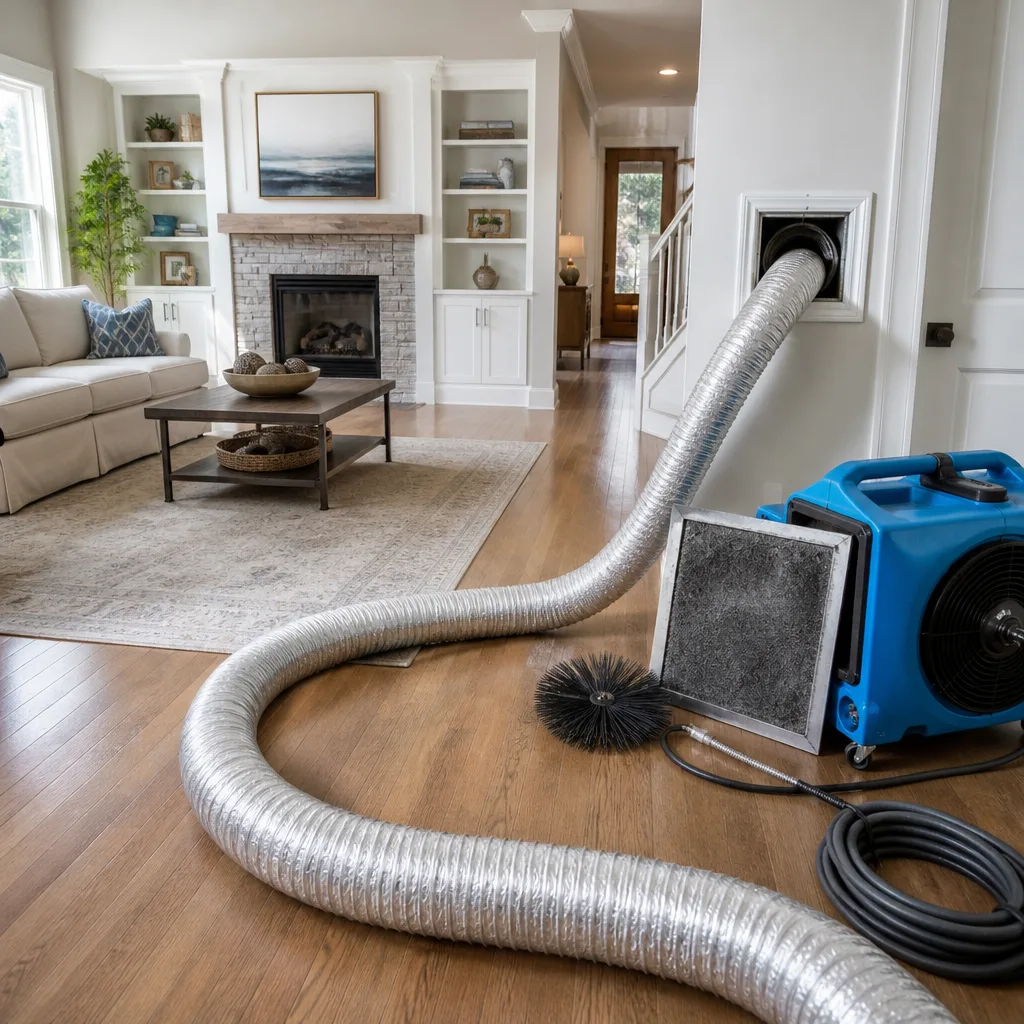 Whole-home duct cleaning
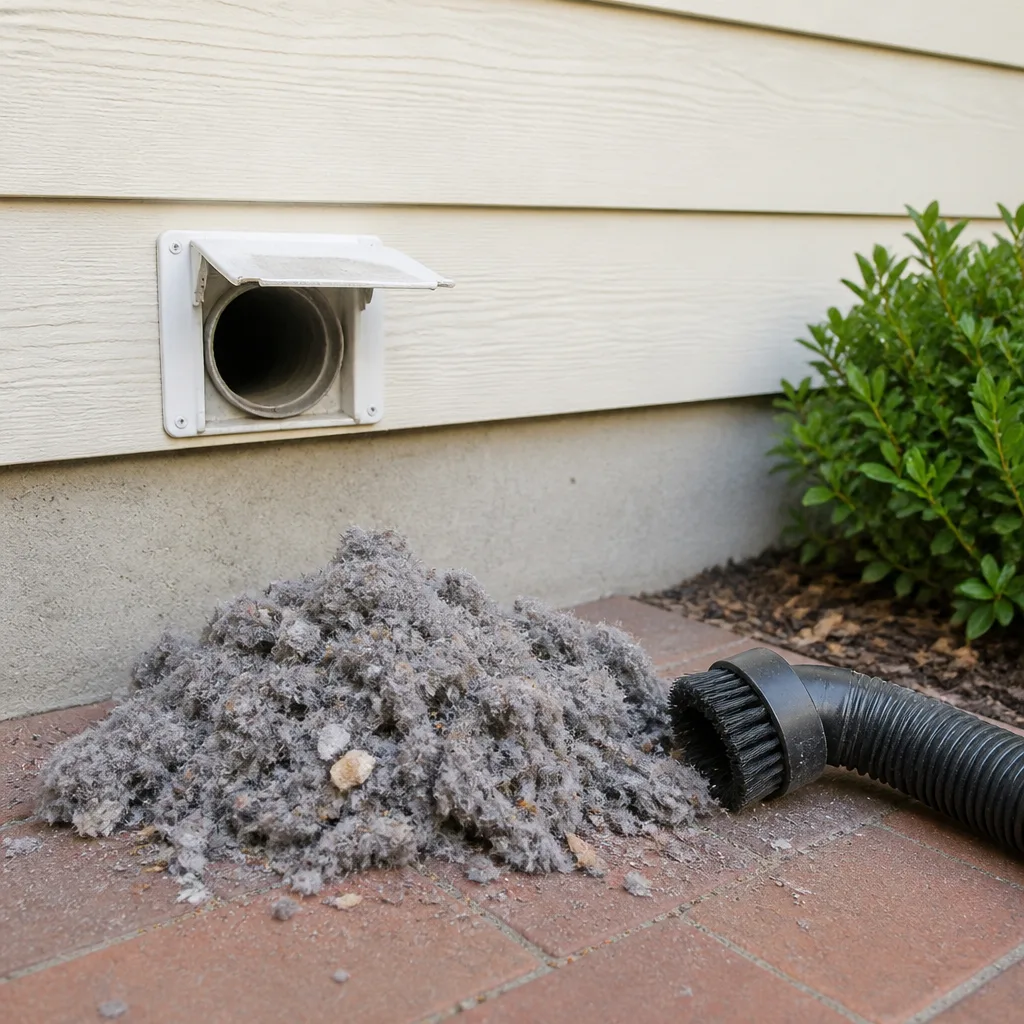 Dryer vent cleaning
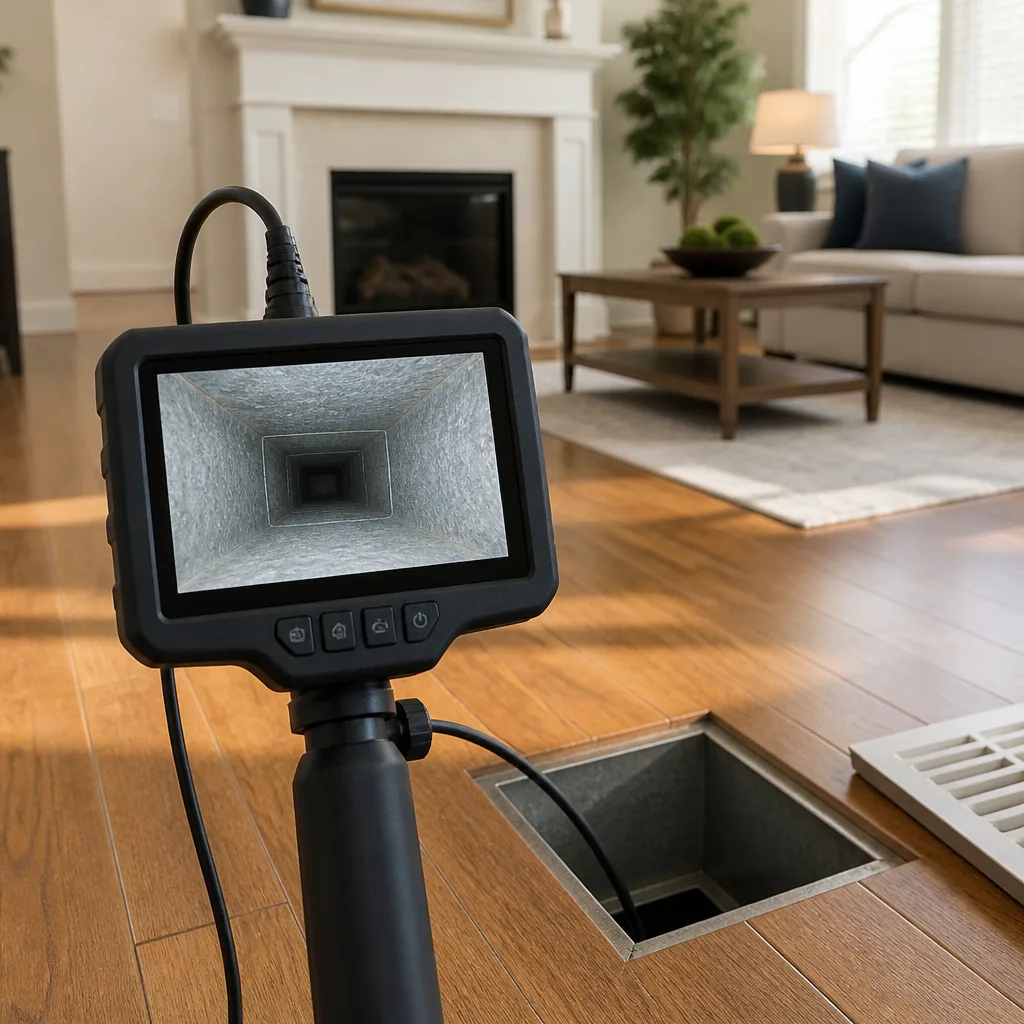 Camera inspection
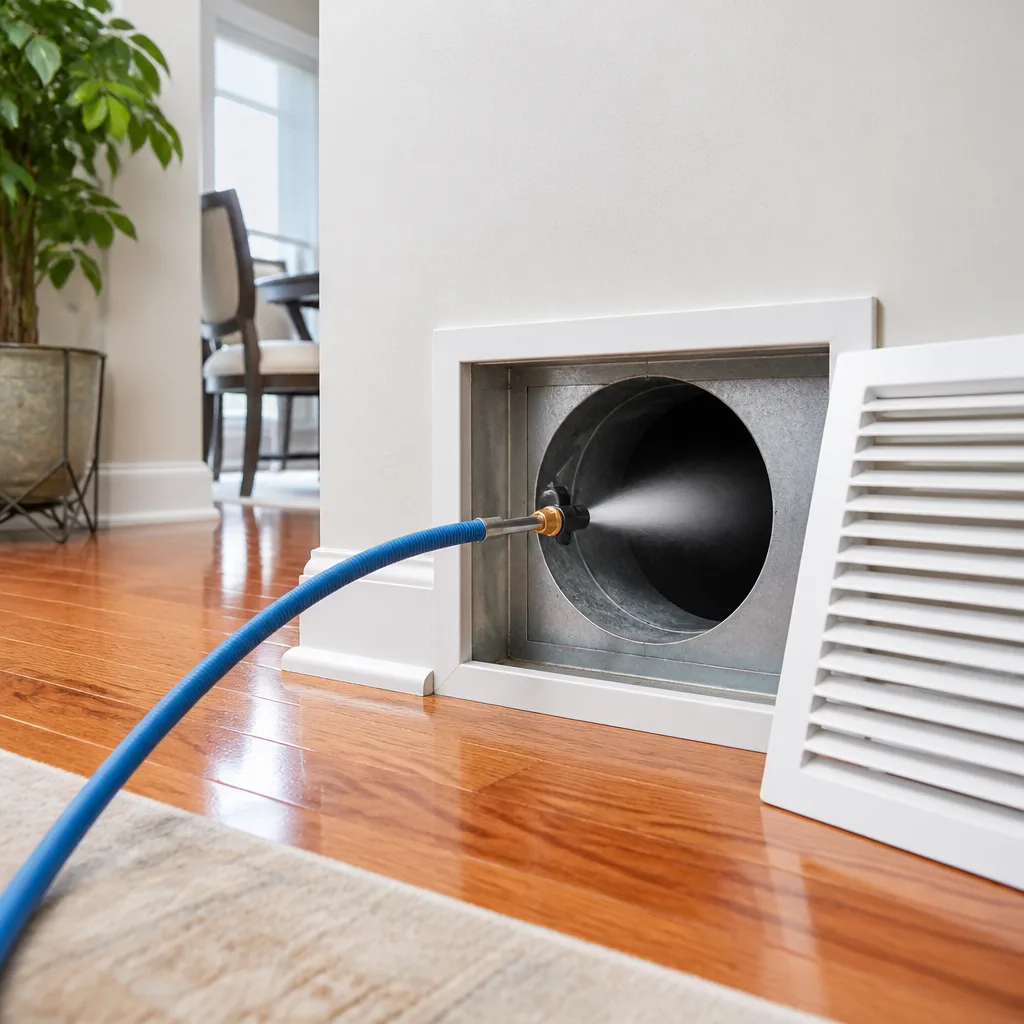 Sanitizing & deodorizing
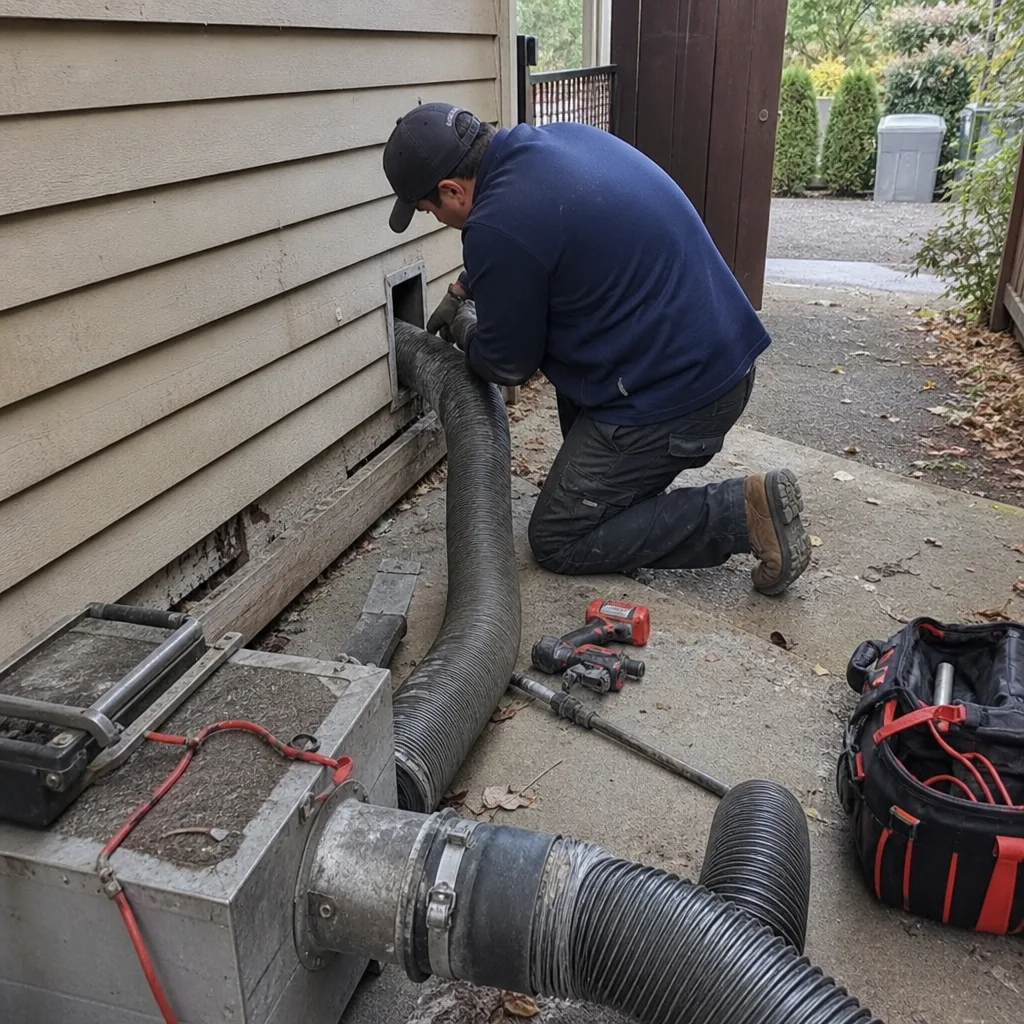
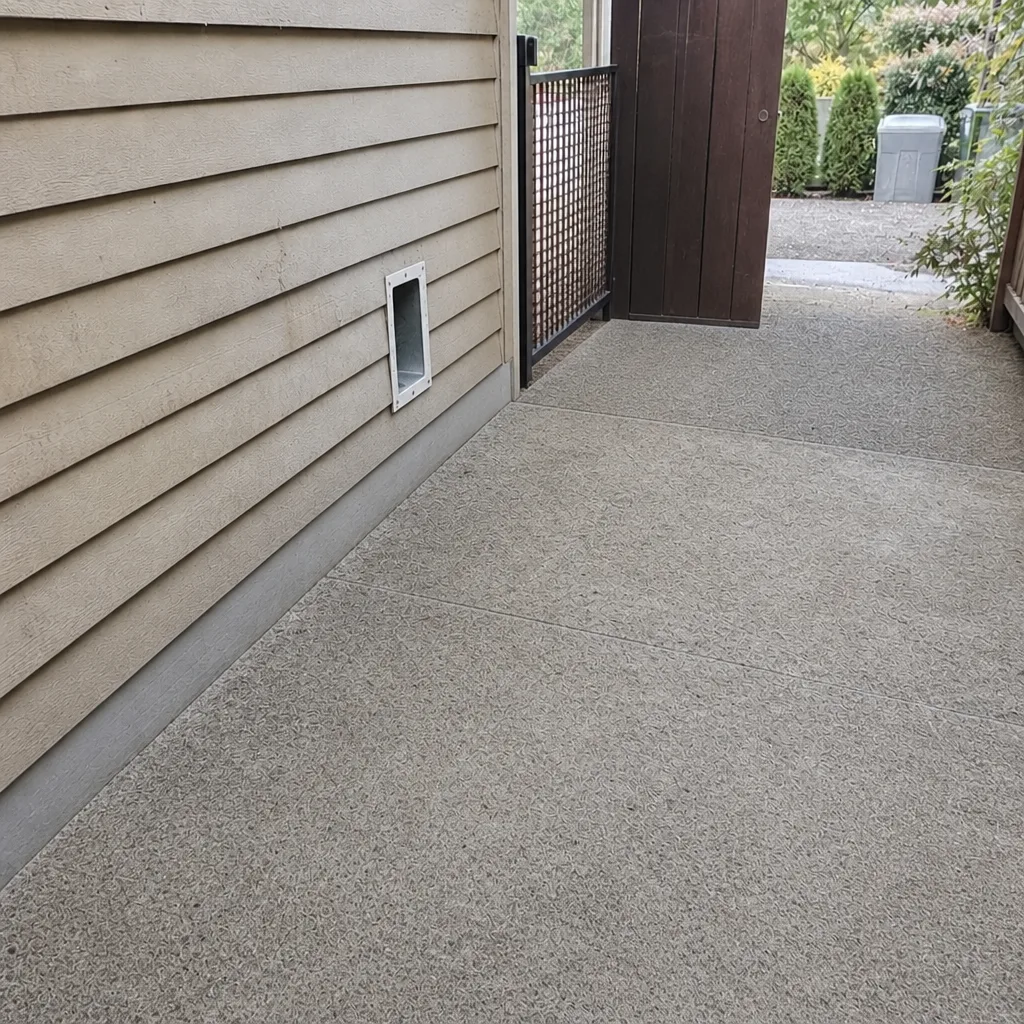
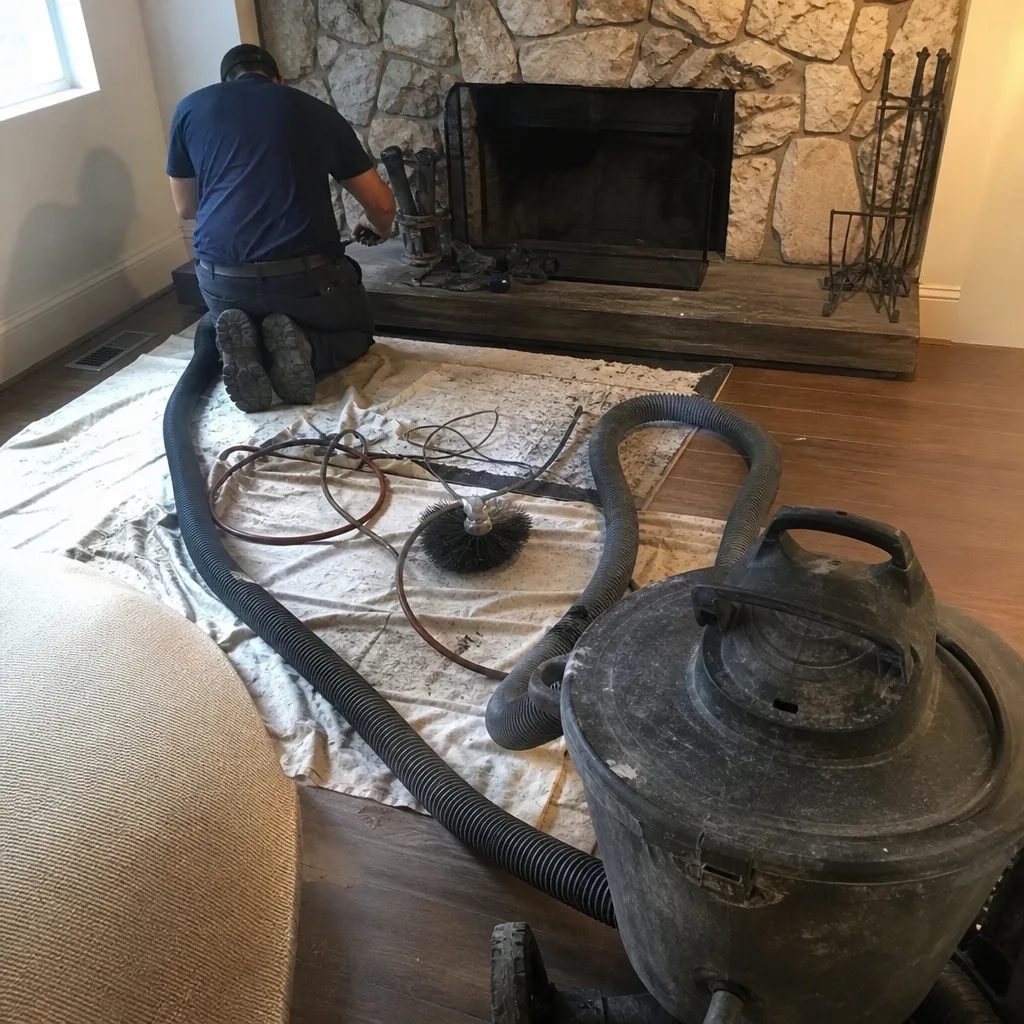
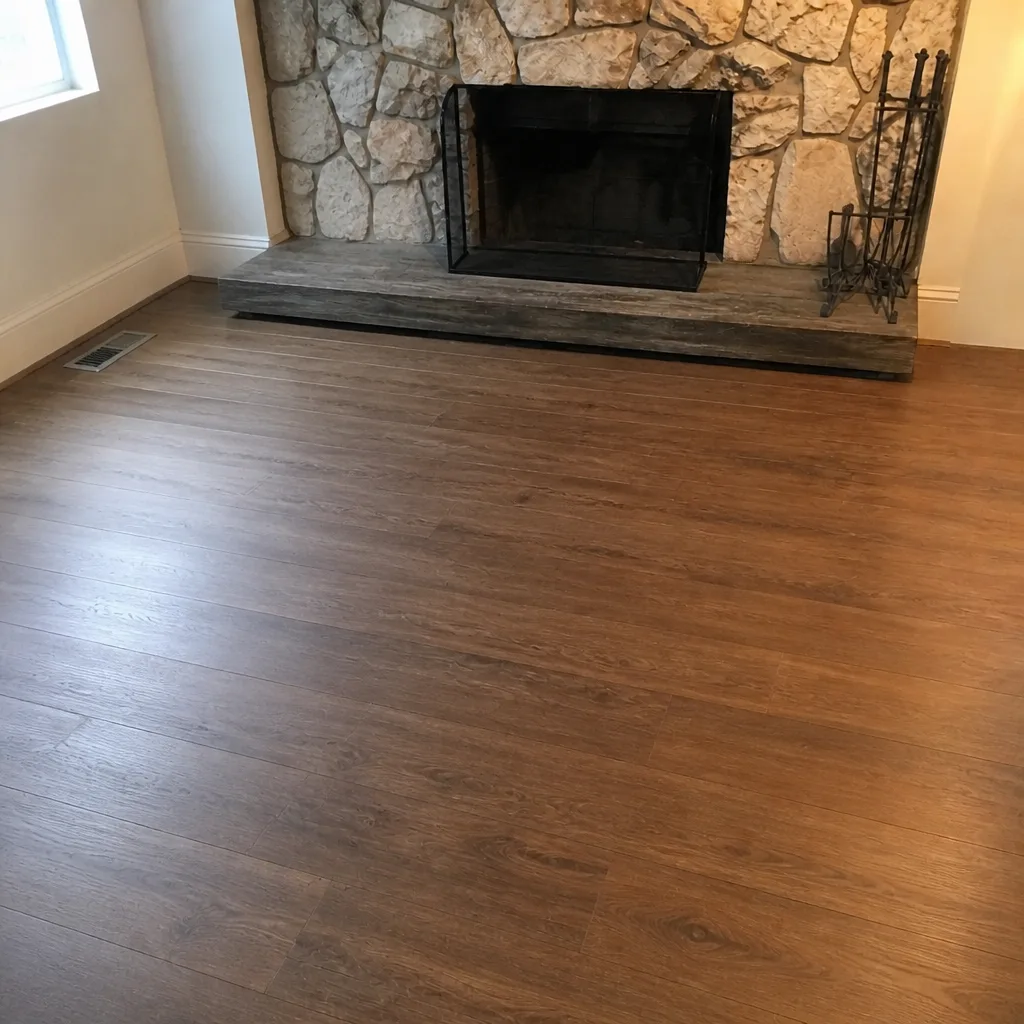
Whole-system duct and dryer vent check with before-and-after photos - you see exactly what came out of your vents
That "$99 whole-house special" is a bait ad - the real number appears once they are in your hallway, or the "clean" is a shop-vac at the register. We photograph the inside of your ducts before and after instead.
Air Duct Cleaning Emergency Preparedness Guide for Redmond Homes
Most Redmond households have a plan for earthquakes and a drawer full of flashlights for power outages. Almost none of them have thought about the duct system. That’s the gap this guide fills. During the 2020 wildfire smoke events, plenty of Redmond residents ran their HVAC systems on “auto” with standard 1-inch filters, pulling smoke-laden outside air straight through return systems that were never built for smoke filtration. A fifteen-minute preparedness step could have changed that. Below you’ll learn how to configure your ducts before, during, and after a smoke event, how to respond in the first 48 to 72 hours after a flood, what seismic movement does to flex duct connections, and how to vet an emergency response contractor in Redmond before you actually need one.
Quick Answer
Emergency duct preparedness in Redmond means three things: knowing how to shut outside air intake and run your system on recirculate during a wildfire smoke event, inspecting duct connections and moisture within 48 to 72 hours of a flood, and having a vetted duct cleaning specialist on file before a crisis hits. Most emergencies that damage ductwork are preventable with a short checklist and a realistic understanding of what “24-hour service” actually delivers.
Styles & brands we work with
- Whole-home duct cleaning
- Dryer vent cleaning
- Camera inspection
- Sanitizing & deodorizing
Table of Contents
- Why Your Duct System Is an Emergency Variable in Redmond
- Wildfire Smoke Protocol: Before, During, and After a Smoke Event
- Post-Flood Duct Response: The 48-72 Hour Window
- Earthquake Preparedness for Duct Systems
- The Emergency Filter Upgrade Path
- Sanitizing After Contamination Events
- How to Vet an Emergency Duct Contractor in Redmond
- What Happens When You Call
Why Your Duct System Is an Emergency Variable in Redmond
Redmond sits in a Puget Sound basin where smoke from inland wildfires funnels west and settles in low-lying neighborhoods for days at a time. Add the region’s wet-season flooding and the fact that Redmond sits on the same seismic zone as the rest of western Washington, and the duct system stops being background infrastructure. It becomes the pathway through which outside problems enter your home.
Here’s the part most preparedness guides skip: your return air system doesn’t know the difference between clean air and contaminated air. It pulls whatever is at the return grille and moves it through the ducts, the air handler, and back out the supply vents. When that “whatever” is wildfire smoke, biological growth after a flood, or dust loosed by earthquake shaking, the ducts you rely on for comfort become a delivery mechanism.
A few Redmond-specific realities worth keeping in mind:
- Older homes in the Grass Lawn and Education Hill neighborhoods often have original flex duct runs with connections that flex and shift more than rigid metal. That matters during seismic events.
- Homes in the Sammamish Valley and near Marymoor Park sit closer to low ground, where moisture intrusion after heavy rain events is a real concern.
- Newer construction in Overlake and Willows tends to have tighter building envelopes, which means a contaminated system recirculates the same air with less dilution from outside.
- The wet season runs long in Redmond. Any ductwork that takes on water has a short window before mold takes hold.
Treat the duct system the way you’d treat the electrical panel or the water main: a system with specific emergency procedures that most people never write down. This guide walks through those procedures in the order you’d actually encounter them.
Wildfire Smoke Protocol: Before, During, and After a Smoke Event
Wildfire smoke is the most likely emergency in Redmond that affects your duct system directly, and it’s the one you can prepare for the most completely. The goal isn’t to make your home airtight. It’s to stop your HVAC system from actively pulling smoke into the ductwork, where fine particles coat the interior surfaces and then circulate for weeks after the smoke clears.
Before a smoke event
- Know your filter slot. Find the return air filter, note the size (most homes have a 1-inch slot, some have a 4- or 5-inch media cabinet), and keep a spare on hand.
- Learn where the outside air intake is on your system, if you have one. Fresh air intakes on newer homes pull outdoor air directly into the return.
- Confirm your thermostat has a “fan on” or “circulate” setting separate from heat and cool. You’ll need this.
- Have a plan for a temporary higher-efficiency filter. A MERV 13 filter will catch much more smoke particulate than a standard filter, but your system has to be able to move air through it.
During a smoke event
The single most important step: don’t run the system on “auto.” Auto cycles the fan on and off with temperature demand, which means the system keeps pulling in outside air through the return and through any fresh air intake. Set the fan to “on” or “circulate,” close fresh air intakes if your system has manual dampers, and keep windows and doors shut. If you can’t shut the intake, at minimum run the system less.
A MERV 13 filter is the practical ceiling for most residential systems without stressing airflow. Going higher than that on a standard 1-inch slot usually does more harm to the blower than it does good for the air.
After a smoke event
Once the air clears, don’t assume the ducts are fine. Smoke particles deposit on duct linings, on flex duct interior surfaces, and on the air handler’s evaporator coil. A post-event inspection should include a look at the coil, a check of the filter (replace it), and an assessment of whether the visible dust inside the ducts has taken on a smoke film. Professional cleaning removes what a filter can’t reach, and our air duct cleaning service is built around exactly this kind of post-event restoration.
Post-Flood Duct Response: The 48-72 Hour Window
Water in the duct system is the most time-sensitive emergency on this list. The 48 to 72 hours after water intrusion are the window before moisture in a duct run crosses into active mold colonization, and once that happens the fix gets significantly more involved. Redmond’s wet season delivers water intrusion through crawl spaces, failed sump pumps, roof leaks, and appliance failures, and any of those can soak insulation or ductwork you can’t see.
What to do in the first 24 hours
- Stop running the HVAC system. Moving air through wet ductwork spreads moisture and spores to parts of the system that were dry.
- Document everything. Photograph water lines, wet duct sections, and any visible condensation. Your insurer will want the record.
- Turn off power to the air handler at the breaker if there’s any chance water reached the electrical components.
- Call your insurer and get a mitigation crew scheduled. Duct cleaning comes after the structure is dry, not before.
What emergency mitigation actually looks like
Real mitigation isn’t a cleaning pass. It’s drying first, then assessing, then cleaning. A proper response starts with moisture readings on the duct surfaces and insulation, mechanical drying, and confirmation that the readings have returned to normal before any cleaning begins. If interior duct liner has absorbed water and can’t be dried, it gets removed or replaced, not cleaned.
Flex duct that has been submerged or has held standing water should generally be replaced rather than salvaged. Cleaning wet or previously-wet flex duct rarely gets the result you want, and the cost of replacement is honest money. Where ducts survive drying, cleaning after mitigation removes the settled debris and any biological growth that started before the moisture dropped. Guardsman-backed sanitizing treatments add a traceable, named product layer after cleaning, which matters when an insurer needs documentation of what was done.
Earthquake Preparedness for Duct Systems
Seismic movement does specific things to duct systems, and most homeowners never look. The most vulnerable point is the connection between the air handler and the main trunk, and between trunk sections where flex duct is joined. Flex connectors are designed to absorb small movement, but a seismic event pushes them past what they were designed for. Connections slip, tear, or pull loose entirely.
What a post-event inspection looks like
- Turn off the HVAC system before you go looking. If a duct has separated, running the system will blow conditioned air into a crawl space or wall cavity and pull unconditioned air in.
- Look at every visible duct connection in the garage, mechanical closet, utility room, and attic access points. Separated flex connections are usually visible.
- Check the return air path. If the return trunk has separated from the air handler, you’ll get weak airflow, a loud noise, or both.
- Look for duct runs that have fallen off hangers or are now resting on ceiling joists.
- Book an inspection. A technician with a camera and the right equipment can see the connections you can’t. Our HVAC cleaning team routinely runs these post-event inspections and documents what it finds.
The reason post-event inspection matters so much is that separated flex duct doesn’t just lose efficiency. It creates a path between the living space and unconditioned cavities, and it pulls dust, insulation fibers, and whatever else lives in a crawl space into the supply air. Duct repair and sealing capability is what separates a cleaning-only provider from one that can actually fix the connection. We handle that alongside the cleaning, because there’s no point cleaning a system that has a duct lying open in the attic.
If your building has gas appliances, treat the gas line as a separate concern from the duct system and have a licensed gas professional check every connection before you restart appliances. That’s outside the duct scope, but it belongs in the same preparedness conversation.
The Emergency Filter Upgrade Path
Filters are the fastest, cheapest lever in a duct emergency, and the one most Redmond homeowners get wrong. The instinct during a smoke event is to buy the highest MERV number on the shelf and swap it in. That can backfire. A filter that’s too restrictive for your system starves the blower of airflow, and you end up with poor circulation, a stressed motor, and a coil that ices up.
Here’s how the MERV scale actually maps to emergencies:
- MERV 8: standard residential protection against larger dust and pollen. Good everyday filter, minimal protection against wildfire smoke.
- MERV 11: a meaningful step up for fine particulate without much added static pressure. A reasonable baseline upgrade for smoke season.
- MERV 13: the practical ceiling for most standard 1-inch residential slots. Captures a much larger share of smoke-sized particles, but check your system’s static pressure capability before committing.
- MERV 16 and higher: usually requires a 4- or 5-inch media cabinet or a dedicated filter housing, not a standard slot. This is the territory of whole-home purification systems.
When a whole-home purifier makes sense
A temporary high-efficiency filter is a bridging measure. During a long contamination event or as a permanent improvement, a whole-home air purification setup integrated into the duct system provides filtration you don’t have to think about. Honeywell and Aprilaire both make product lines that are specified by name in HVAC engineering, which is a useful signal when you’re comparing options. The best way to decide between a temporary filter upgrade and a permanent purifier is to have a specialist look at your system’s airflow capacity, your duct condition, and your home’s specific exposure. There isn’t a universal answer.
Sanitizing After Contamination Events
Cleaning and sanitizing are not the same step, and conflating them is a common mistake. Cleaning physically removes the debris, dust, and settled particulate from duct surfaces. Sanitizing treats what’s left after cleaning. You can’t sanitize your way out of a dirty duct, and you can’t skip sanitizing after a biological contamination event just because the ducts look clean.
After a smoke event, a flood, or a post-earthquake dust event, the sequence should be:
- Inspect, with camera documentation of what’s inside the ducts.
- Clean the full system from the vent cover to the air handler using professional-grade equipment.
- Capture dislodged debris with negative air pressure and HEPA filtration throughout the process. We use Abatement Technologies filtration on every job for exactly this reason – it keeps debris out of the room instead of moving it around.
- Apply a sanitizing treatment with a traceable product. Guardsman-backed treatments are the ones we use because they’re documented, not generic.
We’re deliberate about which product brands we use in homes. Honeywell and Aprilaire are the names HVAC engineers specify by default, and using named products rather than off-brand substitutes matters when air quality is the actual point of the job. You can read more about how we approach the full system on our Redmond Air Duct Cleaning Pros homepage.
How to Vet an Emergency Duct Contractor in Redmond
The time to find a duct contractor is before you need one. During a smoke event or after a flood, every duct cleaning company in the region is booked, and the ones with the fastest pitch aren’t necessarily the ones with the right equipment. Vet in advance, keep the number saved, and know what you’re actually buying.
What to ask before you need them
- What equipment will you use? The answer should name specific equipment. Rotobrush and Nikro are industry-recognized system brands, and Abatement Technologies is standard for controlled debris capture. If the answer is vague, that’s information.
- Can you find and fix a separation, or only clean? A cleaning-only provider will clean around a broken duct connection. A full-scope provider repairs and seals it, then cleans. Ask directly.
- What’s the price for a whole system, not per vent? A firm price per system before the work starts is the honest structure. Per-vent pricing invites the bait-and-switch structure that gives this trade its reputation.
- Do you document the work? Before-and-after photos of your own ducts, camera footage from inside the system, and records of what product was used. If they can’t show you, don’t book them.
- What does “24-hour service” actually mean? This is the honest part. You can call any hour and someone answers, but a real emergency response is a scheduled dispatch, not an instant crew at your door at 3am. Ask what the realistic booking window looks like.
What to have ready
Have your filter size written down, a rough count of supply vents, and a note about the system type (forced air, heat pump with air handler, etc.). Have your insurer’s claim number ready if you’re post-flood. Have photos of any visible damage. The call goes faster and the estimate is more accurate when you have the basics in hand.
Dryer vent: the emergency you’ll forget
Dryer vent cleaning is part of full duct emergency readiness even though it feels unrelated. A clogged dryer vent is a fire risk any day of the year, and it’s the kind of overlooked maintenance that turns a normal day into an emergency. Our dryer vent cleaning covers that side of home safety, and it’s a service most duct-only providers don’t offer.
What Happens When You Call
Call (877) 492-3883. We answer 24/7. Fast dispatch from 7am to 7pm, Sunday through Friday. A call outside dispatch hours is booked into the next opening, Sunday through Friday, 7am to 7pm. We’re closed Saturday.
When you call for a duct emergency in Redmond, the conversation starts with what happened. Smoke event, water intrusion, seismic damage, or a quality issue you’ve been putting off? Each one has a different urgency and a different first step. If the situation is time-sensitive – active water in the system, a separated duct pouring air into a crawl space – we’ll tell you what to do immediately to stop additional damage before a technician is on site.
From there we schedule an inspection and give you a written estimate. The estimate is free, the price is set per job, and we agree on a flat price before any work starts. Our technicians have up to 12 years of experience with systems of every age and configuration across Redmond, and the same equipment used for commercial remediation comes to your home. Professional-grade machinery, residential pricing, no per-vent games.
Common Mistakes to Avoid
- Running “auto” during a smoke event. Auto cycles the fan with temperature demand, which means it keeps pulling smoke-laden outside air into the return. Set the fan to “on” or “circulate” and cut the fresh air intake if you have one.
- Cleaning wet ductwork. Cleaning a system before it’s dry pushes moisture and spores deeper into the system. Dry first, confirm with moisture readings, then clean. Redmond’s wet season makes this mistake common after crawl space flooding.
- Restarting the HVAC system after an earthquake without inspection. A separated flex connection will pump conditioned air into a wall cavity or attic, and pull unconditioned air back into the living space. Turn the system off and get it inspected.
- Buying the highest MERV filter available. A filter that’s too restrictive starves the blower and can cause coil icing. MERV 13 is the practical ceiling for most standard 1-inch slots in Redmond homes; anything higher needs a media cabinet.
- Accepting per-vent pricing. A per-vent structure invites the bait-and-switch: the headline number per vent never reflects the final invoice. Insist on a flat price per system, agreed in writing before work starts.
- Skipping the post-event inspection because the ducts “look fine” from the vent covers. What you can see from a grille is a fraction of the system. Camera inspection from the vent cover to the air handler is the only way to know.
- Waiting until an emergency to pick a contractor. Every duct company in the Redmond area books up during a smoke event or flood. Vet in advance so you know who to call, and what they’ll actually do when you do.
See the difference
 Before
 After
 Before
 After
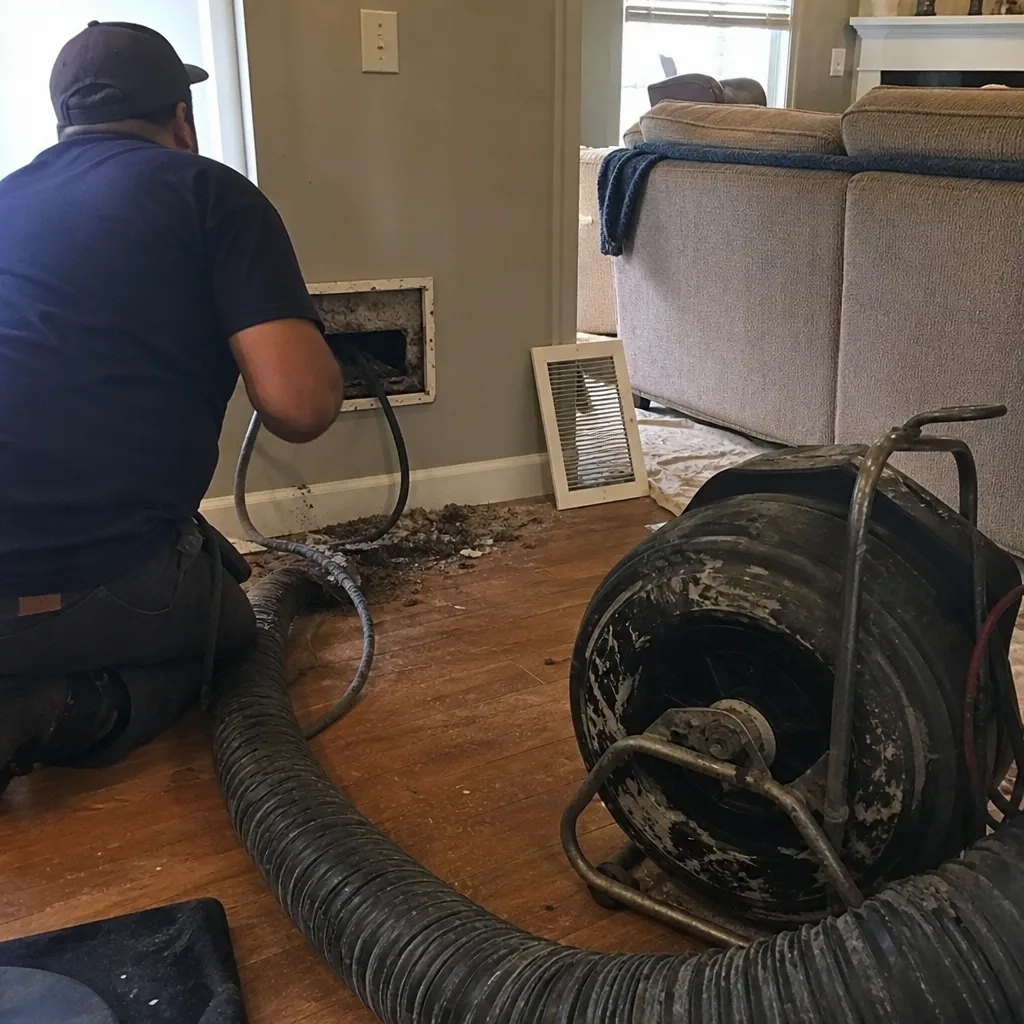 Before
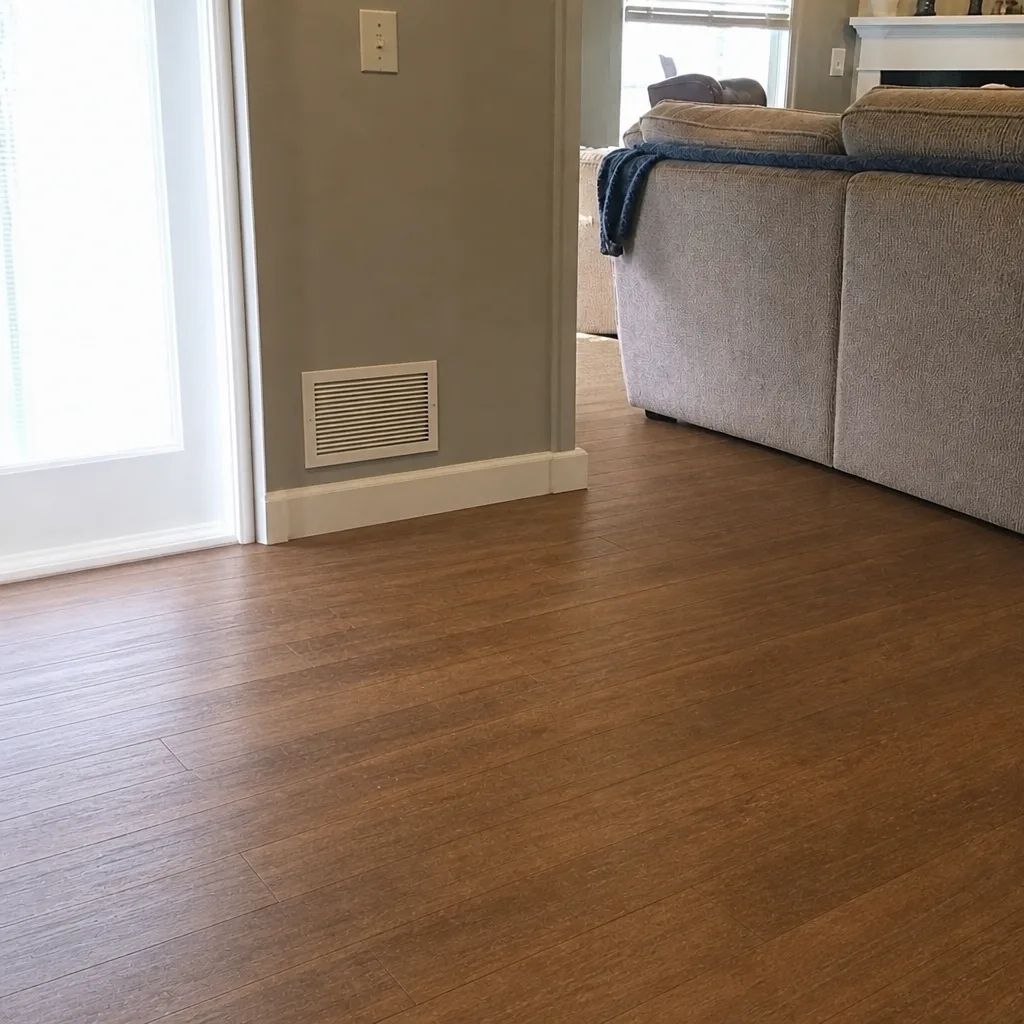 After
When to Call a Professional
Call a professional when there’s visible water in or near ductwork, when you suspect a duct connection has separated (weak airflow, whistling, temperature swings, dust streaks near vents), or when a smoke event has deposited visible film inside the system. Call after any earthquake you felt indoors, before restarting the HVAC. Call when a musty odor persists after the rest of the home is dry, which often signals biological growth in a duct run you can’t see. Call when your energy bills climb and the system has been running longer than usual without an obvious cause.
For scenarios that don’t quite hit those thresholds, call anyway and we’ll tell you if it’s a real concern. Redmond Air Duct Cleaning Pros offers free estimates in Redmond – call (877) 492-3883. We answer 24/7. Fast dispatch from 7am to 7pm, Sunday through Friday.
Frequently Asked Questions
Emergency duct cleaning in Redmond is priced per job by written estimate, and the estimate is free. The price depends on the size of the system, the extent of contamination, and whether repair or sealing is needed, so we won’t quote a single number without seeing the system. Call (877) 492-3883 for an exact quote – estimates are free.
Yes, but set the fan to “on” or “circulate” rather than “auto,” close any fresh air intake if your system has manual dampers, and keep windows and doors shut. The goal is recirculating filtered indoor air, not pulling outside smoke in. Switch to a MERV 11 or MERV 13 filter if your system can handle the airflow, and change it immediately after the event ends. Call (877) 492-3883 if you’re unsure whether your system can handle the higher MERV.
Within 48 to 72 hours of the water entering the system. That’s the window before moisture in a duct run crosses into active mold colonization. The sequence matters: dry first, confirm with moisture readings, then clean and sanitize. Call (877) 492-3883 if you’re not sure whether moisture has reached the ducts.
Turn off the HVAC system and inspect every visible duct connection in the garage, mechanical closet, utility room, and attic before restarting. Separated flex connections and fallen duct hangers are the most common post-seismic issues. Book a professional camera inspection of the full system before you run the HVAC again. Call (877) 492-3883 to schedule one.
Often yes, but it depends on your policy and the nature of the event. We can work with your insurer and provide documentation of the damage and the work performed. Talk to your adjuster before work starts, and keep photos of everything. Call (877) 492-3883 and we’ll walk through what documentation we can provide.
Because per-vent pricing and low headline quotes usually turn into much larger invoices once the technician is on site. We quote one flat price per system, agreed before any work starts, and provide before-and-after photos of your own ducts so you can see what was done. Call (877) 492-3883 for an honest written estimate and a clear scope.
The Bottom Line
Emergency preparedness in Redmond usually starts with earthquake kits and ends there. Extend it to your duct system. Know your filter size, know how to run the fan during a smoke event, know what to do in the first 24 hours after water enters the system, and know which contractor to call before you need one. The equipment matters – Rotobrush, Nikro, Abatement Technologies, Honeywell, Aprilaire, and Guardsman are the names we use because they’re what the work requires. The structure of the pricing matters too: one flat price per system, agreed in writing before any work starts, with before-and-after photos so you can see the result.
If you’ve been putting off an inspection, if a smoke event or a flood has left you unsure about the condition of your ducts, or if you want to be prepared before the next event rather than after, call (877) 492-3883. We answer 24/7. Fast dispatch from 7am to 7pm, Sunday through Friday. The estimate is free.
Written by the team at Redmond Air Duct Cleaning Pros.