
Last updated November 25, 2026
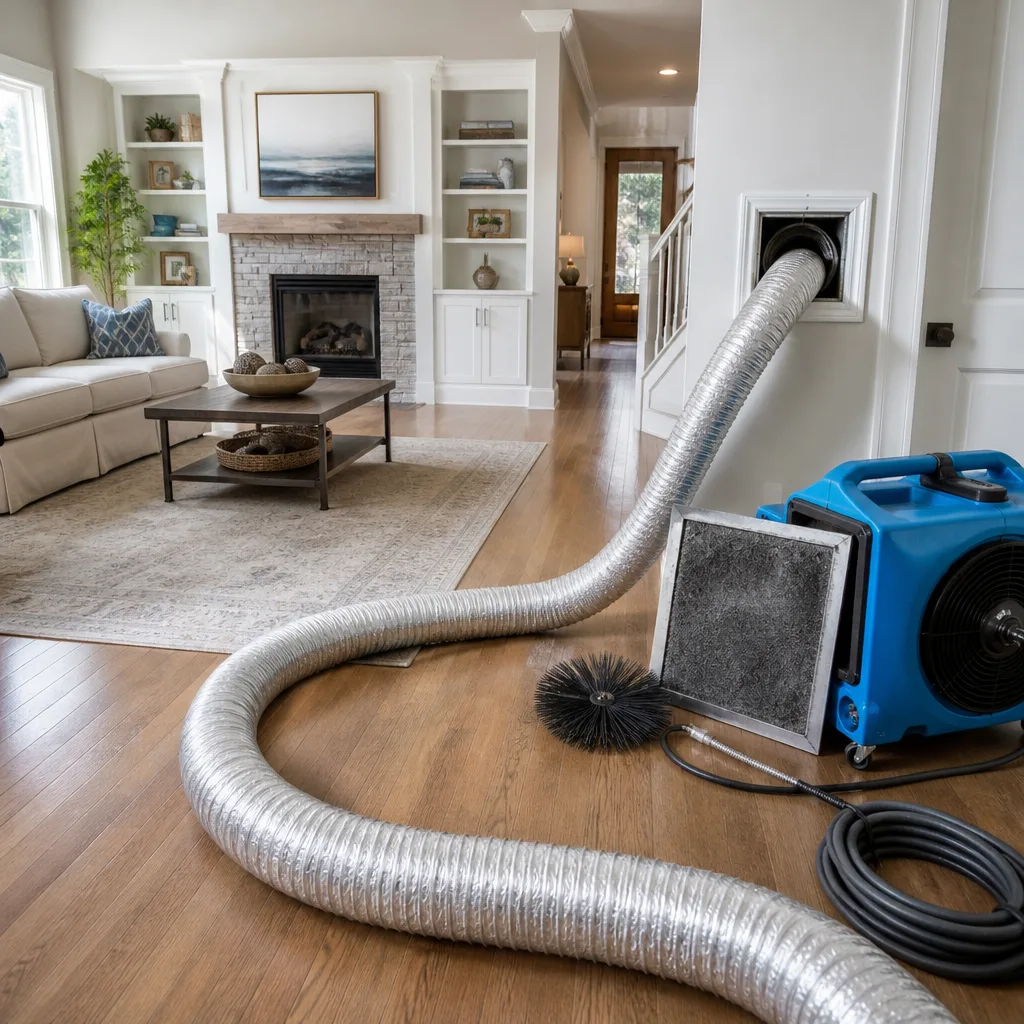 Whole-home duct cleaning
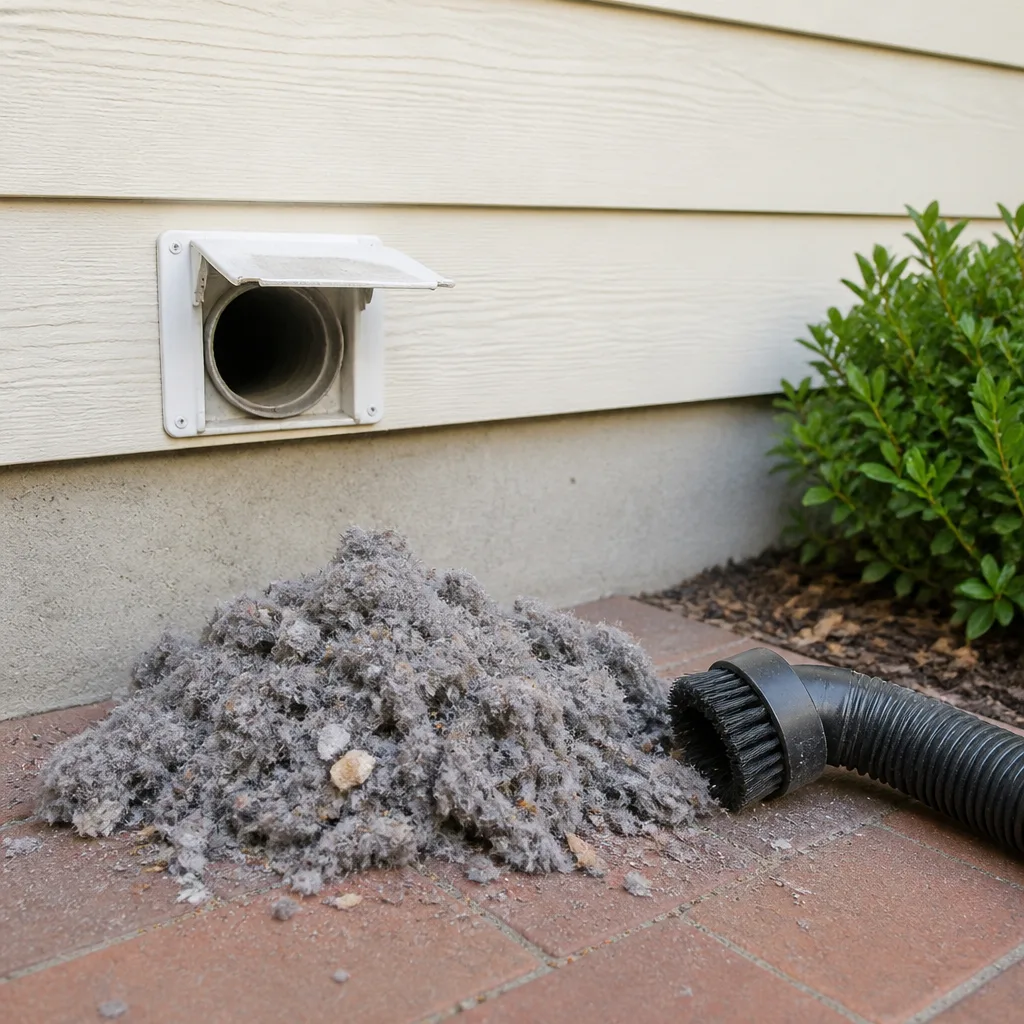 Dryer vent cleaning
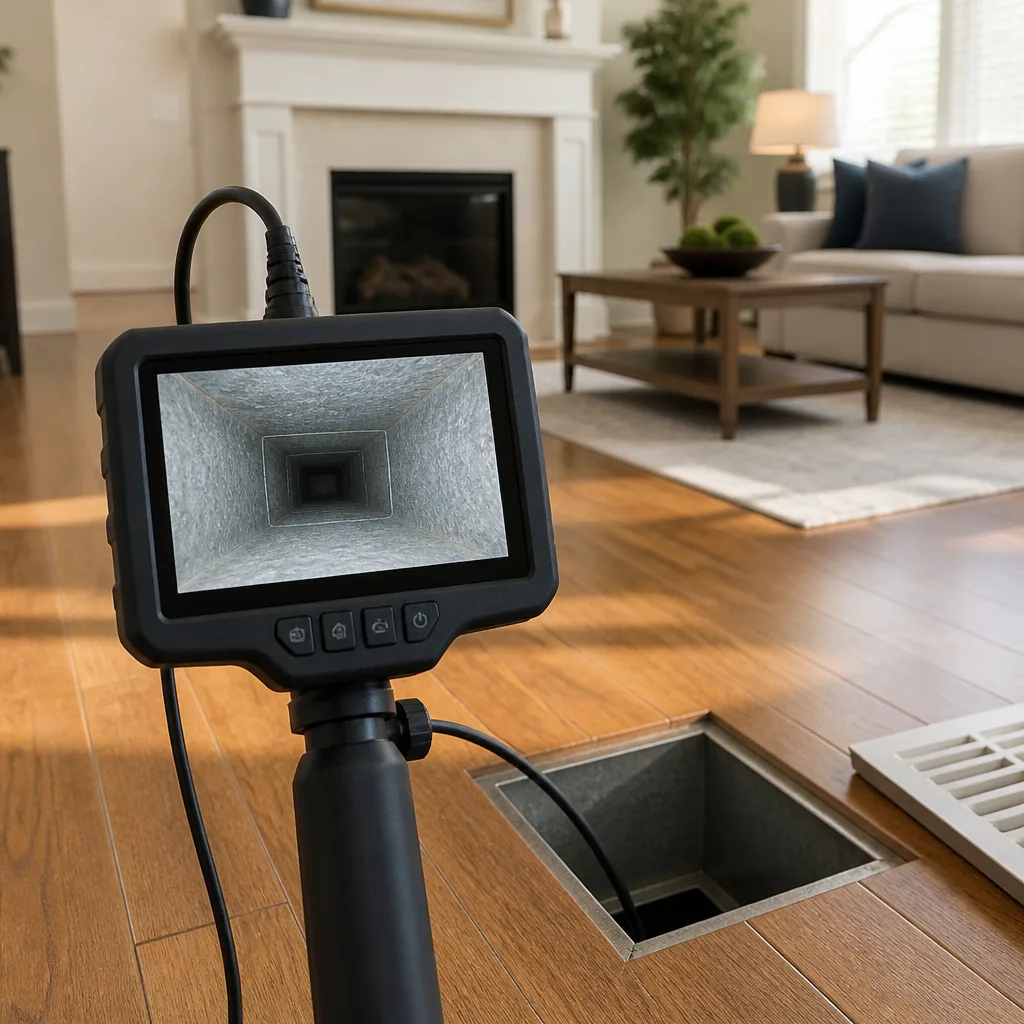 Camera inspection
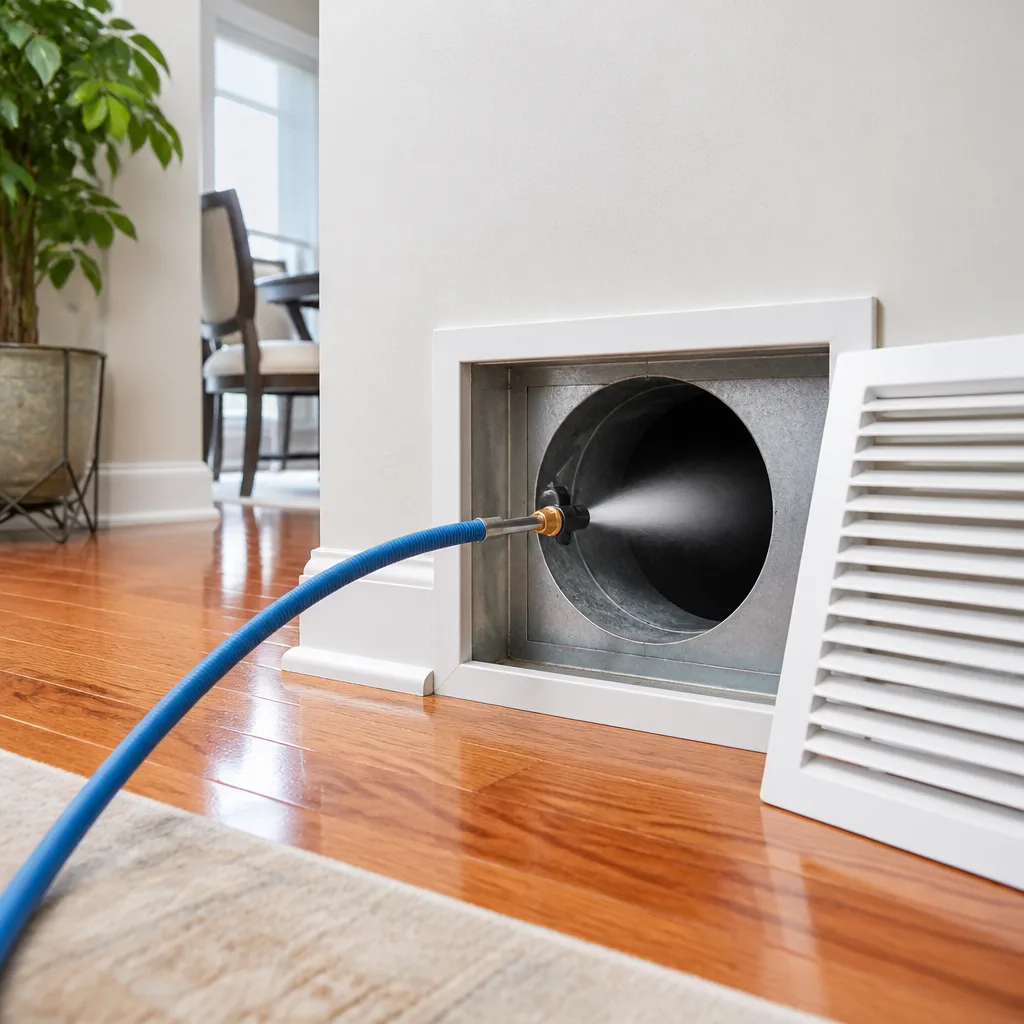 Sanitizing & deodorizing
Whole-system duct and dryer vent check with before-and-after photos - you see exactly what came out of your vents
That "$99 whole-house special" is a bait ad - the real number appears once they are in your hallway, or the "clean" is a shop-vac at the register. We photograph the inside of your ducts before and after instead.
Air Duct Cleaning Warning Signs: A Redmond Homeowner’s Reference Guide
Visible dust on the register face is not an early warning sign. By the time you can see it, the duct lining upstream has been shedding particulates into your living space for months. The signs that actually matter in Redmond show up long before that: a room that runs two degrees cold, a faint musty note during the first heat cycle of the morning, a cough that only shows up at home. This guide walks through the early and indirect indicators most homeowners dismiss, how Redmond’s ranch homes and newer construction fail differently, and how to spot contamination before it reaches the heat exchanger.
Quick Answer
The most reliable early warning signs of contaminated ducts in a Redmond home are uneven room temperatures, a musty odor that appears only during the first heat cycle of the day, allergy symptoms that flare up only indoors, and a spike in dust settling on surfaces within days of cleaning. Visible dust at the registers is a late sign, not an early one. If you notice two or more of these patterns for more than a month, it’s worth a professional inspection before the problem spreads from the ducts into the coil or blower.
Styles & brands we work with
- Whole-home duct cleaning
- Dryer vent cleaning
- Camera inspection
- Sanitizing & deodorizing
Table of Contents
- Early Warning Signs Most Homeowners Miss
- Normal Duct Aging vs. Active Contamination
- Warning Signs Specific to Redmond Home Types
- Using an Air Quality Monitor as an Early Warning Tool
- When the Problem Has Moved Past Duct Cleaning
- How a Professional Inspection Actually Works
- Common Mistakes to Avoid
- When to Call a Professional
Early Warning Signs Most Homeowners Miss
The five or six warning signs on most “duct cleaning checklist” pages are the obvious ones: visible dust, visible mold, critters, a smell you can’t miss. They’re accurate, but they’re late. In our experience, the indicators that actually give a Redmond homeowner time to act arrive six to twelve months before the obvious ones, and they show up as small patterns rather than big symptoms.
The four patterns worth tracking:
- Uneven room temperatures. One bedroom runs two to four degrees cooler than the rest of the house even with the vents fully open. This can be a damper issue, but a partially blocked or partially collapsed trunk line causes the same symptom.
- A musty smell only during the first heat cycle of the day. The furnace kicks on, you catch a note of dampness in the air for the first five or ten minutes, and then it’s gone. That’s the smell of settled biological growth being warmed and disturbed, not the smell of a dirty filter.
- Allergy symptoms that only flare up indoors. If the sneezing, itching or sinus pressure follows you home but not to work, the source is inside the house. Ducts are a common culprit, and one of the most frequently overlooked.
- Dust settling faster than it used to. You clean on a Sunday and by Wednesday the dark furniture has a visible film again. Rising dust production is often the first measurable change a homeowner can point to.
None of these four is definitive on its own. Two or more together, lasting more than a month, is the pattern to act on. Redmond’s cool, damp shoulder seasons make these signs easier to mistake for seasonal allergies or general house dampness, which is exactly why they get dismissed.
Normal Duct Aging vs. Active Contamination
A 25-year-old duct system is not a failing duct system. Ducts age. Flex duct sags a little over time, joints loosen, sealant dries. That’s normal. What isn’t normal is contamination, and the distinction matters because the cleaning approach is completely different for each.
Here’s how to separate the two categories:
| Signal | Normal aging | Active contamination |
|---|---|---|
| Odor | None, or faint “new house” smell | Musty, earthy, or damp-basement smell |
| Dust color | Gray or brown, uniform | Black, greenish, or patchy |
| Where dust appears | Evenly on registers and floors | Concentrated at specific vents |
| Sound | Steady airflow, no rattle | Rattle or whistle at one vent |
| Filter life | Filter lasts its rated interval | Filter clogs weeks early |
| Allergy pattern | None, or seasonal, consistent year to year | New indoor-only flare-ups |
Particulate accumulation is the more common category. It’s dust, hair, pet dander and construction debris that collects in the duct lining and trunk lines over years. Cleaning it is a mechanical job: high-volume negative pressure with an Abatement Technologies air filtration unit running during the work to capture dislodged material, plus agitation using a Rotobrush or Nikro system sized to the duct type.
Biological growth is the second category. It shows up as dark patchy staining on the inside of a register boot, a musty odor that intensifies when the system runs, and sometimes visible discoloration on the register face itself. Cleaning it involves more than scrubbing. You want mechanical cleaning first, then a sanitizing treatment. We use Guardsman-backed treatments for that stage because it’s a named, traceable product, not a generic spray from an unlabeled jug.
The two categories are easy to confuse on sight. A technician with a scope camera and the right lighting will know within minutes which one they’re looking at. A homeowner looking at the register grille generally won’t.
Warning Signs Specific to Redmond Home Types
Redmond’s housing stock splits into two broad groups with genuinely different duct systems, and the warning signs follow suit. Knowing which category your home falls into changes what you should look for.
Older Eastside ranch homes and their flex duct
A large share of Redmond’s mid-century ranch homes were built with flex duct running through unconditioned crawl spaces and attics. Flex is a ribbed inner liner wrapped in insulation. The ribbing is a debris trap. Over decades, that liner sags, kinks at bends and sometimes tears. In a crawl-space install, small tears let in crawl-space air, which brings moisture and pathogens. The early warning signs to watch in a ranch home:
- Visible sag in flex runs at the corners of a heated crawl space
- A patch of warm, humid crawl-space air bleeding up through a floor register
- Early failure of the flex liner at the plenum connection point behind the furnace
- A musty note in the room closest to the longest flex run
Newer Redmond construction and sheet metal trunk-and-branch systems
Newer builds around Redmond lean toward rigid sheet metal trunk-and-branch layouts with short flex runs to the boots. These systems age differently. They develop gaps at the joints, leaky mastic seams, and lapses in the boot-to-drywall seal. The warning signs skew toward pressurization and dust:
- Dust settling heavily on the top of the drywall in a closet where a trunk line runs
- A whistle at one vent when the system kicks on
- HVAC noise that’s louder in one zone than the others
- Obvious gaps between a register boot and the surrounding drywall or trim
Sealing matters as much as cleaning on these systems, which is why we do both. A cleaned trunk line with leaky joints re-contaminates itself from the return-side air. Duct repair and sealing closes the loop so the cleaning actually holds.
Using an Air Quality Monitor as an Early Warning Tool
A full indoor air quality (IAQ) professional test is a serious diagnostic tool, but it’s also more than most homeowners need at the first-signs stage. A consumer-grade air quality monitor, the sort with particulate (PM2.5) and volatile organic compound (VOC) sensors, will run you less than a routine HVAC service call and give you weeks of trend data. Positioned well, it becomes a cheap early warning tool.
Here’s how to set one up so the data actually means something:
- Place it near the main return air register, within a few feet, at roughly seated height. The return pulls air from across the house, so it reads a mix of everything the system is cycling.
- Log it for two weeks before drawing conclusions. One-day spikes mean nothing. A rising baseline over two weeks is the pattern to look at.
- Compare indoor to outdoor readings on the same days. An indoor PM2.5 count that stays elevated when outdoor air is clear is a signal the source is inside.
- Watch what happens when the system starts. If PM2.5 or VOC readings climb in the first ten minutes after the air handler kicks on and settle back down afterward, the system is disturbing something in the ducts.
- Rule out obvious sources first. Candles, cooking, new furniture, a wood stove, incense. All of these will spike VOC or PM readings and confuse the signal.
A monitor won’t tell you whether the contamination is particulate or biological. It’s not a substitute for a professional inspection. What it does well is give you an objective, personal number so you’re not guessing. Redmond homes run closed up for much of the year, and monitors tend to matter more in tightly sealed houses than in ones that are open to the outside more often.
When the Problem Has Moved Past Duct Cleaning
Not every symptom traced to the ducts is solved by duct cleaning. Sometimes the problem has already moved downstream, and that’s when the work turns into something bigger: HVAC component cleaning or, in the worst case, duct replacement and moisture remediation.
The signs that the problem is no longer confined to the ducts:
- Cold spots that persist after duct cleaning. The problem is at the evaporator coil or the blower wheel, not the ducts. A dirty coil chokes airflow; a dirty blower wheel throws less air than it should. Both need component cleaning, not duct cleaning.
- Water visible in the condensate pan or on the coil housing. Moisture at the coil is a sign of a separate problem (a clogged drain line, an oversized system, a low refrigerant charge) that will keep re-contaminating the ducts until it’s fixed.
- Active biological growth on the coil or the plenum. Duct cleaning team members can clean and sanitize; mold remediation on structural surfaces inside a sealed HVAC cabinet is a different trade. Some situations need a licensed remediation contractor, and a good duct cleaner will say so up front.
- Persistent musty odor after a full clean and sanitize. The source is somewhere the ducts don’t reach: an attic leak, a wet crawl-space liner, a bath fan venting into the attic instead of outside.
- Condensation or rust visible on the inside of a duct run. That’s a duct-replacement conversation, not a cleaning one, because the duct’s structural integrity is already compromised.
The reason this matters for a Redmond homeowner is that duct cleaning by itself is an excellent service that solves a real problem. It’s a poor service when it’s being asked to solve a problem it can’t solve. The right professional will scope the whole system, from the vent cover to the air handler, before quoting anything. If the coil or the blower is the issue, you’ll hear that up front, not after the duct work is already done.
How a Professional Inspection Actually Works
A proper inspection is a diagnostic, not a sales pitch. The steps are predictable, and knowing them helps you spot the difference between a real inspection and a technician who walks in and quotes duct cleaning on sight.
- Walk the system. The technician traces from the furthest return register back to the air handler and checks each branch. Time: 15 to 30 minutes on a typical Redmond home.
- Video scope the trunk and branches. A camera on a flexible reel goes into the main trunk line and at least one branch. You should see the screen. If the technician describes the inside but won’t show you, ask.
- Check the air handler. The blower wheel, the evaporator coil and the filter slot. A dirty blower wheel is often the real culprit behind the “duct cleaning didn’t fix it” call.
- Check moisture. Visible water, standing condensate, rust or biological growth on the coil cabinet.
- Pressure check (sometimes). A quick return-side static pressure reading shows whether the system is starving for air.
- Written findings. The findings should be written down, with photos or video, before any price is quoted. If the number comes before the findings, that’s the pattern to be cautious about.
Book an inspection when the pattern (not one symptom) has persisted for weeks. When you’re ready, you can schedule a free estimate with us for air duct cleaning and we’ll scope the whole system before quoting. If you’re also concerned about the dryer, dryer vent cleaning is worth booking on the same visit, since lint accumulation is one of the most commonly overlooked fire-safety issues in a Redmond home. And if the inspection turns up trouble at the coil or blower, that becomes an HVAC cleaning scope.
Common Mistakes to Avoid
- Treating visible register dust as the first sign. It’s the last. By the time dust is on the register face, the upstream duct lining has been shedding for months. Act on the earlier patterns, not this one.
- Hiring on price alone. The lowest bid on a Redmond duct job usually means a technician with a shop vac and a brush. Ask what equipment they’ll use on site. Named equipment matters. Rotobrush, Nikro and Abatement Technologies are what commercial duct remediation contractors specify by name. A truck with brand-new unmarked equipment and no compressor is not doing a professional job.
- Cleaning without sealing. A cleaned sheet metal trunk with leaky mastic joints re-contaminates itself in six months. Cleaning only makes sense paired with sealing on the systems that need it.
- Sanitizing a dirty duct. Sanitizer on top of a contaminated surface does very little. Sanitizing is a step after cleaning and mechanical removal, not a replacement for them.
- Skipping the air handler scope. Duct cleaning that doesn’t check the evaporator coil and blower wheel is a partial job. If the problem has already moved downstream, cleaning alone won’t clear the air.
- Ignoring the return side. Homeowners focus on the supply registers. Contamination in the return trunk is what pulls debris across the coil and into the living space. In our experience, the return is where early problems hide.
- Assuming newer Redmond builds are fine. Newer construction has fewer decades of dust accumulation, but short flex runs to the boots, mastic gaps and drywall dust traps from the build cycle cause their own early problems.
When to Call a Professional
Call a professional when the pattern is bigger than a single symptom. You notice two or more of the early indicators on this page for more than a month. Your air quality monitor shows an indoor PM2.5 baseline that stays elevated even when outdoor air is clear. You’ve found dark staining on the inside of a register boot, or a musty note that gets stronger when the heat kicks on. You’re a property manager noticing a pattern across multiple units. You’re moving into an older Redmond home and don’t know the last time the ducts were serviced.
Redmond Air Duct Cleaning Pros offers free estimates in Redmond. Call (877) 492-3883. A technician scopes the system from the vent cover to the air handler and writes the findings down before quoting anything. The price is set per job by a written estimate, and the written estimate is what you pay. Our technicians have up to 12 years of experience and run equipment that matches the scope of the work: Rotobrush and Nikro agitation systems, Abatement Technologies filtration running during service to capture dislodged material rather than redistribute it, Honeywell and Aprilaire product compatibility, and Guardsman-backed sanitizing treatments when biological growth is present. We also do duct repair and sealing, which matters because a cleaning without a seal on a leaky system doesn’t last.
We answer 24/7. Fast dispatch from 7am to 7pm, Sunday through Friday.
See the difference
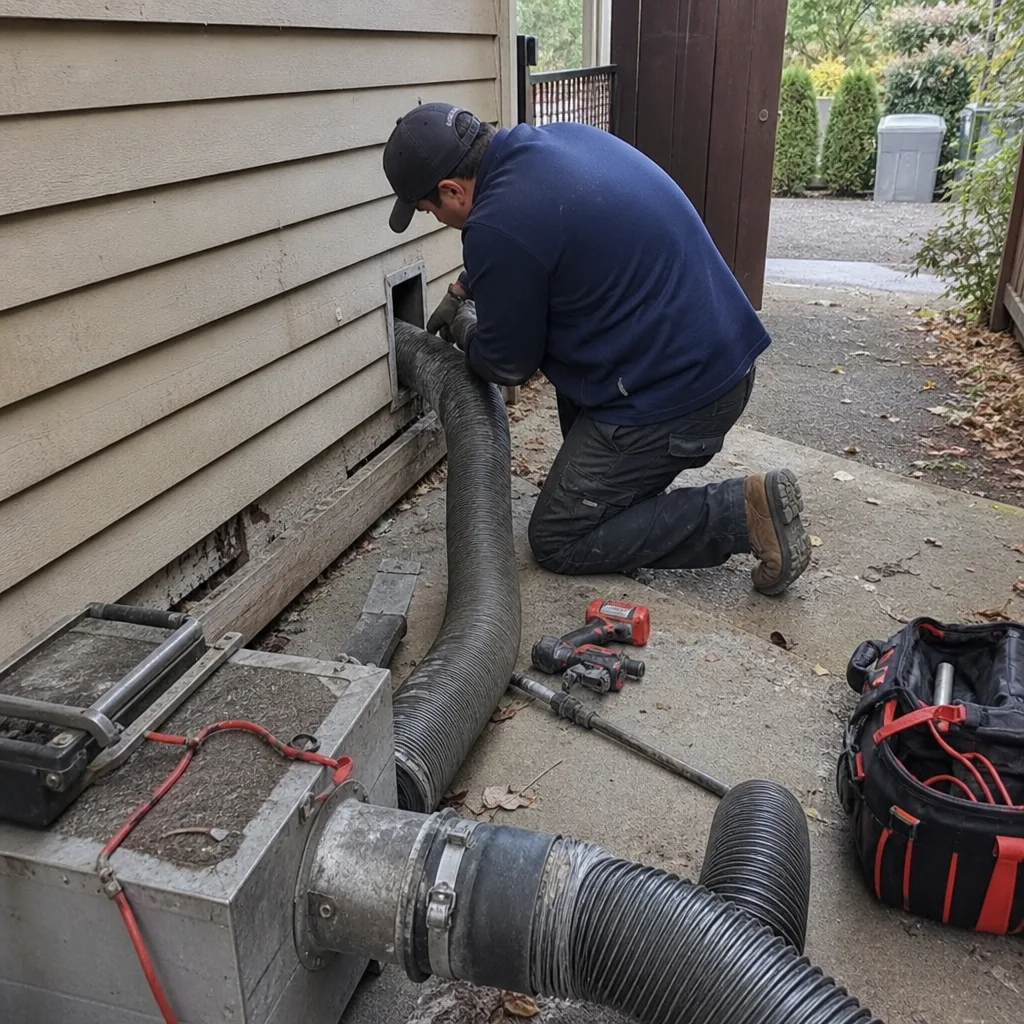 Before
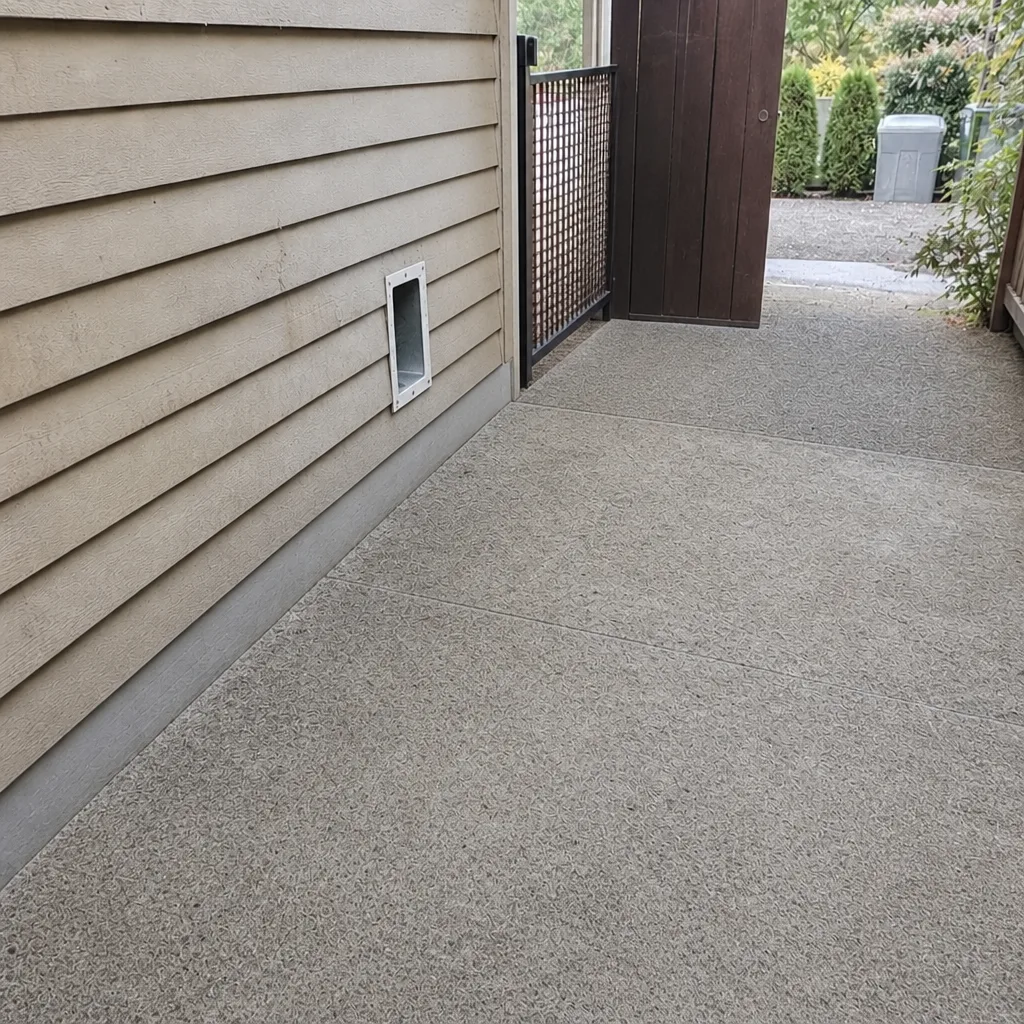 After
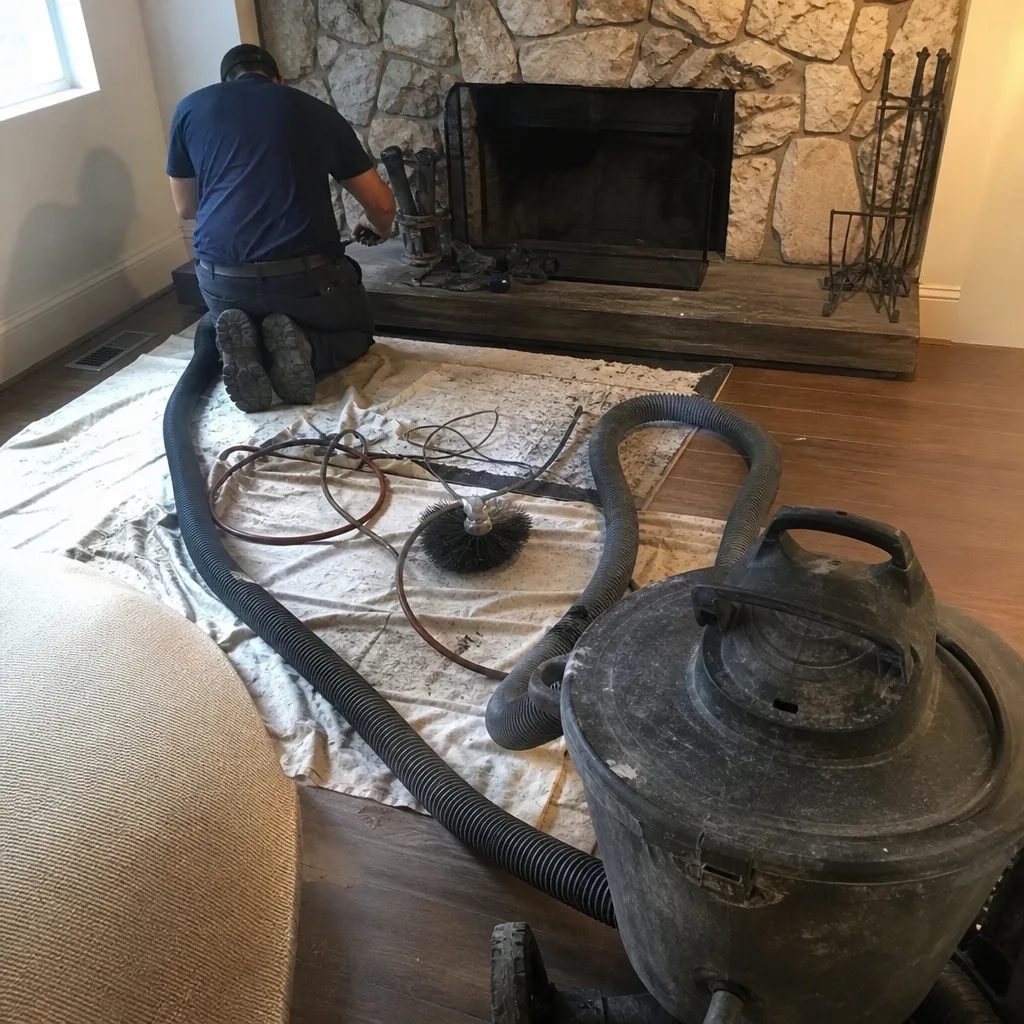 Before
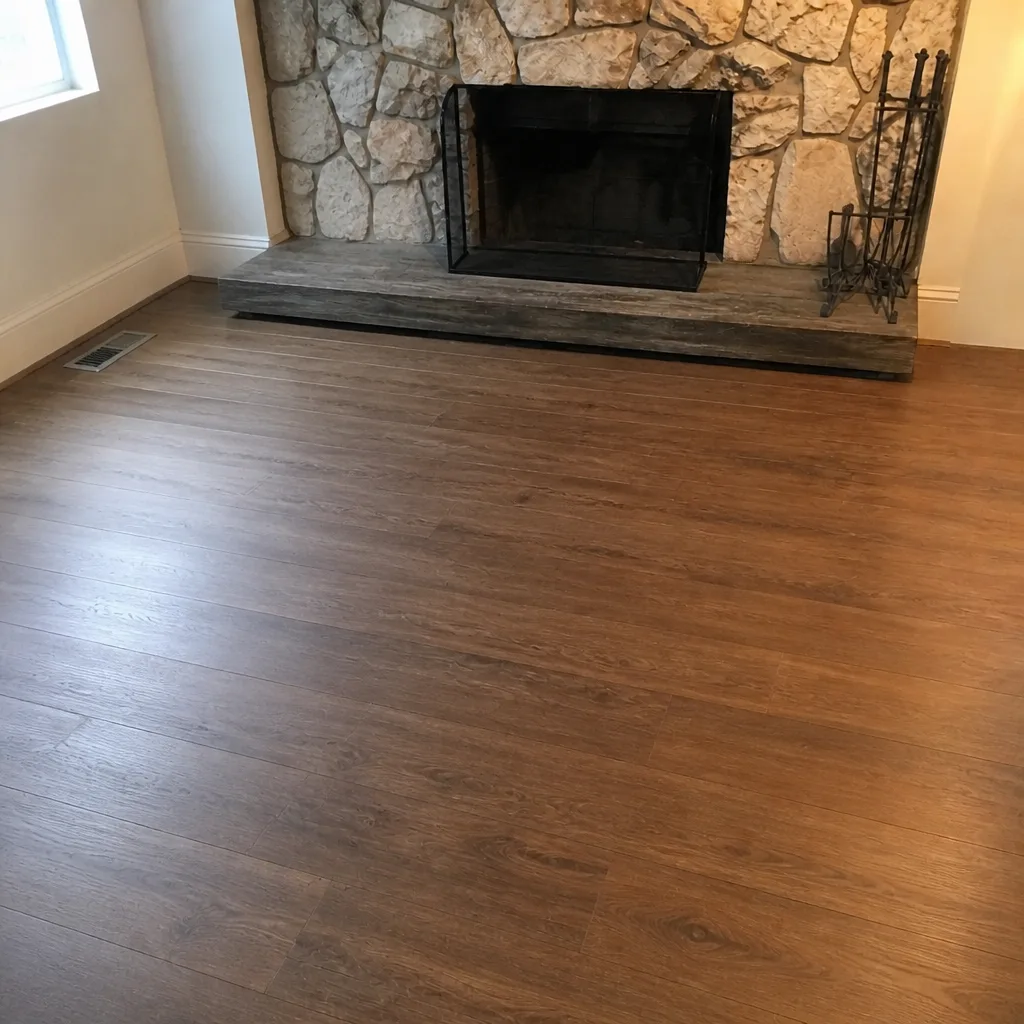 After
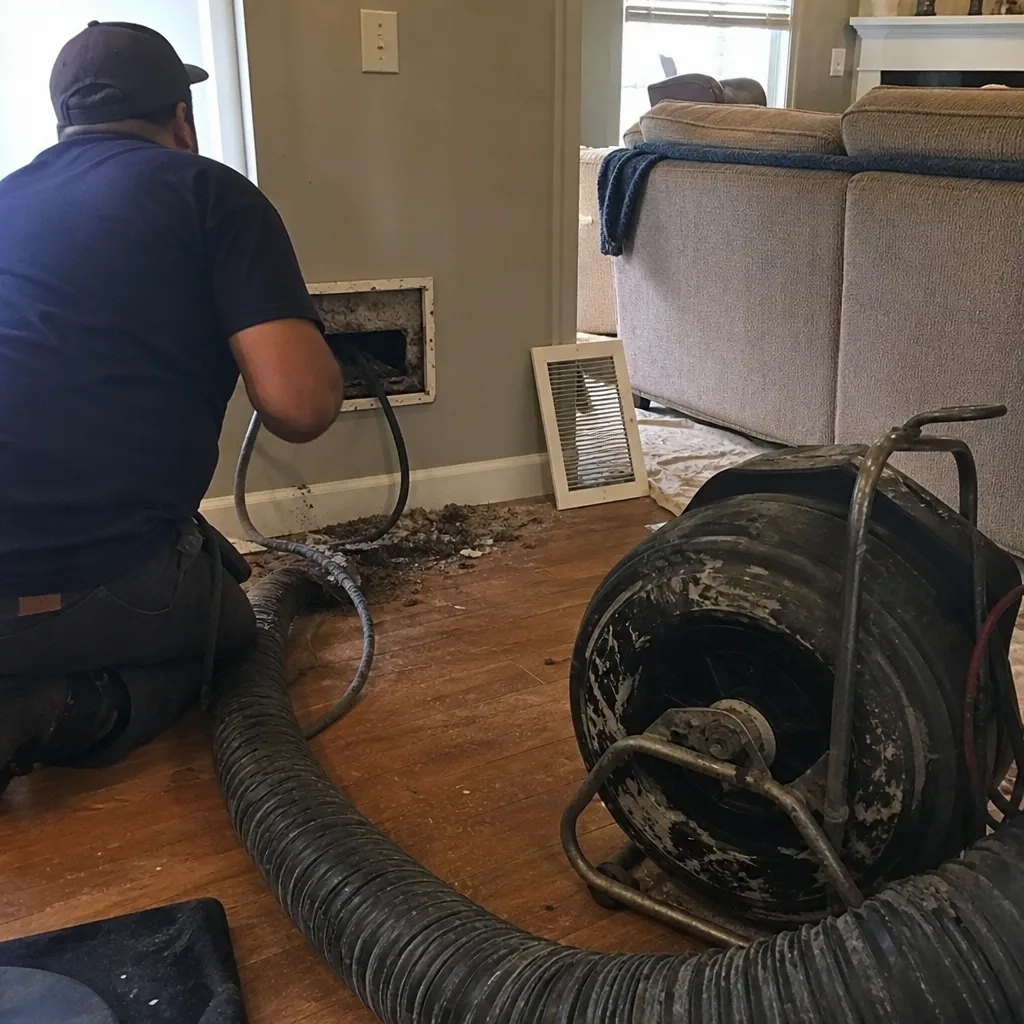 Before
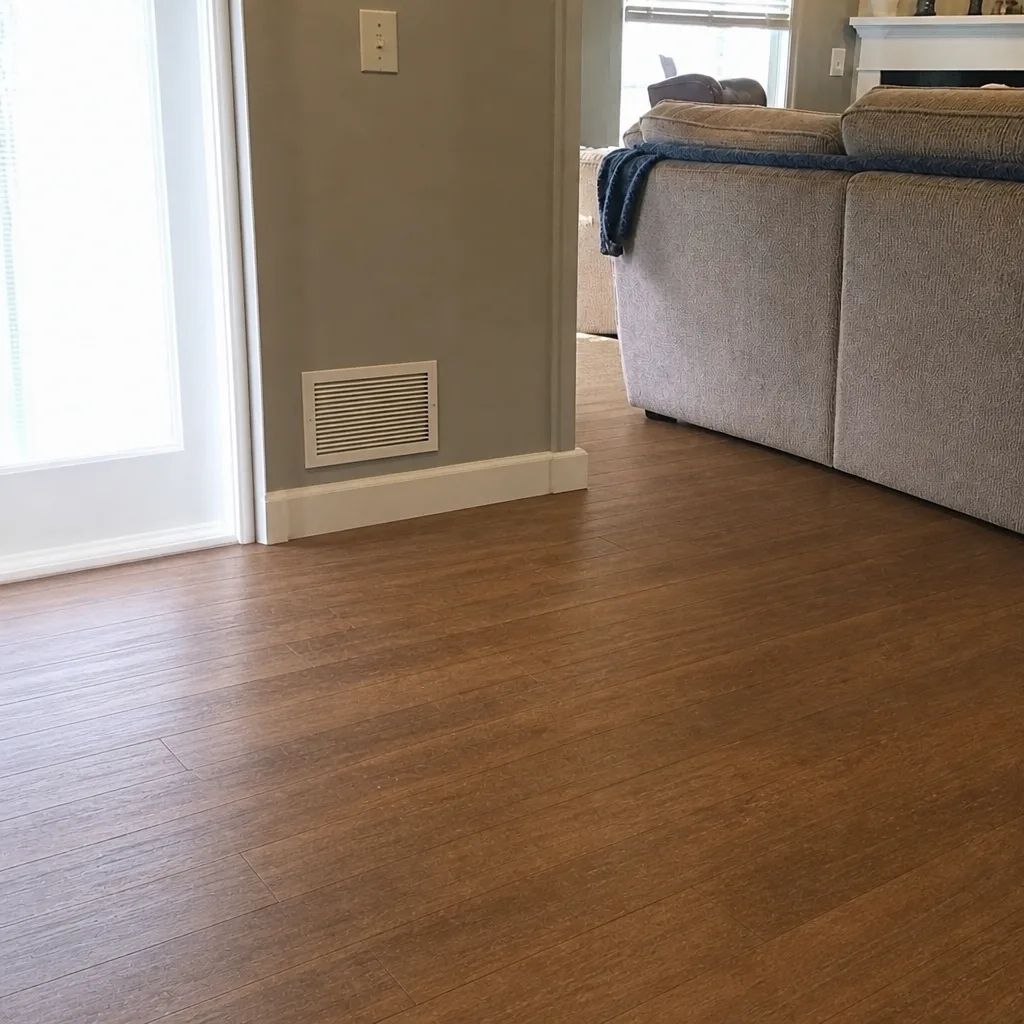 After
Frequently Asked Questions
The earliest signs are uneven room temperatures, a musty odor only during the first heat cycle of the day, indoor-only allergy flare-ups, and dust settling faster than it used to. Visible dust at registers is a late sign. If two or more of the early patterns have lasted a month, book a scope inspection. Call (877) 492-3883. We answer 24/7. A free estimate from Redmond Air Duct Cleaning Pros is the fastest way to know what you’re dealing with.
For most Redmond homes, every three to five years is the working range, sooner for homes with pets, recent renovations, or flex duct in a crawl space. A newer sheet metal trunk-and-branch system with sealed joints can go longer. A ranch home with aging flex duct often needs a scope every two or three years. What matters more than the calendar is the pattern of early signs on this page.
Yes. Newer Redmond construction tends toward sheet metal trunk-and-branch systems with short flex runs and mastic-sealed joints. The warning signs skew toward pressurization and dust rather than biological growth: whistling vents, dust on closet drywall above a trunk line, gaps at register boots. Older ranch homes with long flex runs in crawl spaces show more moisture and biological signs. Call (877) 492-3883 if you’re not sure which category your home falls into.
An air quality monitor can tell you whether something in the system is being disturbed into your air. It can’t tell you whether the source is biological or particulate, and it’s not a substitute for a professional scope inspection. Position it near the main return air register, log two weeks, and compare indoor readings to outdoor readings on the same days. That’s the useful signal. Call (877) 492-3883. We answer 24/7 for a free estimate in Redmond.
When there’s active biological growth on structural surfaces inside the air handler, the plenum, or the duct interior that’s already lost its structural integrity. Duct cleaners can clean and sanitize; licensed mold remediation on structural surfaces is a different trade. A good inspection will flag this up front so you’re not paying for a clean that won’t solve it. Redmond homeowners can call (877) 492-3883 for a free scope inspection to find out which side of that line they’re on.
Because the equipment and scope are different. A low quote often means a shop vac and a brush rather than a Rotobrush or Nikro agitation system, no Abatement Technologies filtration running during the work, and no scope camera or written findings. A cheaper job that leaves the return trunk and coil untouched costs less because it’s doing less. Call (877) 492-3883 for a free estimate. We answer 24/7, and the price we quote is the price set by the written estimate.
The Bottom Line
The warning signs worth watching for in a Redmond home are the early patterns: uneven temperatures, a first-cycle musty smell, indoor-only allergy flare-ups, faster dust settling. Visible dust at the register is a late indicator, not an early one. Older ranch homes with flex duct in crawl spaces show moisture and biological signs; newer sheet metal systems show pressurization and dust patterns. When two or more early signs persist for a month, book a scope inspection and get written findings. The problem is worth catching before it reaches the coil or blower. Redmond Air Duct Cleaning Pros offers free estimates in Redmond. Call (877) 492-3883. We answer 24/7. Fast dispatch from 7am to 7pm, Sunday through Friday.
Written by the team at Redmond Air Duct Cleaning Pros.