
Nikro Air Duct Cleaning in Redmond: A Homeowner’s Guide
Most homeowners assume all duct cleaning equipment is roughly equivalent: a vacuum is a vacuum, and the brand name on the side of the machine is just marketing. It isn’t. Nikro builds equipment specifically for duct hygiene work, and its negative-pressure systems move air at ratings a shop vac can’t touch. That performance gap is exactly what gets left behind in your ducts. If you’d rather skip the homework and just get it done right, call (877) 492-3883 for a free estimate.
What Nikro Equipment Is Actually Built to Do
Nikro Industries makes machinery for one job: pulling debris out of a duct system and capturing it so it doesn’t end up on your floor or back in the air supply. Two pieces of that system matter most in a Redmond home.
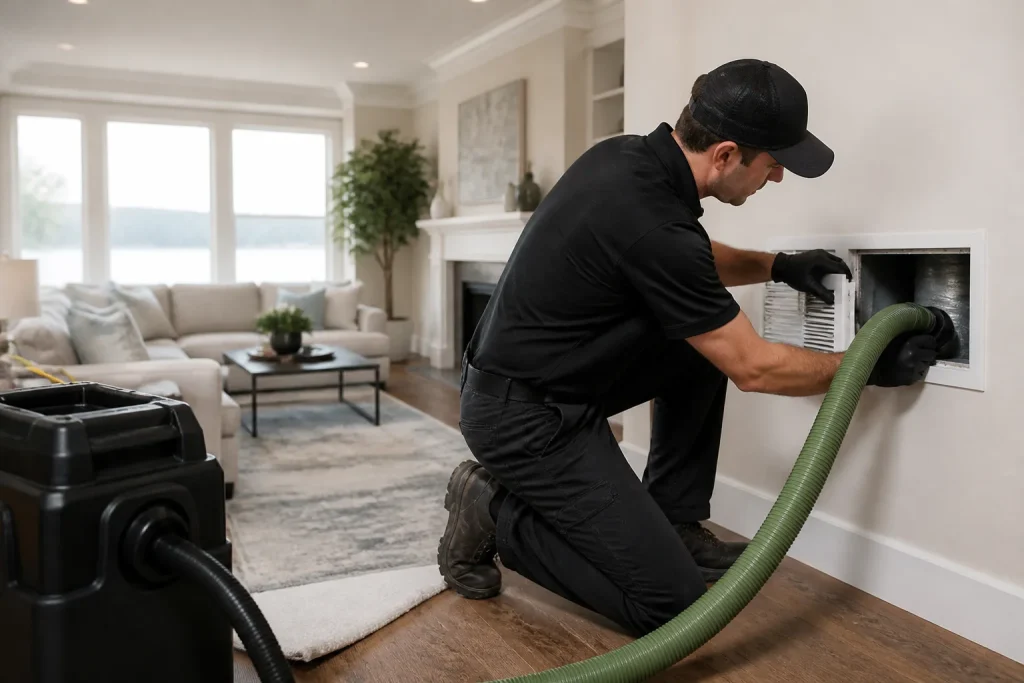
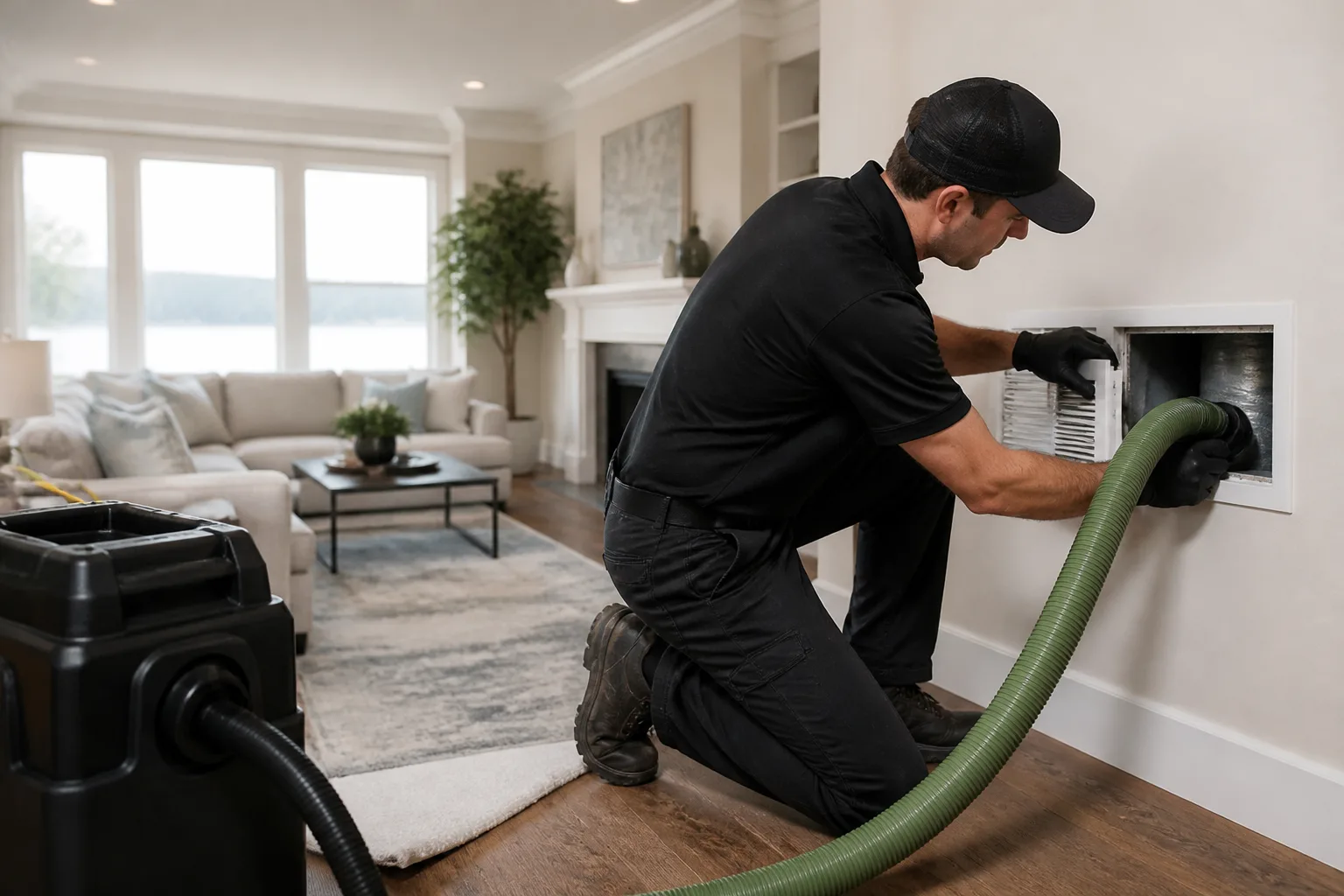
The first is the negative-pressure machine. It’s a high-volume vacuum that attaches to the main trunk line and puts the entire duct system under suction. Every supply and return becomes a straw pulling inward. The second is the contact vacuum, a smaller tool that runs along the interior surfaces of the ducts, loosening what’s stuck to the walls so the negative-pressure unit can carry it away.
What separates Nikro from a general-purpose wet/dry vac rig is airflow and filtration. A shop vac has enough pull to lift loose dust near the register. It doesn’t have enough sustained volume to move compacted debris down a twenty-foot run of flex duct, and it doesn’t have the multi-stage filtration to keep what it does pick up from cycling back into the room. The particulate a proper extraction system removes is the same material that drives dust buildup on furniture, musty smells when the system kicks on, and symptoms in allergy-prone households. When the suction is weak, that material stays put, gets stirred up a little, and resettles. You paid for a cleaning that mostly moved dirt a few inches.
We run Rotobrush and Nikro systems because the machinery sets the ceiling on what any cleaning can achieve. Better equipment doesn’t guarantee a better job on its own, though. That’s the next question.
How to Tell a Technician Is Using Nikro Properly, Not Just Owning It
Owning the equipment and running the full process are two different things. A truck can carry a Nikro unit and a technician can still skip the steps that make it work. Here’s what a properly run job looks like, in order:
- System inspection first. Before any suction starts, the technician checks the air handler, the main trunk, and accessible runs for disconnected joints, crushed flex, or signs of pest intrusion. Cleaning a broken system just blows debris into the gap.
- Negative pressure established and verified. The main vacuum hooks to the trunk and runs before any agitation begins. If you can feel air pushing out of a register while they’re working, pressure isn’t set right.
- Every vent covered or connected. Supply and return registers are either tied into the vacuum or sealed. Registers left open bleed pressure and leave runs uncleaned.
- Contact agitation on each run. The contact vacuum and air whips travel the length of every accessible duct. This is the slow part, and it’s the part cheap jobs skip.
- Containment during the whole process. Abatement Technologies air filtration units capture dislodged debris at the source rather than redistributing it into the living space. If you see a filtration unit staged in the hallway, that’s a good sign.
- Before-and-after photos of your own ducts. Ask for them. A technician using Nikro-grade extraction should be able to show you what came out and what the interior looks like now.
Those six checkpoints are what to ask about before you book, not after. A provider who can’t walk you through them in plain language is telling you something.
Why Redmond’s Older Housing Stock Responds Well to Nikro-Grade Extraction
A lot of Redmond’s housing was built between the 1980s and the early 2000s, and a large share of those homes still run original flex duct. Flex duct has a corrugated interior, and those ridges are shelves. Dust, pet hair, and construction debris settle into the grooves and hold on through ordinary airflow. Over years, the ridges fill and the duct’s effective diameter shrinks.
This is where equipment grade stops being abstract. A low-volume vacuum glides over the ridges and lifts only what’s loose on top. The higher sustained airflow of a Nikro negative-pressure system, paired with contact agitation that works the corrugation, is what actually breaks that layer free. The same logic applies to the return side, which in older Redmond homes is often a single panned joist cavity rather than a proper duct. Those cavities collect everything the filter misses, and they’re one of the first things we check on an inspection.
It isn’t only age, either. Redmond sits in a climate with wet winters and a long shoulder season where the heat runs intermittently. That on-and-off cycling pulls moist outside air across cool duct surfaces, and over time that’s a recipe for the musty smell homeowners describe when the furnace first kicks on in fall. Extraction at Nikro-grade airflow is what clears the settled material behind that smell; a light pass with weaker equipment won’t get to it.
Portable Nikro Units vs. Truck-Mounted Systems: Which Job Needs Which
Both setups use the same negative-pressure principle. The question is scale.
- Truck-mounted systems generate the highest sustained airflow and handle whole-house jobs, large trunk lines, and heavy debris loads. They suit a full-system cleaning where every run gets connected at once.
- Portable Nikro units are self-contained and reach places a truck hose can’t, like a second-floor air handler closet, a tight crawlspace, or a condo where there’s no driveway access to the mechanical room. They’re often used for targeted work: a single problematic run, a dryer vent line, or a follow-up pass after repair.
A good provider brings the right machine for the layout of your home, not whichever one is easiest to unload. If a company shows up with only one portable unit for a full 2,400-square-foot house with a long trunk run, ask how they’ll maintain pressure across the whole system. That’s a fair question in Redmond, where a mix of single-family homes, townhomes, and older split-levels means no two jobs are laid out the same.
If a cleaning turns up a crushed run or a disconnected joint, cleaning alone won’t fix it. Duct repair and sealing is what closes the gap so the next cleaning actually holds. Clean ducts, sealed ducts: the two go together.
Questions to Ask Any Redmond Provider Before You Book
Price is the easy thing to compare and the least useful. These questions get you further:
- What equipment brand do you run, and is it Nikro, Rotobrush, or another system built for duct work?
- Will you establish negative pressure on the main trunk before you start, and how will I know it’s set?
- Do you use containment filtration during the job so debris doesn’t end up in my living space?
- Do you inspect the system first and tell me what you find before cleaning?
- Will I get before-and-after photos of my own ducts?
- If you find a crushed run or a disconnected joint, can you repair and seal it, or do I need a second company?
- What’s the flat price for the whole system, agreed before work starts?
That last one matters more than any other. This trade has a bait-and-switch reputation for a reason: a low coupon figure that turns into a much larger invoice once the technician is on site. One flat price per system, agreed in writing before work begins, with no per-vent pricing, is the honest structure. If a quote is dramatically lower than the rest, ask what’s missing from it. The answer is usually the agitation step, the containment, or the square footage.
We use Honeywell and Aprilaire product lines where filtration and system components come into play, and Guardsman-backed sanitizing treatments when an odor problem calls for a named, traceable product rather than a generic spray. If you want the full picture of what a cleaning involves from the vent cover to the air handler, our air duct cleaning page walks through the process, and dryer vent cleaning covers the fire-safety side that duct-only services skip.
When to call a pro
Some of this you can check yourself: swap the filter, look behind a register cover, notice whether the musty smell is worse when the system starts. But once you’re looking at a full-system cleaning, duct repair, or anything involving the air handler, the equipment and the process are what decide the result. That’s a job for a trained technician. Our technicians have up to 12 years of experience, and we’d rather you ask the questions above of any provider, including us, than book on price alone. Professional-grade equipment, residential pricing, and one flat price per system agreed before work starts.
Related services in Redmond: HVAC cleaning for the air handler and coils, and Redmond Air Duct Cleaning Pros for the full service menu, which also covers air quality sanitizing and duct repair and sealing.
The Bottom Line
The brand on the machine matters because airflow and filtration set the ceiling on what any cleaning can remove. Nikro equipment is built for duct hygiene work, and it does more than a general-purpose vacuum can. But equipment alone isn’t a job well done. What to look for:
- Negative pressure established on the main trunk before any agitation starts
- Containment filtration running during the work, so debris is captured rather than redistributed
- Contact agitation on every accessible run, including the corrugated flex duct common in 1980s-2000s Redmond homes
- Before-and-after photos of your own ducts
- A flat price per system, agreed in writing before work begins
If you’re in Redmond and need help, Redmond Air Duct Cleaning Pros offers free estimates. Call (877) 492-3883. We answer 24/7. Fast dispatch from 7am to 7pm, Sunday through Friday. Breathe the difference.
Frequently Asked Questions
Yes. Nikro negative-pressure systems move far more sustained airflow and use multi-stage filtration a shop vac doesn’t have, which means they can pull compacted debris out of a duct run instead of just lifting loose dust near the register. The difference shows most in older flex duct, where debris settles into the corrugation. Call (877) 492-3883 for an exact quote on your system; estimates are free.
It’s priced per system by a written estimate, not per vent, because the size and layout of the ductwork determine the job. Ask any provider for a flat, whole-system figure before work starts and be wary of a quote that’s dramatically lower than the others; it usually means the agitation or containment step is missing. Call (877) 492-3883 for an exact quote; estimates are free.
Ask for before-and-after photos of your own ducts, taken during the job. A technician running proper Nikro-grade extraction can show you what came out of the system and what the interior looks like afterward. Walking through the six checkpoints above before you book is the other way to protect yourself. Call (877) 492-3883 to talk through your home’s layout.
It depends on the home. A house with pets, recent renovation dust, or original flex duct from the 1980s to 2000s tends to need it sooner than a newer build with a well-maintained filter. Visible dust at the registers, a musty smell when the system starts, or a rise in allergy symptoms are the signals worth acting on. Call (877) 492-3883 for an assessment; estimates are free.
Written by the team at Redmond Air Duct Cleaning Pros.
Need Air Duct Cleaning Help?
Call Redmond Air Duct Cleaning Pros - the local pro we connect you with is licensed and insured, with free written estimates in Redmond.
(877) 492-3883