
Last updated November 25, 2026
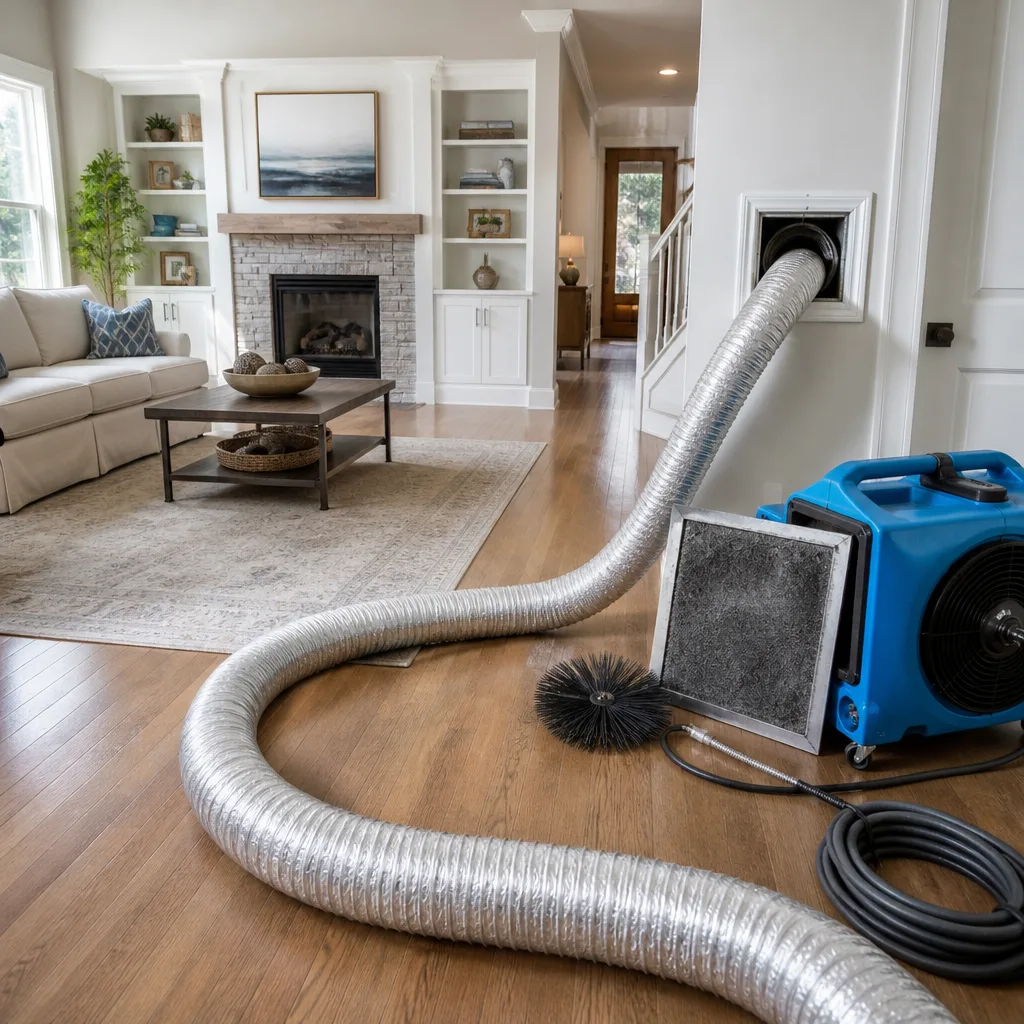 Whole-home duct cleaning
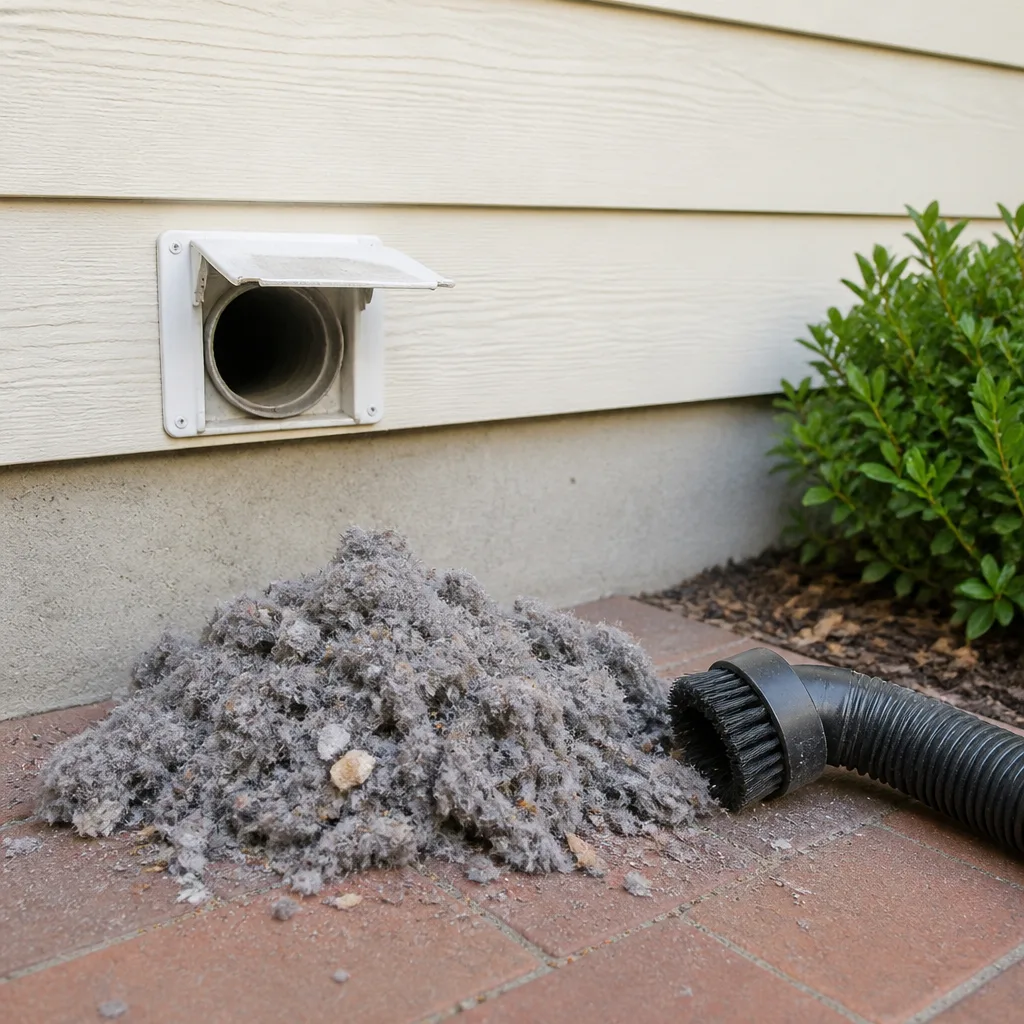 Dryer vent cleaning
 Camera inspection
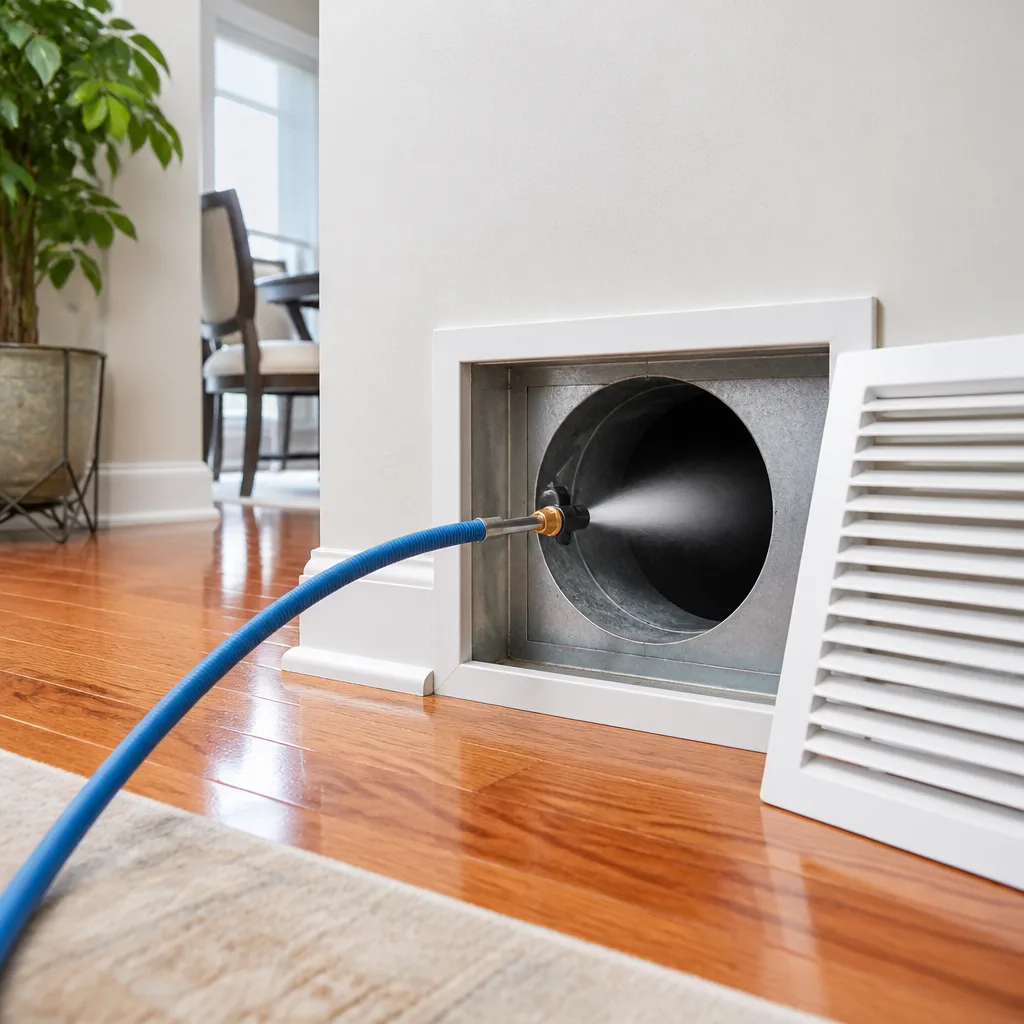 Sanitizing & deodorizing
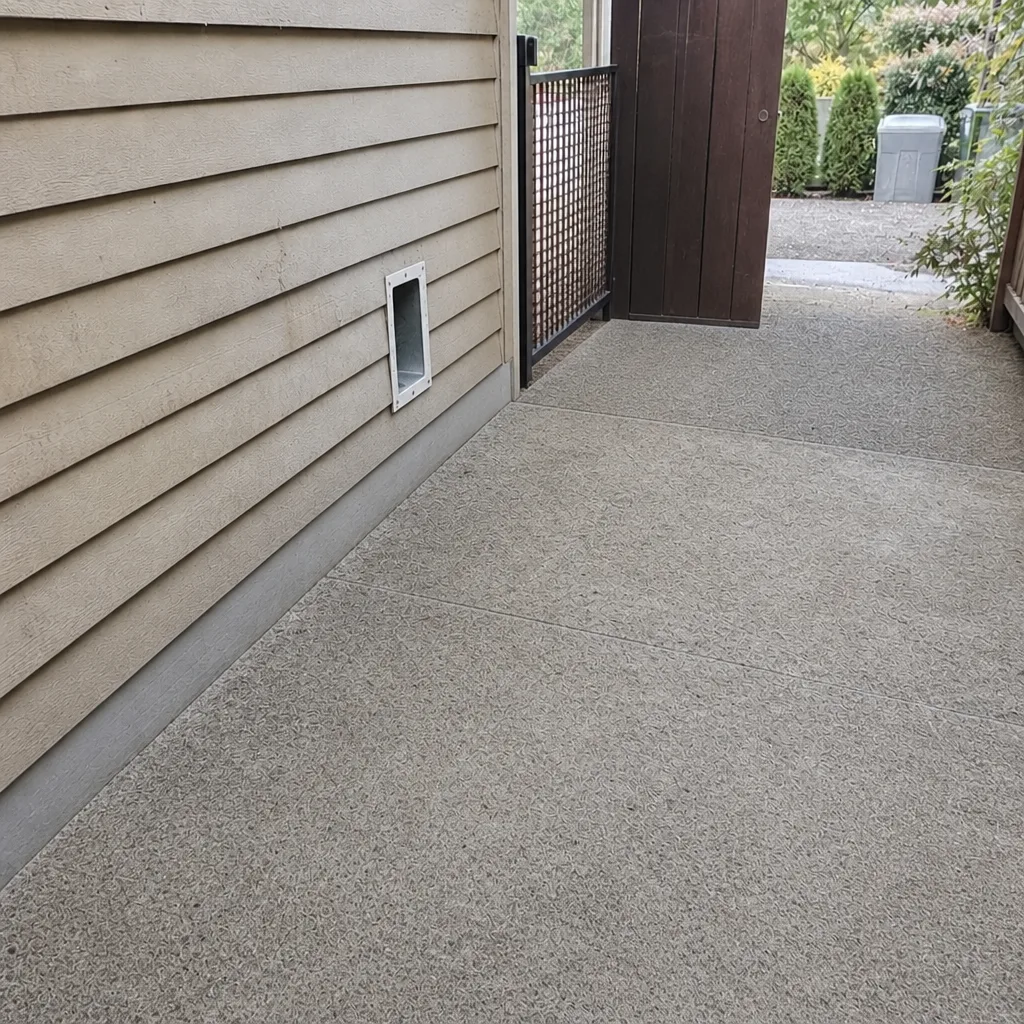
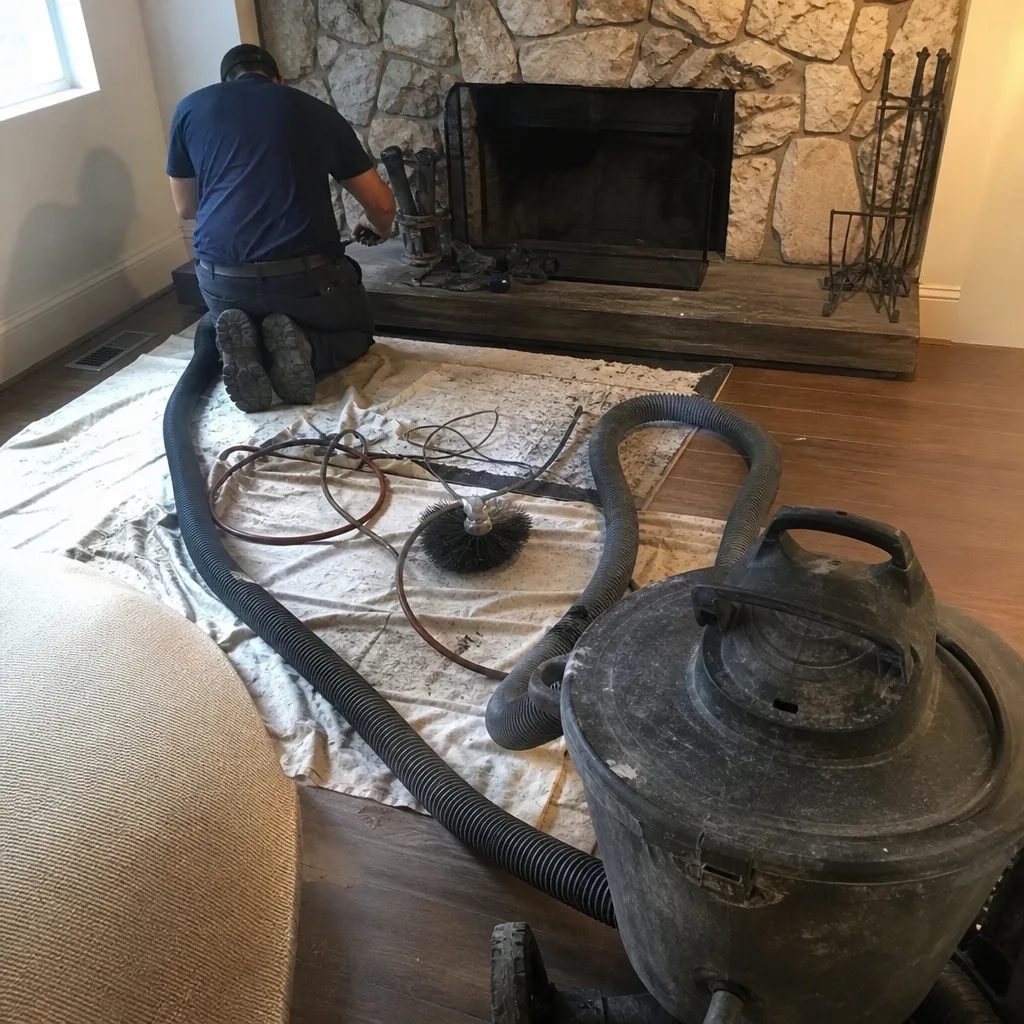
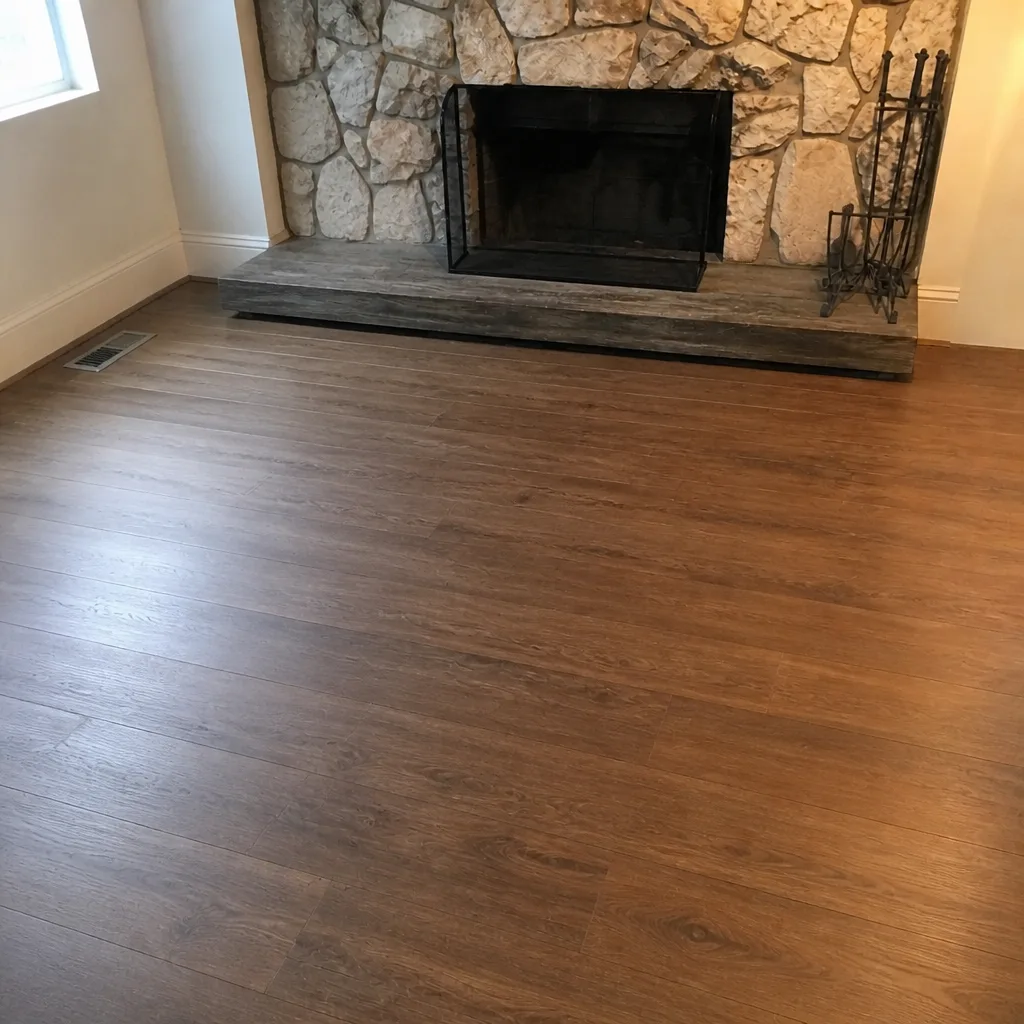
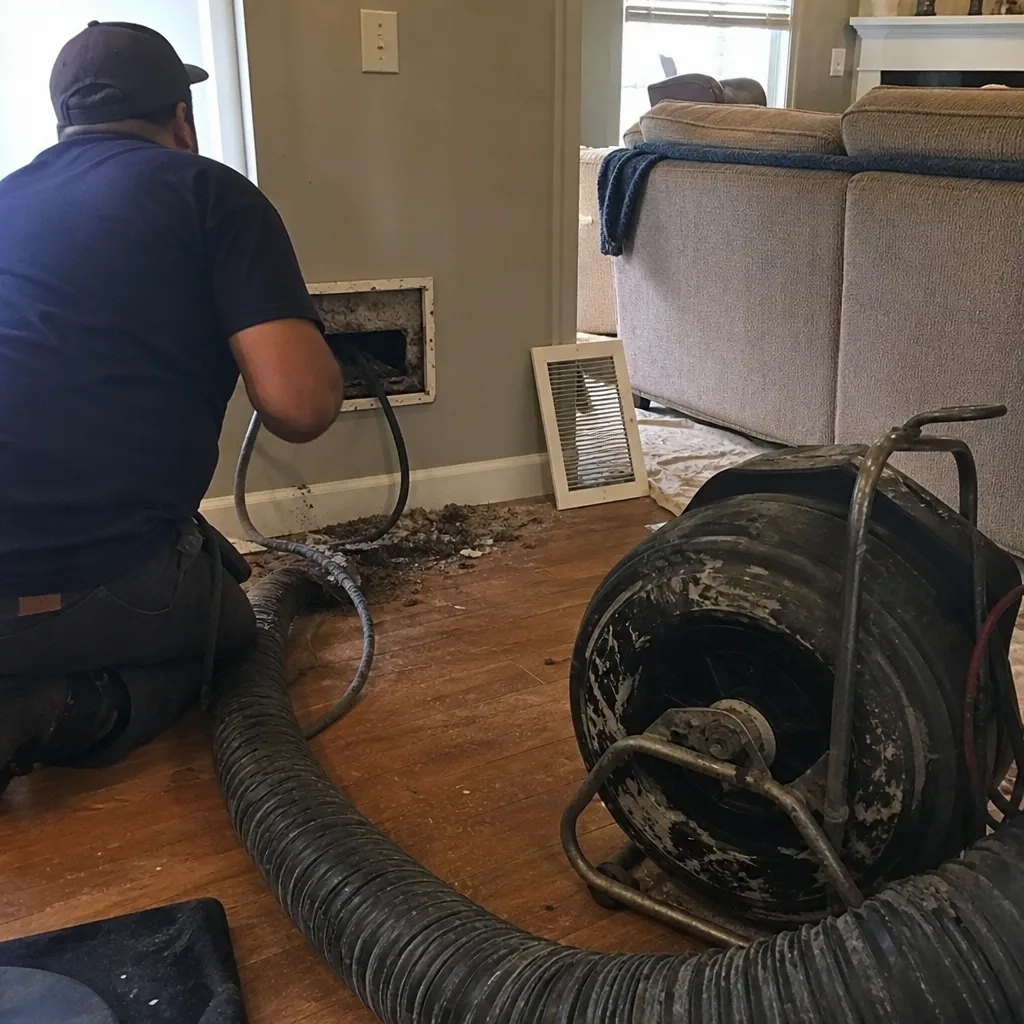
Whole-system duct and dryer vent check with before-and-after photos - you see exactly what came out of your vents
That "$99 whole-house special" is a bait ad - the real number appears once they are in your hallway, or the "clean" is a shop-vac at the register. We photograph the inside of your ducts before and after instead.
Seasonal Air Duct Cleaning Care for Redmond: Year-Round Homeowner’s Guide
Most homeowners we talk to in Redmond schedule duct cleaning the way they schedule a furnace checkup: once a year, whenever it comes to mind, usually when the first cold snap hits in November. That single annual habit is the wrong framework for a climate like ours. Redmond’s four seasons each put a different kind of stress on a duct system. Late-summer wildfire smoke pushes ultrafine particulate through returns running in cooling mode. Our persistently wet winter air turns cold duct runs into condensation surfaces. Spring heating shutdown and summer AC startup each change how your system moves air entirely. In this guide we’ll map each season to the condition it creates and the action that actually prevents damage, so you can build a duct calendar that fits your home rather than the calendar on a brochure.
Quick Answer
Seasonal duct care in Redmond works best as four separate checkpoints, not one annual cleaning: a fall smoke-and-heating-startup assessment (September to November), a winter moisture watch (December to February), a professional deep cleaning in spring (March to May) once the heating season ends, and a summer AC-mode inspection tied to any regional smoke event. If you do only one professional cleaning per year, spring is the optimal window for most Redmond homes.
Styles & brands we work with
- Whole-home duct cleaning
- Dryer vent cleaning
- Camera inspection
- Sanitizing & deodorizing
Table of Contents
- Why Redmond Ducts Follow a Different Seasonal Clock
- Fall (September to November): Wildfire Aftermath and the Transition to Heating
- Winter (December to February): Wet Air, Condensation, and Microbial Risk
- Spring (March to May): The Optimal Professional Cleaning Window
- Summer (June to August): Cooling Mode, Condensate Pans, and Smoke Events
- How to Build a 12-Month Duct Calendar for Your Home
- Signs Your Ducts Need Attention Now, Not Next Season
- Common Mistakes to Avoid
- When to Call a Professional
- Frequently Asked Questions
Why Redmond Ducts Follow a Different Seasonal Clock
Redmond sits in a climate that confuses duct systems more than it damages them. We don’t get deep sustained cold. What we get is a long, wet, mild winter, a short burst of genuine heat in summer, and a late-summer smoke season that has become reliable enough to plan around. Those three conditions interact, and the interaction is what most homeowners miss.
Here’s the core pattern. For roughly five to six months a year, a Redmond duct system is running in heating mode with a house sealed tight against rain. Then by June, that same system flips to cooling, and by September the return air is pulling from a smokier outdoor environment while the system is still trying to cool. Each transition changes what’s inside the ductwork and what’s growing there.
A single “once a year” cleaning lands at a random point in that cycle. In our experience, homes that get cleaned on a seasonal logic rather than a calendar logic come out noticeably cleaner, because the intervention happens just before a stress period rather than in the middle of one.
- Heating season: five to six months of continuous warm-air circulation with the house closed up.
- Cooling season: shorter, but returns pull more outdoor air into a closed system when windows are shut against heat.
- Smoke season: late summer, when regional wildfire smoke reaches Redmond from Eastern Washington, and the system is running in cooling mode.
- Wet season: our winter humidity is persistent, not extreme, which is exactly the condition that keeps duct surfaces damp rather than drying them out.
If you want the technical context on what accumulates inside a system over all of that, our guide to air duct cleaning covers the mechanics. This page is about timing.
Fall (September to November): Wildfire Aftermath and the Transition to Heating
September is Redmond’s highest-risk month for duct contamination, and it’s not because of heating season startup. It’s because late summer is when wildfire smoke from Eastern Washington pushes ultrafine particulates into a cooling-mode system whose return air is still pulling from the outdoors. The filter catches some of it. Ultrafine particulate is small enough that much of it doesn’t stay on the filter, and it deposits along the duct walls while the system is still moving cool air.
What Happens in September and October
Then the transition happens. Somewhere in late September or October you turn off cooling and turn on heat. That’s the moment a season’s worth of smoke deposition gets lifted back into the airstream, because heating mode moves warmer, drier air across surfaces that have held fine particulate all summer. If you have ever noticed a smoky or dusty smell the first few times the furnace runs in autumn, that is the transition doing its work.
The window that homeowners consistently miss is right here: a duct assessment done between the end of smoke season and the first sustained heating week. It’s a short window, and it’s the one that matters most in our climate.
The Fall Transition Inspection: 4 Steps
- Assess the season. If Redmond had visible smoke days that summer, plan a smoke-affected assessment rather than a routine check.
- Check the filter and housings. A filter that went into summer fresh and came out grey-and-rough needs replacing, and the housing around it usually tells you how much got past it.
- Look at return grilles and supply registers. A thin grey film on return grilles after a smoke summer is a signal that particulate coated the duct interior too.
- Decide on a cleaning before the heating season is fully underway. Cleaning after the first month of heating often redistributes what was already circulated.
For homeowners who want the deeper system context, our HVAC cleaning page explains why the air handler and coil are part of the fall picture, not just the ducts.
Why the Fall Transition Is Easy to Miss
Most homeowner calendars treat autumn as a landscape season, not a duct season. Raking, gutters, planting. Ductwork is invisible, so it slides. But the fall transition is when a cooling-season accumulation becomes a heating-season exposure, and it’s the one point in the year where a moderate cleaning job can prevent a much larger one later.
Winter (December to February): Wet Air, Condensation, and Microbial Risk
Redmond’s winters aren’t cold in the way that cracks pipes, but they are wet in a way that affects ductwork more than most homeowners expect. The pattern that matters is condensation. When warm air from a running furnace meets a colder duct surface, moisture forms. In a drier climate that moisture evaporates overnight. In our wet winters, it doesn’t fully evaporate, and duct surfaces can sit slightly damp for long stretches through December, January, and February.
What Condensation Does Inside a Duct
Damp is half of what microbial growth needs. The other half is organic material, and that comes from dust, skin cells, pet dander, and the fine organic fraction of outdoor air. Put the two together and you get the musty odour that some Redmond homeowners notice in midwinter but can’t trace. It’s not the furnace, and it’s not the bathroom fan. It’s usually the duct lining or the coil plenum.
Heating runtime patterns make this better or worse. Homes with a modern modulating furnace or a heat pump running long cycles at moderate output move enough warm air to keep ducts drier. Homes with an older single-stage furnace that runs in short, hot bursts produce repeated warm-damp-cool cycles over a duct surface, and that’s the more problematic pattern.
- Watch for: stale or musty smell when the system starts, especially in the first cycle of the day.
- Watch for: family members with allergy symptoms that flare in December and January rather than spring.
- Watch for: condensation on interior duct runs that pass through unheated spaces such as crawlspaces or garages.
- Watch for: a return plenum that stays cool because the system rarely runs long enough to warm it through.
What Helps in Winter
Winter is not the season for a full cleaning in most homes. It’s the season for inspection and for moisture management. A proper professional assessment can identify whether microbial growth is present and where it’s concentrated, and a sanitizing treatment with a named, traceable product is the right response when it is. Redmond Air Duct Cleaning Pros uses Guardsman-backed sanitizing treatments rather than a generic spray, which matters if you ever need to know exactly what was applied.
What we’d steer you away from in winter is guesswork. A smell alone doesn’t tell you whether the problem is a damp duct, a failing humidifier, or a coil plenum. That’s inspection territory, not DIY territory.
Why the Winter Window Isn’t Just About Mold
The wider winter concern is that Redmond’s wet season keeps outdoor humidity in a range that supports slow microbial growth without any dramatic water event. No flood, no leak, no obvious sign. Just a long stretch of damp that quietly adds up. Homes that skip every winter inspection and clean only in spring sometimes find that a growth problem has been present for months, and that the spring cleaning is doing repair work, not just maintenance work.
Spring (March to May): The Optimal Professional Cleaning Window
If you’re going to do one professional duct cleaning per year in Redmond, spring is the season. The heating season is over, the cooling season hasn’t started, the moisture from winter is drying out, and any particulate deposited over the previous twelve months is sitting in the ducts without a system actively stirring it. Cleaning during this window catches the accumulation before it becomes a summer problem and before the next heating cycle picks it up.
Why Spring Beats the Other Seasons
- System mostly idle: less redistributing of dislodged debris into living areas while work happens.
- Ducts dry out: a spring clean sits on relatively dry duct surfaces, so a sanitizing treatment applied after cleaning has the right starting conditions.
- Time to fix: if the cleaning uncovers a duct repair or sealing job, there’s schedule room before the cooling season puts load on the system.
- Pairs with HVAC service: air-handler and coil service in spring lines up naturally with a duct cleaning, so the whole system is in a known state heading into summer.
This is the season where professional-grade equipment matters more than at other times of year. We run Rotobrush and Nikro systems, and during a spring clean we use Abatement Technologies air filtration on site so that dislodged debris is captured rather than redistributed around the house. If a company shows up without that kind of filtration during a spring removal job, it’s worth asking exactly what they use.
Timing the Cleaning Around HVAC Service
The cleanest sequence for most Redmond homes is:
- Book your HVAC service first in March or early April, so the technician can note the coil and air-handler condition before the ducts are touched.
- Schedule the duct cleaning after the HVAC service, so any findings from the coil or plenum inspection feed into the duct scope.
- Address duct repair and sealing in the same visit where possible, so the system is sealed and clean together rather than cleaned and then re-opened for repair a month later.
- Sanitize after cleaning if the winter inspection found growth, so the treatment goes onto a clean surface.
If you notice musty odours or an unexplained rise in dust in spring, that’s usually the winter moisture picture announcing itself, and it’s a reasonable trigger to move the cleaning earlier in the season.
What Spring Cleaning Should Actually Cover
Redmond homes vary in scope, but a proper spring cleaning goes from the vent cover to the air handler, not just the branch ducts that are easiest to reach. That means every supply and return run, the air handler housing, and the accessible coil face. If you’re evaluating quotes, ask specifically whether the air handler is in scope, because that’s the most common thing a cheap quote quietly leaves out.
Summer (June to August): Cooling Mode, Condensate Pans, and Smoke Events
Summer puts different demands on the system than winter does. Cooling mode moves air the same way, but it also produces moisture at the evaporator coil, and that moisture runs down into a condensate pan. When the pan is functioning, that water exits. When it isn’t, the water sits. Sitting water in an air handler is one of the most frequent sources of microbial odour in Redmond homes, and it doesn’t announce itself as a leak, just as a smell when the AC starts.
What to Check in Summer
- Condensate pan and drain line: look for standing water, slime, or a drain line that has clogged. This is the most overlooked AC-mode duct interaction.
- Return air source: if windows are shut against heat, the return pulls proportionally more from any outdoor-air intake or leaks. That’s what brings smoke inside on a bad regional day.
- Filter condition: summer filters see more mass than they look like they do. Change or check on schedule during smoke season, not just on the usual calendar.
- Register airflow: if some rooms feel weak in summer compared to winter, it’s often a duct leakage issue catching up on a longer cooling run.
Smoke Event Response Protocol
When regional wildfire smoke reaches Redmond, the protocol is short:
- Close windows and doors and set the system to recirculate if it has that setting.
- Run higher-MERV filtration if your system supports it, and change the filter as soon as the event passes rather than waiting for the next scheduled change.
- Note the event on your home’s duct calendar. Multiple smoke days in one summer changes the fall assessment picture.
- Book a smoke-affected duct assessment if the summer had significant events, especially before heating startup.
We don’t advise running a system with an open return during smoke events, and we don’t advise trying to “flush” a smoke-loaded duct with a box fan or open windows. Smoke deposition happens over the length of the duct run, not just at the register face, and clearing it requires the right equipment. That’s a professional call.
Summer’s Odd Middle Ground
June, July, and August in Redmond are a strange mix of cool stretches and genuine heat waves. Some homes run the AC for days and then not at all for two weeks. That pattern is harder on duct hygiene than steady operation, because the system cools, the coil stays damp, and then the system sits idle and warm for a while. A short run time to dry the coil after use is a small habit that pays off in odour control.
How to Build a 12-Month Duct Calendar for Your Home
The generic four-season calendar above is a starting point. Your actual calendar should adjust for three factors: home age, system type, and occupancy. Two homes on the same street in Redmond can need different schedules, and that’s normal.
Home Age
Older homes, especially those built before the mid-1980s, often have duct systems that were not sealed to modern standards and may have more leakage at joints. Leakage pulls more from unconditioned spaces, and that changes both the deposition pattern and the priority of a sealing visit versus a cleaning visit.
Newer homes in Redmond are often tighter, which means internal moisture has less escape. Tight homes benefit from more attention to internal moisture and less to outdoor dust infiltration. A home built in the last fifteen years usually needs the winter inspection more than a home from the 1970s.
System Type
- Forced-air furnace: steady seasonal pattern, spring cleaning plus fall transition assessment fits well.
- Heat pump: longer run times in both seasons mean the ducts are more continuously loaded with airborne material. Two cleanings a year is more common.
- Ductless splits: far less duct volume, but head-unit filters need monthly attention and don’t follow a duct calendar at all.
- Zoned systems: dampers concentrate airflow in specific branches, so the calendar should weight the branches that run longest.
Occupancy Factors
Three factors dramatically shift the calendar:
- Pets: pet dander is organic and holds moisture. Homes with pets usually want at least one additional inspection window per year.
- Allergies and asthma in the household: the priority shifts from seasonal timing to continuous filtration and cleaning, and the spring window should be protected rather than skipped.
- Renovation activity: any remodel with a system running puts construction dust into the ducts. If you’ve renovated in the last year, the spring cleaning becomes mandatory rather than advisable.
If you’re still not sure where your home sits, the fastest way to find out is an assessment rather than a guess. Redmond Air Duct Cleaning Pros offers free estimates in Redmond, and an initial walkthrough tells us which of the four seasons your home actually needs most.
Signs Your Ducts Need Attention Now, Not Next Season
The seasonal calendar prevents problems. Some signals override the calendar and mean you should act now, regardless of which season it is. These are the ones we look for first.
- Musty or stale smell when the system starts. This is the classic winter moisture signal, and it rarely improves on its own.
- Visible dust at registers within days of cleaning them. A deposit pattern that returns quickly usually means the duct interior is the source.
- Allergy symptoms that flare without a seasonal explanation. If the household is reacting in months when outdoor allergens are low, indoor sources usually need a look.
- Weak airflow in specific rooms. This can be duct leakage, a collapsed run, or an obstruction. Repair and sealing is the right response, not another cleaning.
- Any condensate water standing in the air handler. Small pan issues become microbial issues faster than most homeowners expect.
- Post-renovation dust that won’t settle. Construction dust gets into an open system and stays there, and it’s the most common reason we do a non-seasonal cleaning.
- Dryer taking longer than it used to. That’s a dryer vent cleaning issue, not a duct issue, but it’s the same visit and it’s a fire-safety concern worth taking seriously.
One rule we’d apply broadly: if a signal overlaps with a seasonal window, act in the window. If a signal sits outside the seasonal windows, act on the signal. The calendar exists to catch problems before they show up, not to override the ones that do.
Common Mistakes to Avoid
- Cleaning in one visit and never inspecting in any other season. The cleaning is one act; the seasonal inspection is what tells you whether next season needs a cleaning or a repair. Doing the clean without the inspection is doing half the job.
- Skipping the fall transition right after a smoke summer. If September had visible smoke days over Redmond, the ducts need an assessment before heating starts. Skipping this step is the most common way a Redmond home ends up with a smoky smell every time the furnace kicks on.
- Assuming a mild winter means no moisture risk. Our wet-but-not-frozen winters are exactly the condition that keeps duct surfaces damp for months. Mild is not the same as dry.
- Cleaning in spring but leaving a known duct repair for later. Clean ducts and sealed ducts belong together. A cleaning followed by months of leakage from the same joints is essentially cleaning a system that keeps re-contaminating itself.
- Ignoring the condensate pan in summer. A small pan issue is easy to miss and it’s one of the fastest paths to odour and microbial growth in the air handler plenum.
- Using a duct-only service that can’t inspect the air handler. Half the seasonal picture lives inside the air handler cabinet and on the coil face. If the quote only covers branch ducts, it’s missing the part where moisture and growth accumulate.
- Chasing a “one annual cleaning” discount without checking the equipment. The cleaning is only as good as the machinery doing it. Professional-grade systems and on-site air filtration during the job are what separate a real cleaning from a register vacuuming.
When to Call a Professional
Some of what happens in your ducts can be checked visually: filter condition, register dust, a return grille film, airflow in each room. But the problems that matter most in Redmond’s climate are inside the system, and they’re not visible from the outside. Musty smell in winter. Smoke odor lingering into fall. Weak airflow in a branch. A post-renovation dust that keeps returning. Any condensate water standing in the pan. Those are the cases where a professional assessment changes the outcome rather than just confirming what you already knew.
We use professional equipment because the seasonal conditions here call for it: Rotobrush and Nikro systems for the cleaning itself, Abatement Technologies filtration to capture dislodged material during service, and Honeywell and Aprilaire parts when a filter or humidifier component needs replacing. The spring window is the most efficient time to book a full cleaning, but if a signal is telling you something now, act now.
Redmond Air Duct Cleaning Pros offers free estimates in Redmond. Call (877) 492-3883. We answer 24/7. Fast dispatch from 7am to 7pm, Sunday through Friday.
Frequently Asked Questions
Once a year is right for most Redmond homes, and the best single window is spring, after heating season ends and before cooling season starts. Homes with pets, allergy sufferers, recent renovations, or a heating system that runs in short hot cycles often benefit from a second inspection window in fall, but the annual cleaning is the backbone. Call (877) 492-3883 for an exact quote. Estimates are free.
Spring is better as a full cleaning, because the heating season is over, the ducts are drying out, and the system is mostly idle. Fall’s real value is a smoke-aftermath assessment before heating startup, not a full cleaning in most cases. If September had significant wildfire smoke days over Redmond, do the fall assessment. If it didn’t, spring alone usually covers it. Call (877) 492-3883 if you’re not sure which applies to your home this year.
Duct cleaning in Redmond is priced per system, not per vent, and the total depends on the number of runs, the condition found during inspection, and whether the air handler is included. We don’t quote teaser figures or per-vent prices; the written estimate sets the final price, and the estimate is free. That’s the honest way to price a cleaning that varies this much by home. Call (877) 492-3883 for an exact quote.
Cheap quotes usually leave something out: the air handler, the filtration during service, the repair and sealing capability, or the equipment quality. A vacuum on a truck is a different job than a professional cleaning with proper on-site filtration. When a quote is dramatically lower than others, ask what the scope actually covers and what machinery is used. We’d rather you ask that question of any company, including us. Call (877) 492-3883 for a straightforward scope comparison.
Two things confirm it: before-and-after photos of your own ducts, and a written scope that specifies what was cleaned. A company that explains the before state and shows the after state is doing verifiable work. That’s why we photograph as we go rather than describing results after the fact. Call (877) 492-3883 to book an assessment and ask what the documentation looks like.
Our winters do affect ducts, but not in a dramatic way. It’s the persistence that matters: a long stretch of damp, mild air with a house closed against rain, and duct surfaces that don’t fully dry out overnight. That’s the condition that supports slow microbial growth without any water event. Winter inspections exist to catch it before spring cleaning has to repair it. Call (877) 492-3883 if you’ve noticed a musty smell before the furnace starts.
The Bottom Line
Seasonal duct care in Redmond isn’t one annual cleaning. It’s four checkpoints tied to four different stress conditions, with one professional cleaning placed at the optimal spring window. Fall is for smoke aftermath and heating transition assessment. Winter is for moisture inspection and, where needed, sanitizing. Spring is the cleaning. Summer is for cooling-mode and condensate checks, plus a response plan for wildfire smoke days. Fit that framework to your home’s age, system type, and occupancy, and you’ll prevent most of what we’re called out to repair. Call (877) 492-3883 for a free estimate, and we’ll map the calendar to your actual system. Professional-grade equipment, residential pricing, and clean ducts that stay clean because they’re sealed.
Written by the team at Redmond Air Duct Cleaning Pros.
See the difference
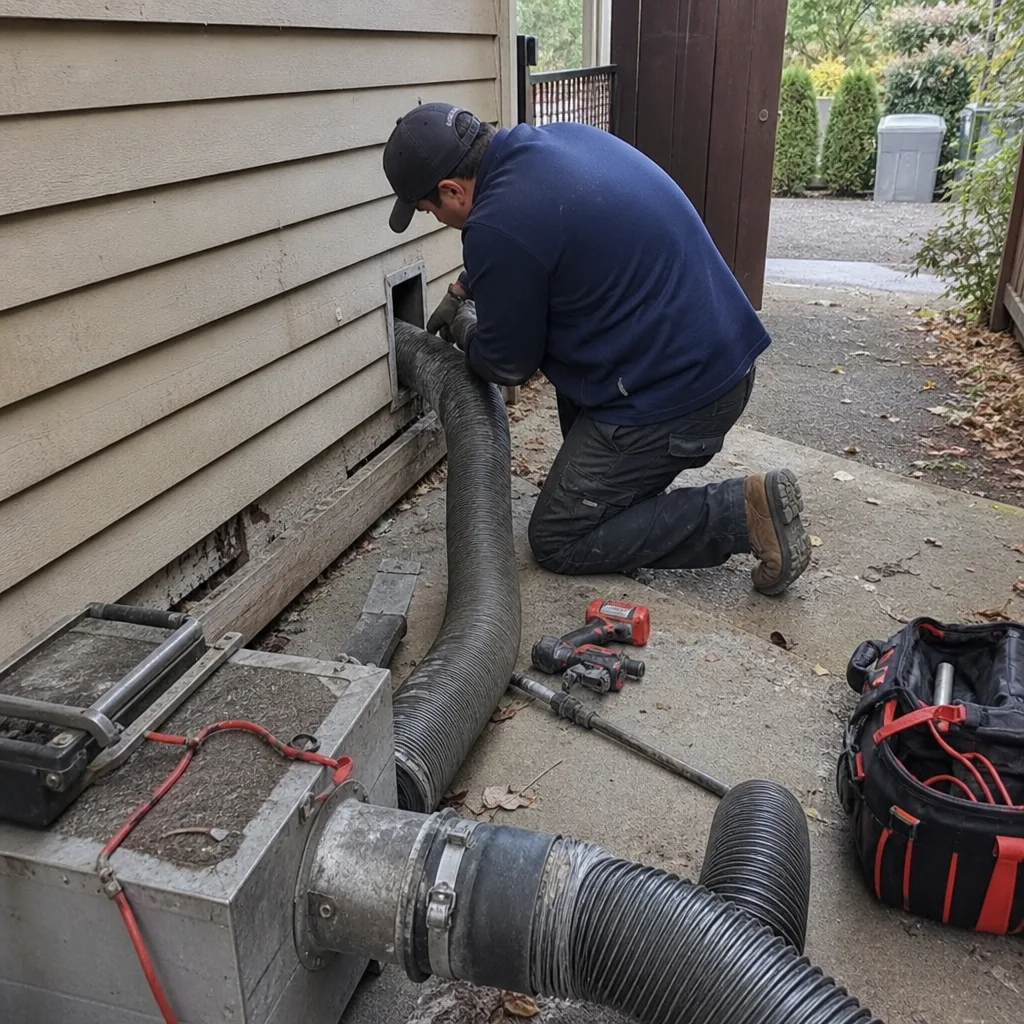 Before
 After
 Before
 After
 Before
 After