
Last updated November 25, 2026
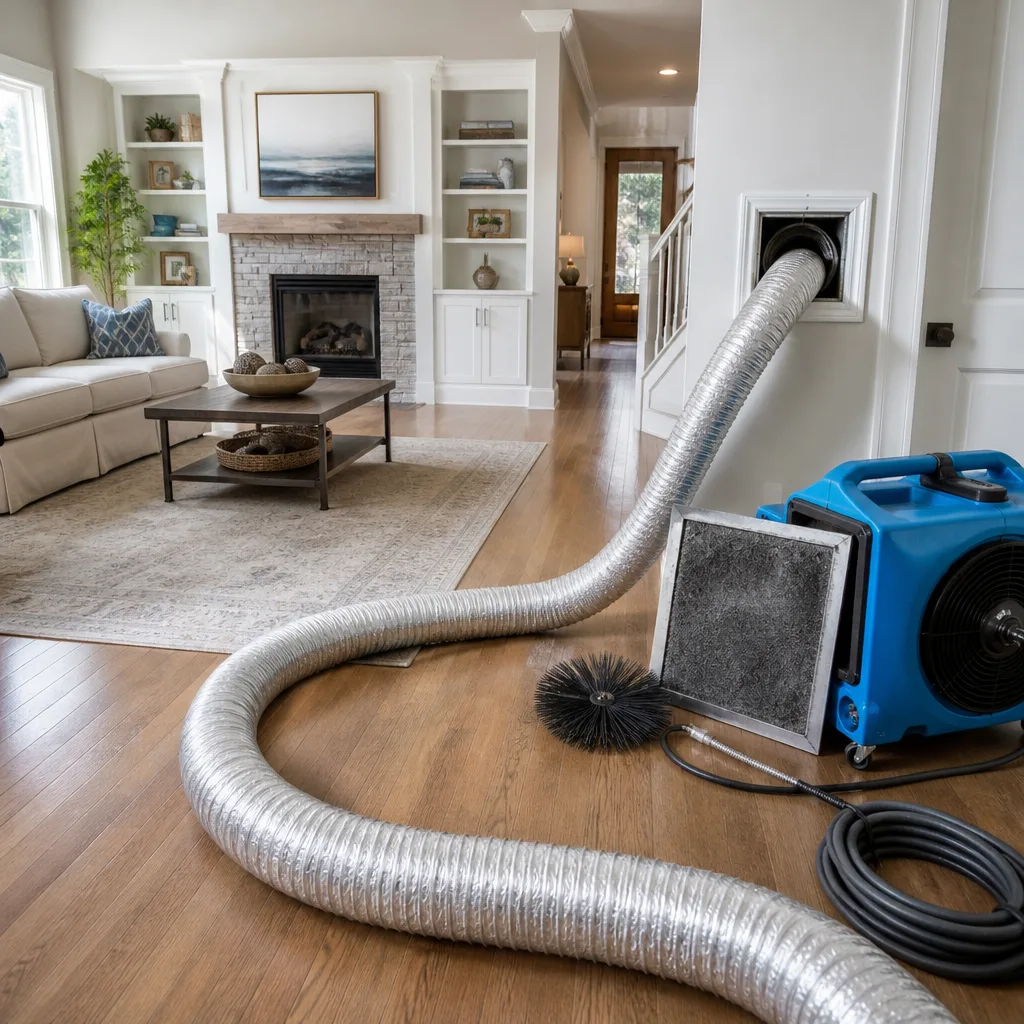 Whole-home duct cleaning
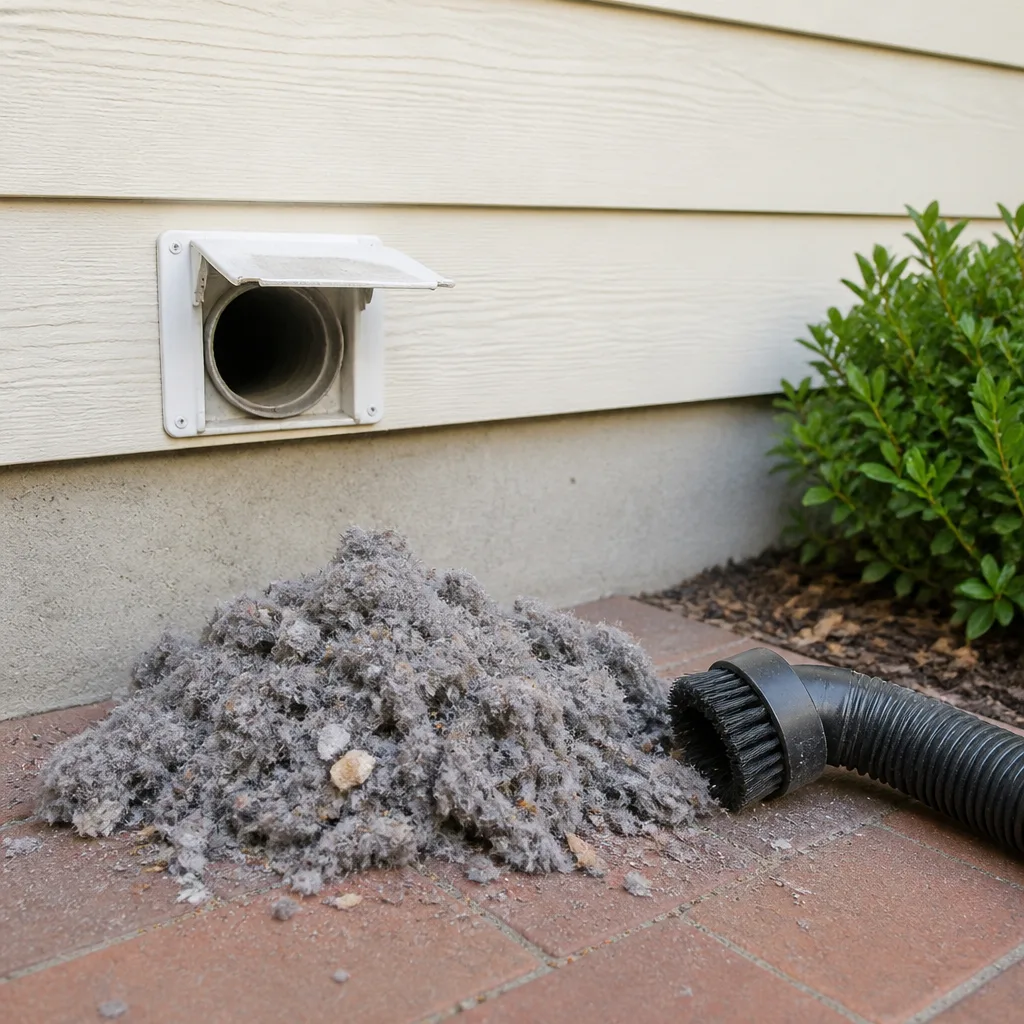 Dryer vent cleaning
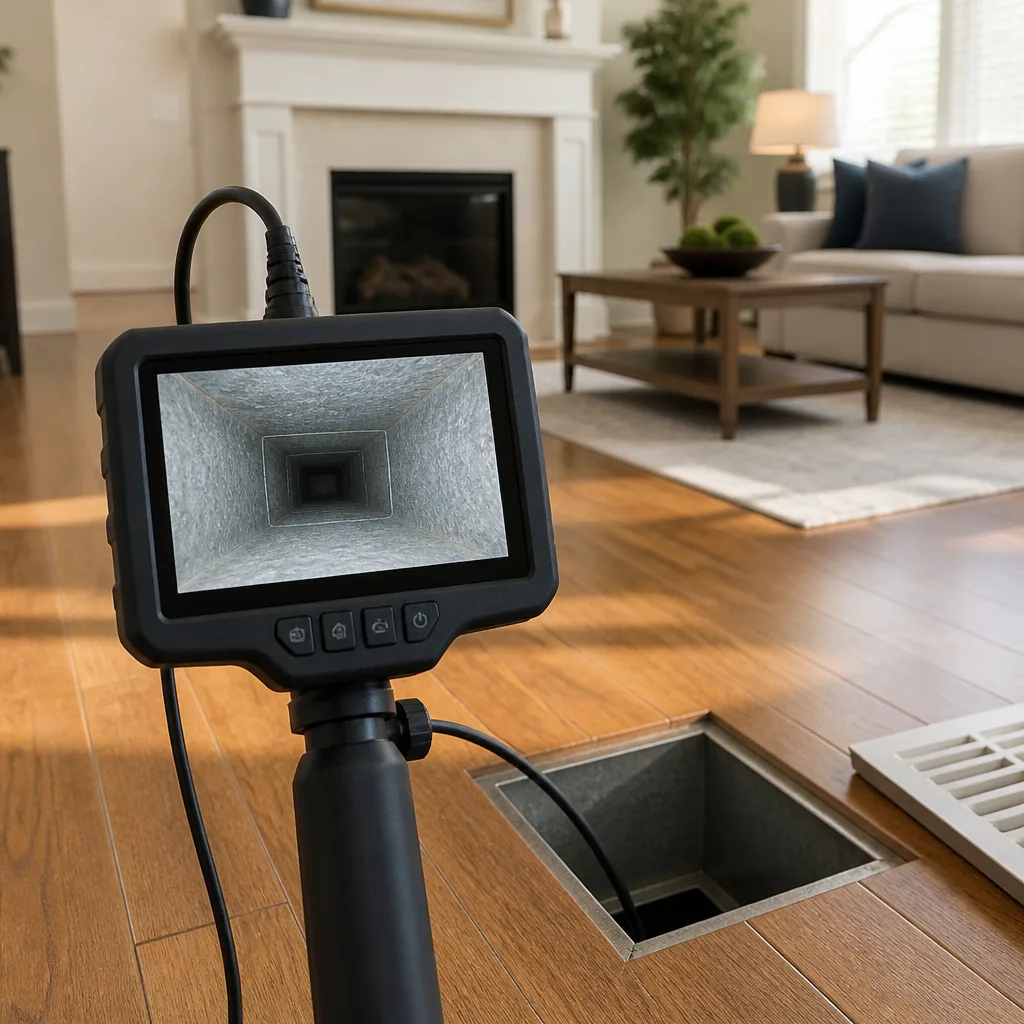 Camera inspection
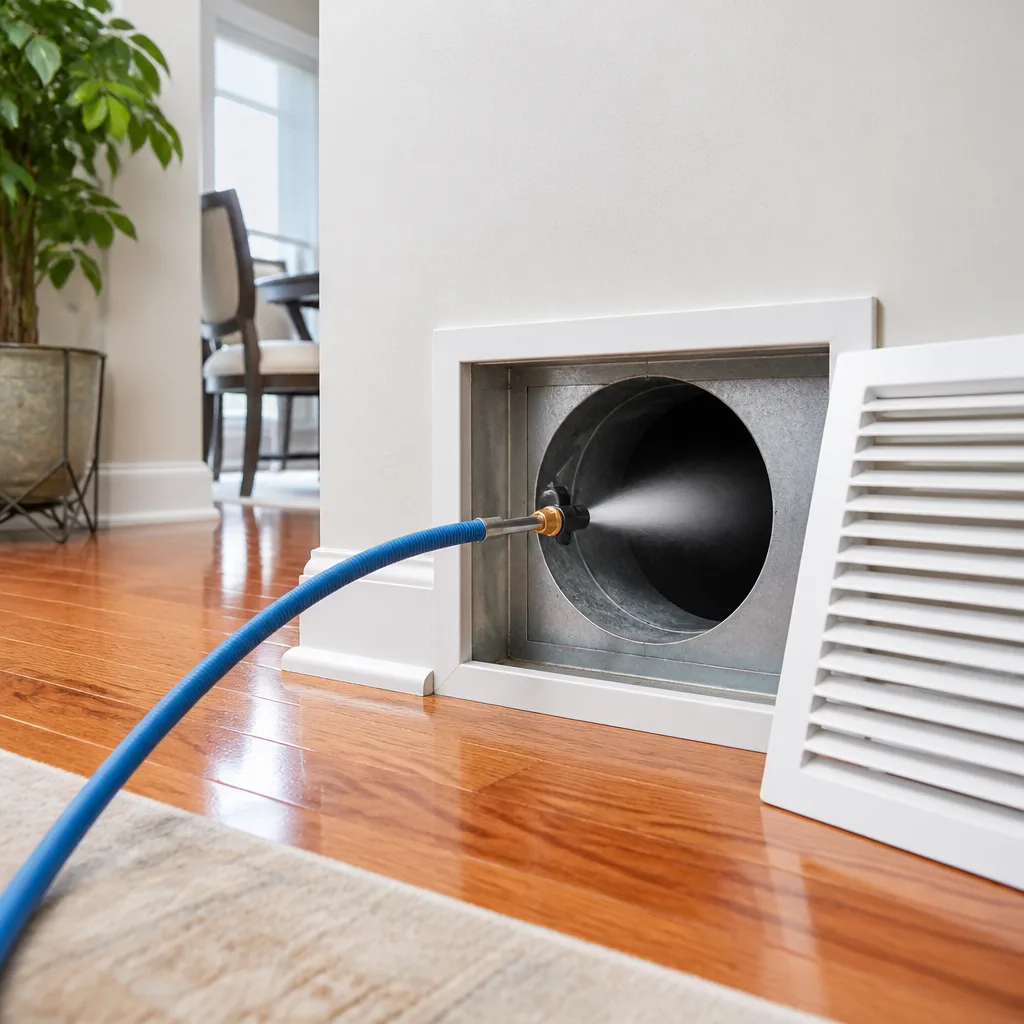 Sanitizing & deodorizing
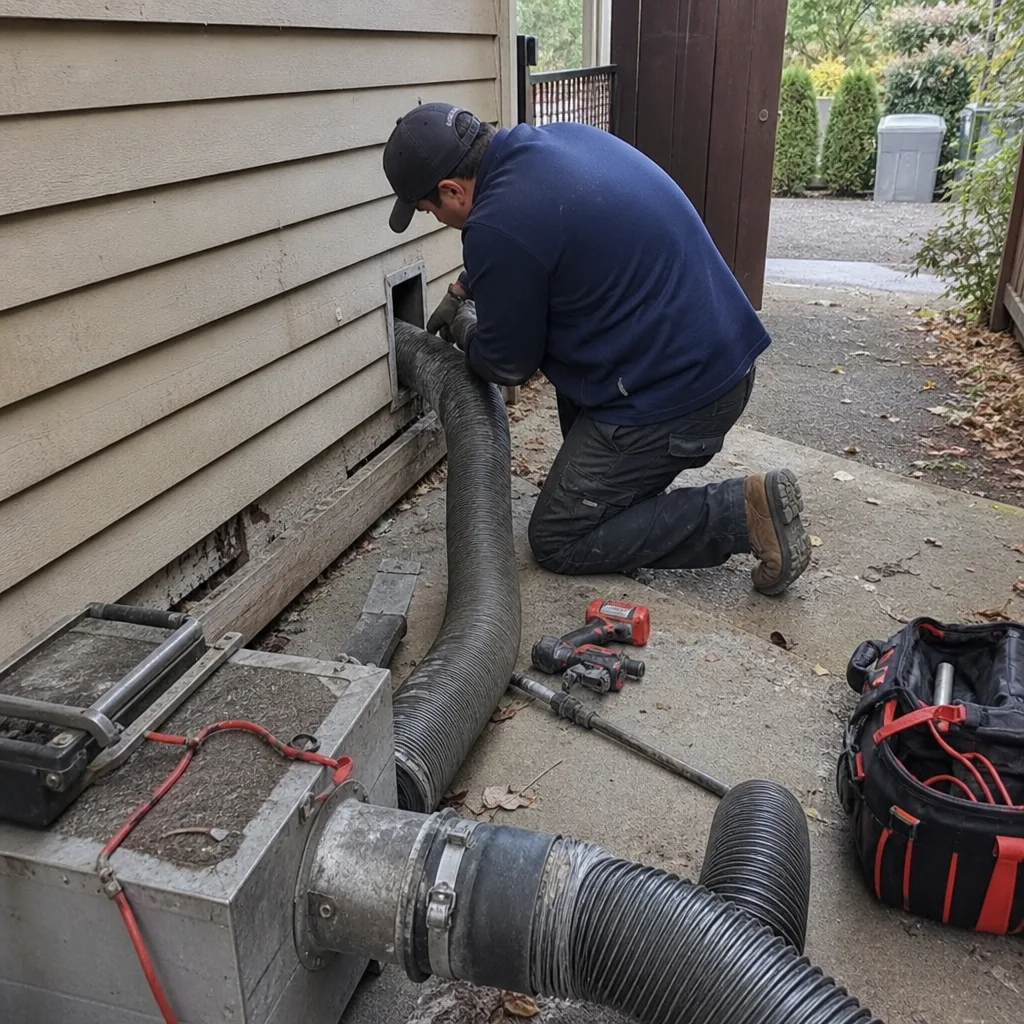
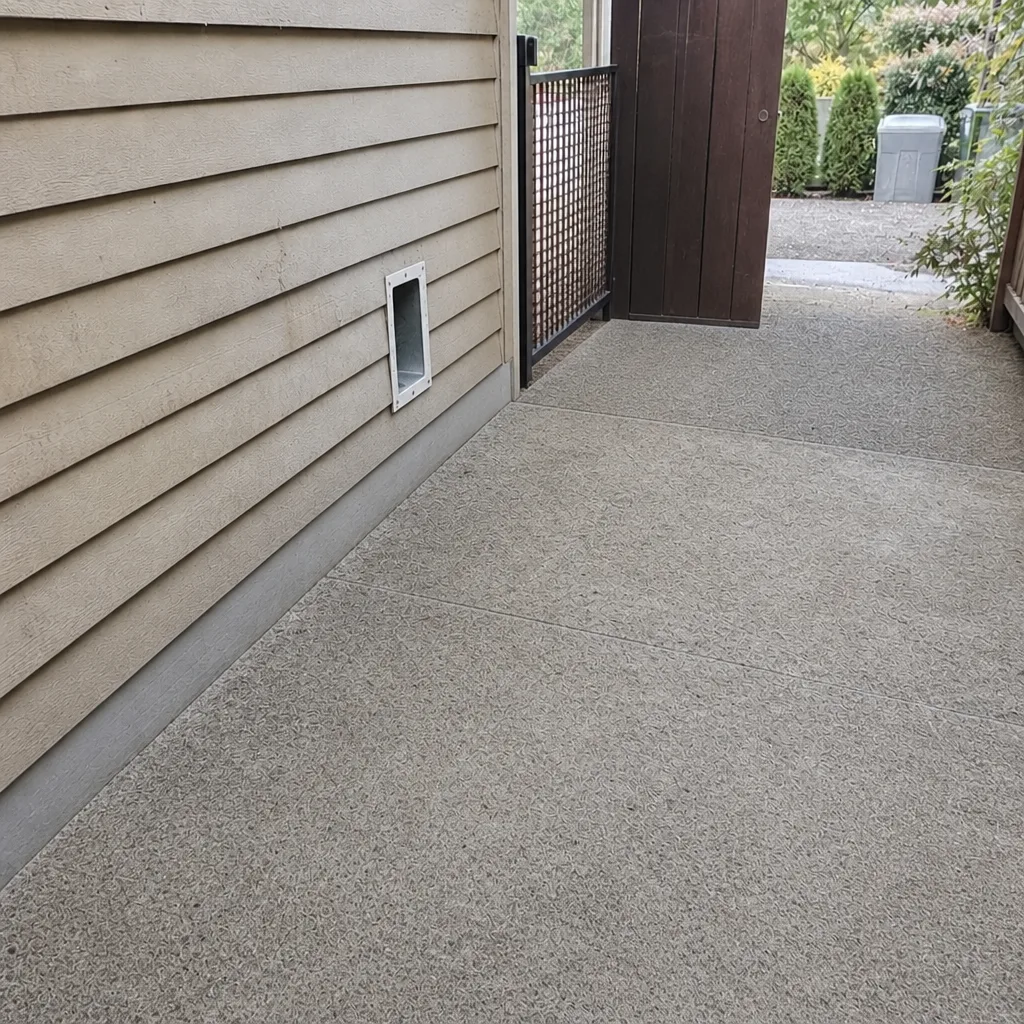
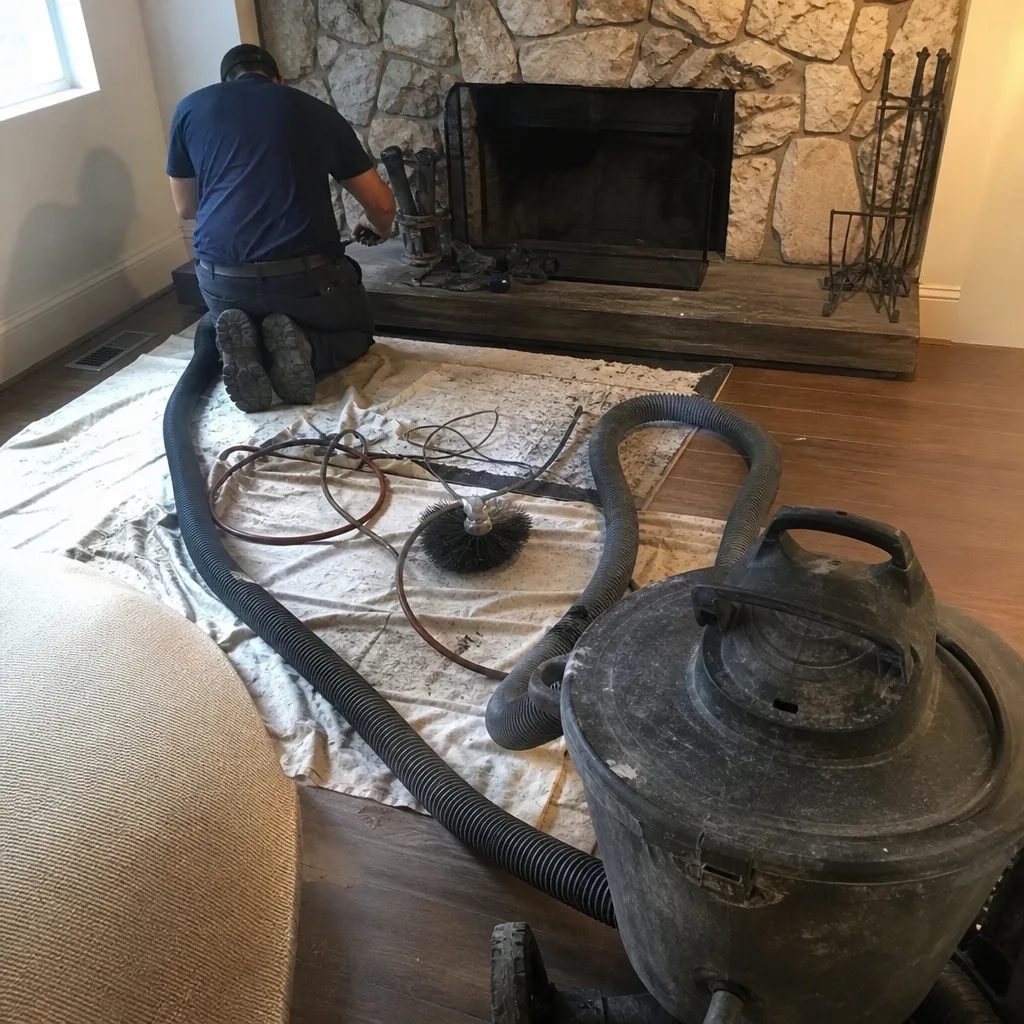
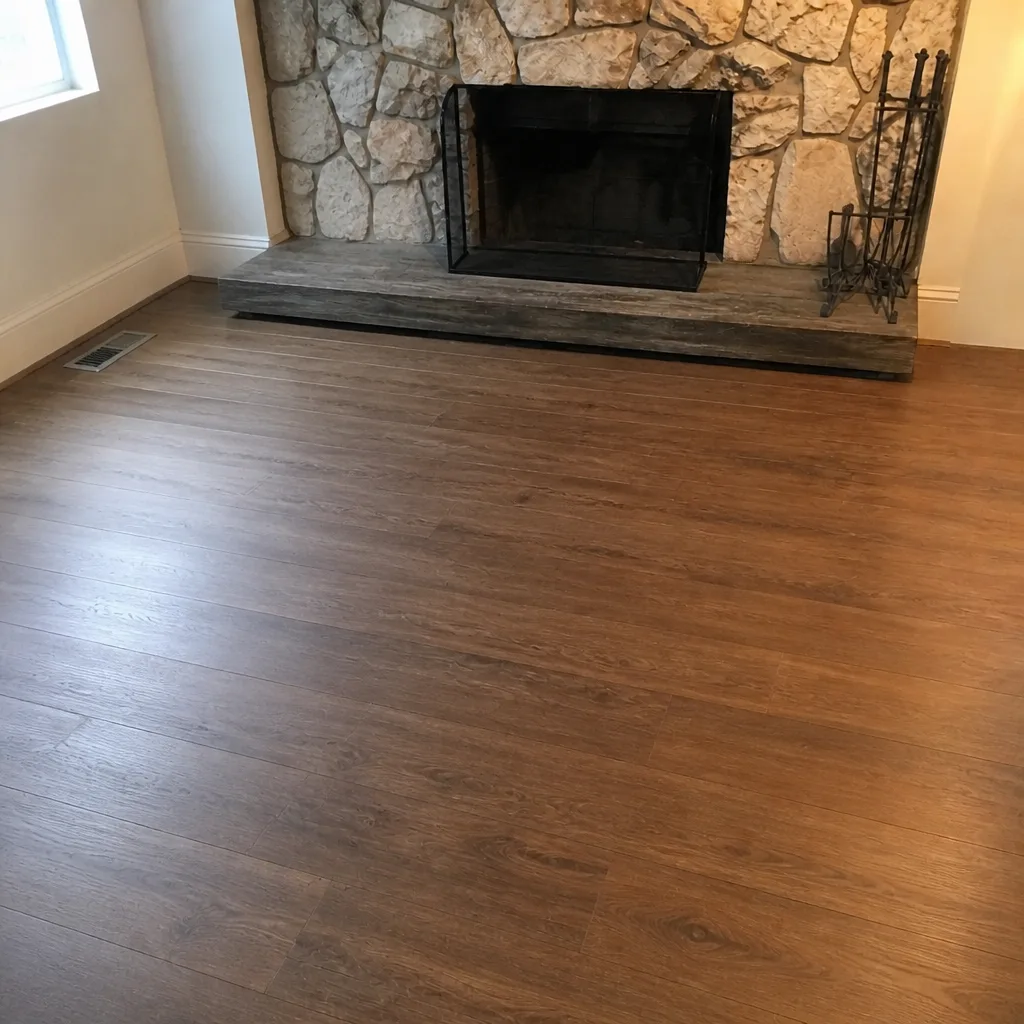
Whole-system duct and dryer vent check with before-and-after photos - you see exactly what came out of your vents
That "$99 whole-house special" is a bait ad - the real number appears once they are in your hallway, or the "clean" is a shop-vac at the register. We photograph the inside of your ducts before and after instead.
How to Hire an Air Duct Cleaning Contractor in Redmond: A Step-by-Step Guide
A five-star review tells you the last customer was satisfied. It tells you nothing about whether the contractor hooked up a truck-mounted negative-pressure unit or ran a shop vac with a logo stenciled on the side. Washington State has almost no licensing barrier to entry for duct cleaning, so the whole decision rests on the questions you’re willing to ask before anyone books the job. Most low-bid operators are banking on you not asking them. This guide gives you a vetting framework built around equipment verification rather than star ratings: the three questions that separate specialists from generalists, how to read a written scope of work, and what a real post-cleaning check looks like before the technician pulls out of your driveway in Redmond.
Quick Answer
Hire an air duct cleaning contractor in Redmond by verifying three things before you book: the vacuum system’s airflow capacity, the type of brush system used to agitate debris, and whether video inspection of the interior ductwork is included. Ask for a written scope of work that specifies source removal (not surface pass-through), confirm NADCA membership or equivalent accountability, and refuse any quote based on per-vent pricing. The final price should be one flat figure per system, agreed before work starts.
Styles & brands we work with
- Whole-home duct cleaning
- Dryer vent cleaning
- Camera inspection
- Sanitizing & deodorizing
Table of Contents
- Why Reviews Don’t Vet a Duct Cleaner
- The Three Equipment Questions to Ask Before Booking
- What NADCA Membership Actually Requires
- Red Flags Specific to the Seattle Metro Market
- How to Structure a Written Scope of Work
- What Legitimate Post-Cleaning Verification Looks Like
- Redmond-Specific Considerations: Climate, Housing, and Duct Layouts
- The Step-by-Step Hiring Process
Why Reviews Don’t Vet a Duct Cleaner
A review measures satisfaction with the visit, not the technical depth of the work. A customer who paid $199 for a “whole-house duct cleaning” and saw a technician wave a hose near each vent has no framework to judge whether the job was done properly. They saw activity, the invoice matched the quote, and nothing obviously broke. Five stars.
The problem is invisible. Surface pass-through cleaning agitates dust on the visible portions of ductwork and leaves the settled debris on the bottom of the trunk lines untouched. Recirculation then stirs that material back into your living space over the following weeks. The homeowner notices nothing until the dust returns to the shelves and the musty smell lingers in the hallway.
Redmond homes present a specific challenge here. Many were built during the tech-boom years of the 1990s and 2000s with flexible duct runs that snake through tight attic spaces and crawl sections. Flexible duct has ridges and folds where debris accumulates, and getting it clean requires mechanical agitation with a rotary brush sized to the duct diameter, plus enough negative pressure to pull the loosened material out of the system rather than pushing it further down the run. That’s not a shop-vac job.
What a review can tell you: whether the contractor showed up on the scheduled day. What it cannot tell you: whether the equipment was capable of the job. That’s why the vetting framework in this guide is built around equipment specification, not ratings. Ratings tell you how the last visit felt. Specifications tell you what the machine is actually capable of.
When you’re ready to compare air duct cleaning providers on those terms, ask each one the same set of questions and compare the answers side by side. The differences become obvious fast.
The Three Equipment Questions to Ask Before Booking
These are the questions that separate a dedicated duct specialist from a generalist with a hose. Ask them on the phone before you commit to anything. A contractor who can answer them specifically and without hesitation is worth the quote. A contractor who deflects, hedges, or says “we use the best equipment in the industry” without naming it is telling you something useful too.
1. What is the CFM rating of your vacuum system, and is it truck-mounted or portable?
CFM means cubic feet per minute, and it’s the measure of airflow the vacuum pulls through the system. Duct cleaning requires enough negative pressure to lift settled debris into suspension and carry it out. A portable unit rated for a few hundred CFM will not move material through a 40-foot trunk line in a way that removes it from the system. Truck-mounted negative-pressure units in the 2,000+ CFM range do. Many residential specialists run powerful portable units with HEPA filtration that can hit a comparable effective airflow, but the number matters. Ask for it. A specialist will know it off the top of their head.
2. What type of brush system do you use?
Rotary brushes and air whips are the two most common agitation systems. Rotary brush systems (we run Rotobrush) are designed for residential flex and rigid duct and mechanically scrub the interior walls where debris clings. Air whips use compressed air to blast material loose but don’t physically contact the duct surface. On a system with heavy buildup, a brush is generally appropriate; on fragile duct types, the wrong brush head can damage the liner. A specialist will tell you which they plan to use and why, based on a pre-cleaning inspection of your system.
3. Is video inspection included before and after?
This is the question most low-bid operators hope you won’t ask. A pre-cleaning camera run shows you what’s actually in the ducts, typically through access openings cut at the trunk or plenum. A post-cleaning run shows you what’s left. Without video, “we cleaned your ducts” is a claim you have to take on faith. With video, you have evidence. Ask if the inspection is included in the price or an add-on. Either answer is workable, but you should know before the quote is signed. A specialist who runs a Nikro or comparable inspection camera as standard practice will say so without negotiating.
None of these questions are tricks. They’re the same questions one duct professional asks another when evaluating a subcontractor. Ask them, listen to how the answer is framed, and trust your gut on which contractors knew the material and which ones were reciting a script.
What NADCA Membership Actually Requires (And Why It’s Different)
NADCA stands for the National Air Duct Cleaners Association, and it’s the closest thing the duct cleaning industry has to a professional standard body. Membership is voluntary, but it requires the member to commit to a defined assessment, cleaning, and restoration process, hold appropriate insurance, and follow an industry code of ethics. It’s a real commitment, not a certificate you buy from a weekend course.
That last point matters because Washington State doesn’t issue a specific license for duct cleaning. The plumber working on your kitchen has a license number you can look up. The person cleaning your air ducts might have no more credential than a business license from the state. This is why NADCA membership (or comparable accreditation) becomes the only checkable professional standard in the industry.
What to look for on the contractor’s site or in conversation:
- Active NADCA member listing, verifiable by name at the NADCA directory.
- Named individuals who hold ASCS (Air Systems Cleaning Specialist) certification, if the contractor uses that credential.
- Written process description that references source removal, not just “vacuuming.”
- Insurance coverage for residential work, disclosed without prompting.
“Licensed and certified” claims without a traceable body behind them are worth nothing. Anyone can print the word certified on a website. Ask which organization issued the certification, and check that the organization exists and has a searchable directory.
Our own service lines sit at the specialist end of that standard – from HVAC cleaning through to full-system sanitizing – because generalist contractors have no reason to invest in the equipment that standard requires. If you’re comparing quotes, ask each one which equipment brands they run. A response of “Rotobrush and Nikro” tells you they’re practicing at the same level as commercial contractors. A response of “we use professional-grade equipment” tells you nothing.
Red Flags Specific to the Seattle Metro Market
The Seattle metro has a dense competitive market for duct cleaning, and not all of it is honest. The low-bid operators rely on three tactics. Learn to spot them and you’ll avoid most of the bad outcomes.
Vague scope statements
“Whole-house duct cleaning” is a marketing phrase, not a scope. A credible scope names exactly what’s covered: which components (main trunks, branch runs, registers, the air handler unit, the return plenum, the supply plenum), what deposit removal method is used for each, and whether the technician will cut access openings or use existing ones. If the written quote is a single sentence and a dollar figure, you don’t have enough information to accept it.
Per-vent pricing and teaser coupons
“$89 for whole-house duct cleaning, plus $15 per vent” is a structure that the final price almost never matches the initial quote. You might have 18 vents in a Redmond home with a two-zone system. Eighteen vents at $15 is $270 on top of the $89 teaser, and the technician on site can claim the first vent was fine but the second one “needs treatment.” The honest way to price the job is one flat number per system, based on a look at the actual system before the quote is issued. Any version of per-vent pricing is a red flag, no matter how benign it looks on paper.
Upsell pressure for sanitizer treatments
Sanitizing has legitimate applications: post-mold remediation, post-fire cleanup, or after a known biological contamination event. It is not standard maintenance. A technician who arrives with no camera inspection and immediately recommends an add-on antimicrobial fogging is selling anxiety, not air quality. Named sanitizer products (Guardsman is one we use) are also not the same as a generic “spray” that came from a distributor’s bucket. Ask what the product is called, what it’s rated for, and whether it’s necessary in your specific case. A specialist will tell you when it isn’t.
How to Structure a Written Scope of Work
The written scope is your contract, not just a formality. If the scope is vague, the contractor can deliver exactly the minimum and still be within the letter of the agreement. Build the scope yourself, from these elements, then ask each contractor to respond to it:
- Name the components covered. Supply trunks, branch runs, all supply and return registers, air handler interior, evaporator coil face (if visible), return plenum, supply plenum, and the blower compartment. If a component isn’t listed, assume it isn’t included.
- Specify source removal, not pass-through. Source removal means the debris is physically extracted from the duct and leaves your home. Pass-through means loosened debris is pushed into the living space or into a downstream HVAC component. Use the term “source removal” in the scope.
- Describe the agitation and vacuum methods. Brush system type, vacuum CFM range, whether the vacuum is HEPA-filtered or truck-mounted. This is where the generalist contractors fail to respond credibly.
- Require pre- and post-cleaning video inspection. State the inspection must be available for customer review, either on-site or delivered as a file after the visit.
- Set the access method. Ask whether the technician uses existing access ports or cuts new ones, and who is responsible for sealing any new openings.
- Confirm the final price, in writing, and refuse per-vent pricing. The written estimate is the price. Add-ons should be presented separately and declined without pressure.
- Request the sanitizer product name in advance if sanitizing is recommended. “Antimicrobial treatment” for $200 on top of the quote with no product specified is the classic upsell. Named products with known composition are different.
- State the cleaning completion criteria. NADCA’s standard is that cleaned surfaces should be visibly free of debris, and that the source of any visible debris should be identified if it can’t be fully removed. Get the contractor to state how they’ll confirm this before leaving.
Two or three contractors asked to respond to that scope will differentiate themselves clearly. At Redmond Air Duct Cleaning Pros, our team works against exactly that standard: a flat price per system, before and after photos of your own ducts, and the equipment named before we start. We also offer dryer vent cleaning under the same framework, because dryer vents accumulate lint in ways that a duct-only contractor often misses – and that has fire-safety implications that duct cleaning alone doesn’t address.
What Legitimate Post-Cleaning Verification Looks Like
The most important twenty minutes of the job happen after the cleaning is done and before the technician packs up. This is when you ask for verification, and a credible contractor will deliver it without being asked.
Legitimate verification has three components:
- Video walkthrough of the interior ductwork. The technician runs the inspection camera through the cleaned sections and shows you the surfaces. Debris-free duct walls look metal-colored or white (if the ducts are lined) and uniform. Any visible debris pile in the bottom of a run is a red flag for a re-clean.
- Debris captured count. A proper negative-pressure system collects material in a sealed container or HEPA bag. The contractor should be able to show you the collection bin. A truck-mounted system may not offer this on-site, but a written confirmation of the amount captured should be available in the main unit.
- Component review. The technician walks you through what was cleaned, what was excluded, what was found, and whether any repair or sealing is recommended. A duct repair recommendation that wasn’t in the original quote needs the technician’s reason stated clearly.
If a contractor won’t do a walkthrough, do the walkthrough yourself before they leave. Walk to each vent, look at the visible interior of the register boot, and ask to see the video output. If the answer is “we don’t have the camera,” that’s a significant mark against the job.
We include before-and-after photos of your own ducts at completion because a specialist contractor should have nothing to hide from the customer. If you’ve had air duct cleaning in Redmond from another provider and don’t have photos, that alone is a reason to be cautious about the work quality.
Redmond-Specific Considerations: Climate, Housing, and Duct Layouts
Redmond sits in a temperate climate with wet winters and dry summers, which affects duct hygiene more than most homeowners realize. The wet-season pattern – high indoor humidity during the long rain months, followed by dry summer air – creates repeated condensation cycles in unsealed ductwork and around plenum joints. Moisture plus the settled organic dust in ductwork is the condition mold needs to establish. Sealing the system is often as important as cleaning it, and generalist contractors who offer cleaning only can’t address that.
Housing age and construction types vary widely across the city, and each presents different duct challenges:
- Older homes near downtown Redmond: rigid metal ductwork, often with less consistent sealing at the joints, that benefits from a sealing service alongside cleaning.
- Tech-boom construction from the 1990s and 2000s (Overlake, Willows, Grasslawn areas): flexible duct with longer runs through attics and crawl spaces, where debris accumulation patterns require brush-based agitation.
- New construction on the east side (Union Hill, Novelty Hill): tight envelopes with heat-recovery ventilation systems in some cases, where duct cleaning requires understanding how the ventilation systems interact with the standard HVAC trunk-and-branch layout.
- Condos and townhomes near Marymoor and Sammamish Village: shared building envelopes with in-unit air handlers, where the scope is per-unit but the duct layout may extend into shared wall cavities. Confirm the scope covers only what’s within your unit’s responsibility boundary.
Property managers in Redmond have a separate set of considerations. A single document that specifies what’s covered per unit, how access is scheduled, and how completion is verified, saves a lot of back-and-forth. The cleaning-only contractors will tell you they can handle multi-unit work; the specialists will ask about access and inter-unit duct separation before quoting. Ask them about duct repair capability while you’re at it. A duct system that’s been cleaned once and never inspected since may have seal failures at the plenum that need more than cleaning.
If your building uses a central return with a mechanical room, verify that the scope covers the return plenum and the air handler interior – not just the supply branch runs. A “branch-only” clean on a central-return system is incomplete and will produce the same dust patterns you were trying to eliminate.
The Step-by-Step Hiring Process
Here is the process that gets you from noticing a problem to a verified, documented cleaning, in order:
- Identify what’s actually happening. Musty odors, elevated dust on horizontal surfaces, allergy flare-ups after the system runs, or increased energy bills after a heating season. Note the specific symptom. It affects the questions you’ll ask.
- Build your scope of work. Use the checklist above. Take an hour. The time spent here is the time that saves you from a bad outcome.
- Get three quotes against the same scope. Give each contractor the same scope document and ask them to respond line by line. Compare the equipment and process answers, not the dollar totals.
- Ask the three equipment questions. Vacuum CFM, brush system type, video inspection. Write down the answers side by side.
- Verify credentials independently. Check NADCA membership in the directory if the contractor claims it. Ask for proof of insurance. Confirm which certifications are claimed and who issued them.
- Confirm the pricing structure. One flat number per system, in writing. Any per-vent pricing or teaser coupon is a reason to eliminate that contractor from the list.
- Book the visit, and plan to be present for the beginning and end. Watch the equipment as it’s brought in. Confirm the pre-cleaning inspection happens. Request the post-cleaning verification before the technician leaves.
- Review the video and the before/after photos. If anything looks incomplete, request a re-visit on the specific section while the record is fresh. A specialist contractor will do it; the one that pocketed the low-bid invoice may not.
None of this is unusual or adversarial. It’s the same process a commercial property manager follows for every HVAC contract. It works on residential jobs at the same level of detail, and it exposes the contractors who are hoping you’ll skip it.
Common Mistakes to Avoid
- Booking on the lowest advertised price. A “whole-house duct cleaning” offered at an unrealistically low figure is a teaser, not a price. The add-ons at the door – or the missing work – are where the actual cost shows up.
- Accepting a phone quote without seeing the system. A specialist will ask about your system before quoting: age of the ductwork, number of zones, whether you have a heat pump or furnace, whether the ducts are rigid or flex. A contractor who quotes blind is quoting a guess.
- Skipping the video inspection on either side of the job. If you don’t see the inside of your ducts before the cleaning, you can’t judge the after. Without a post-cleaning video, the contractor’s word is the only verification you have.
- Assuming a “certified” badge means something without checking the issuer. “Certified” is a word. NADCA is a directory. Check the directory.
- Letting a technician upsell sanitizer on an un-inspected system. Sanitizer as a standard upsell to a cleaning is the classic low-bid business model. Named products (like Guardsman) applied when inspection shows a reason are a different matter, and no one should be applying them without showing you the reason first.
- Forgetting that duct repair often needs to happen with cleaning. In Redmond, ducts with failed plenum seals or deteriorated flex boots leak debris back into the air after cleaning. Cleaning without addressing seal failures on a system that needs them is half a job.
- Ignoring the dryer vent as a separate fire-safety item. A cleaning that covers HVAC duct runs but skips the dryer vent misses one of the most common fire-ignition points in residential HVAC systems.
See the difference
 Before
 After
 Before
 After
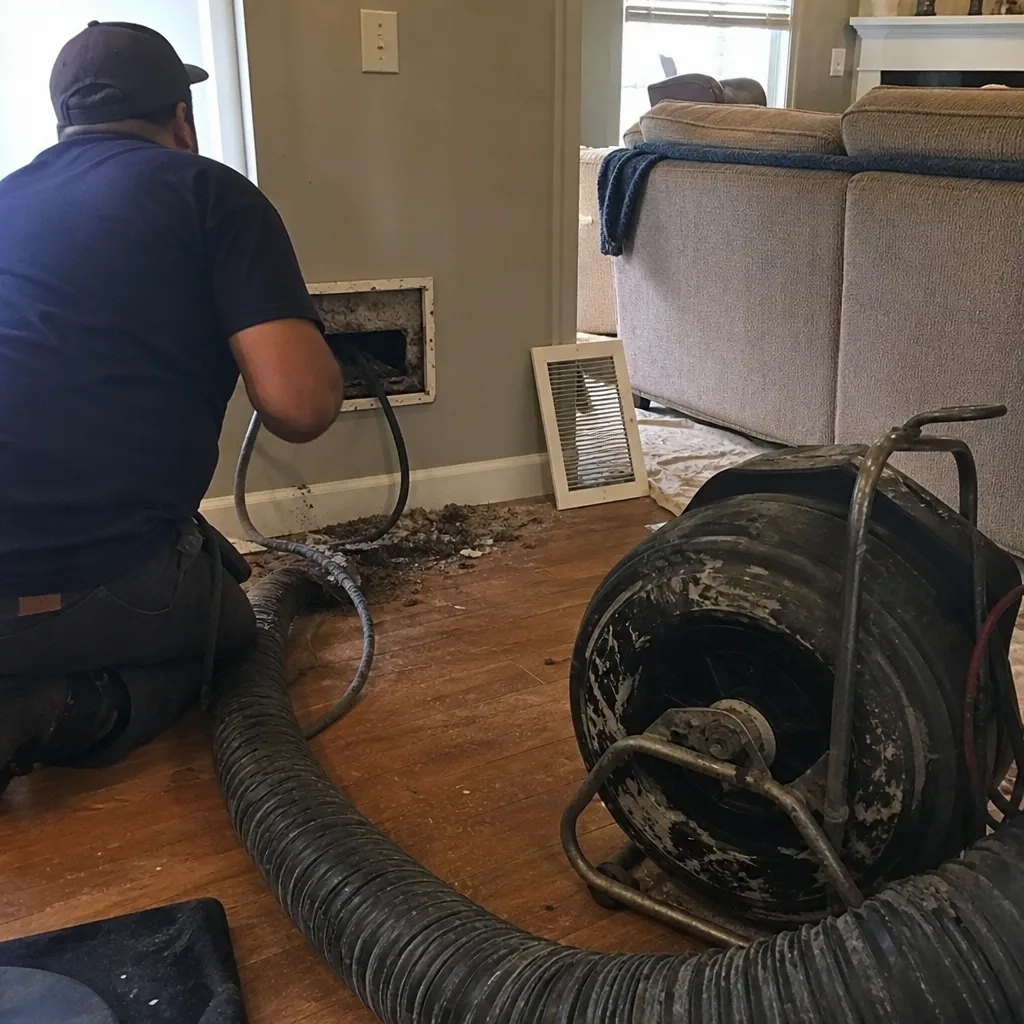 Before
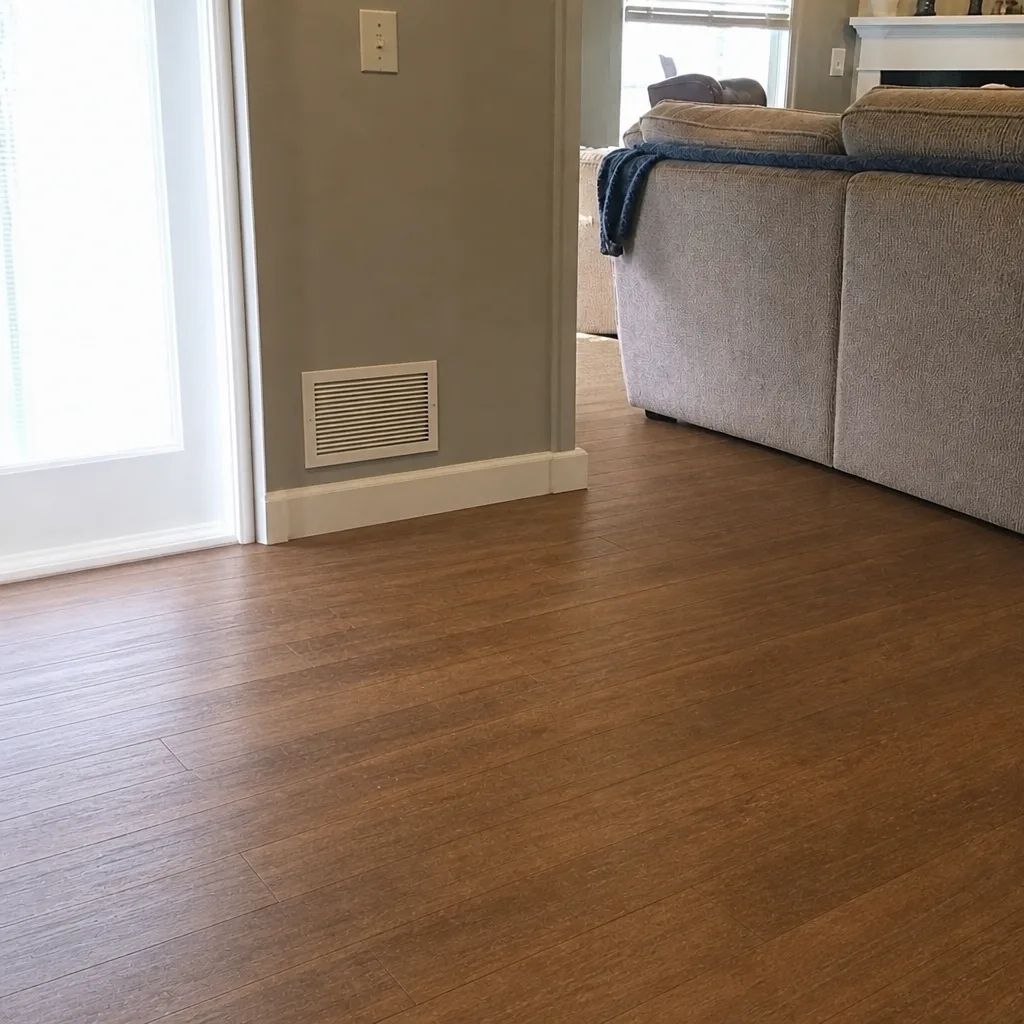 After
When to Call a Professional
You don’t need to book a cleaning on a fixed schedule. Redmond duct systems vary by house, by system age, and by use patterns, and the right interval differs from home to home. But certain situations call for a professional visit regardless of when the last cleaning was:
- Persistent musty or dusty smells that increase when the system runs.
- Visible debris blowing from supply registers when the fan starts.
- Recent renovation, remodeling, or water intrusion in the home.
- A new home purchase where the duct cleaning history is unknown.
- A recent pest issue (rodent activity in attic or crawl duct runs).
- Unexplained increases in energy bills after a heating season.
- Allergy, asthma, or respiratory symptoms that flare when the HVAC runs.
Redmond Air Duct Cleaning Pros offers free estimates in Redmond. Call (877) 492-3883. We answer 24/7. Fast dispatch from 7am to 7pm, Sunday through Friday. Our technicians have up to 12 years of experience, run Rotobrush and Nikro equipment as standard, and deliver before-and-after photos of your own ducts as part of every job.
Frequently Asked Questions
Whole-system air duct cleaning in the Redmond area typically runs in the several-hundred-dollar range for a standard residential system, with pricing adjusted for the number of zones, system accessibility, and whether duct sealing or repair is needed. The written estimate sets the final price and there should never be a per-vent line item. Because Redmond homes vary widely in duct layout and construction era, the only reliable number is the one a specialist puts in writing after evaluating your actual system. Call (877) 492-3883 for an exact quote – estimates are free.
Lower quotes usually reflect missing equipment, not lower overhead. A contractor running a portable unit with a few-hundred-CFM rating cannot remove the settled debris from a 40-foot flex trunk the way a specialist with a truck-mounted or high-capacity portable system and rotary brush can. The cheap quote is completing a different job – surface pass-through rather than source removal – and often comes with per-vent add-ons or sanitizer upsells at the door. When you compare quotes, compare the equipment and the scope, not the bottom line. Call (877) 492-3883 for a free estimate with the equipment and scope specified in writing before work starts.
You know it was done when the contractor shows you a post-cleaning video walkthrough of the interior ductwork and before/after photos of your own system. That evidence should be provided as part of the visit, not on request after the fact. If a contractor can’t produce a camera run and photos, the work is unverified no matter how many hours the technician spent in your attic. Call (877) 492-3883 for an estimate – we include before-and-after photos of your own ducts as standard.
Most Redmond homes don’t need duct cleaning on a fixed annual or bi-annual schedule. The intervals that matter are event-based: after renovation work, after water intrusion or mold growth, after a pest issue in the attic or crawl space, at purchase of a home with unknown duct history, or when symptoms (musty odor, elevated dust, allergy flare-ups when the system runs) return after a previous cleaning. What’s more useful than a schedule is duct sealing done alongside cleaning so the system holds the result. Call (877) 492-3883 for an exact quote – estimates are free.
Cleaning removes accumulated debris from duct interiors. Repair addresses the physical failures of the duct system itself – disconnected joints, failed plenum seals, cracked or collapsed flex runs, torn duct board, and unsealed penetrations in the building envelope. A specialist contractor handles both because cleaning without repair on a system with seal failures is a temporary fix. Redmond homes with tech-boom-era flex duct in attics and crawl spaces commonly need both in the same visit. Call (877) 492-3883 for a free estimate and ask the contractor to assess repair needs during the pre-cleaning inspection.
No. NADCA membership requires a defined process commitment, insurance, and adherence to an industry code of ethics. “Factory-trained” usually means the contractor attended a one-day training on a specific brand of equipment – useful, but not equivalent to a professional standard. Ask which certifications are claimed, by whom, and whether they’re listed in a searchable directory. A verifiable credential you can look up is worth having; a badge with no issuer is worth nothing. Call (877) 492-3883 for an estimate with our equipment and process described in advance.
The Bottom Line
Hiring an air duct cleaning contractor in Redmond comes down to questions, not ratings. Verify the equipment (vacuum CFM, brush system, video inspection), verify the credentials (NADCA or comparable, via a searchable directory), and verify the scope in writing (one flat price per system, source removal specified, no per-vent pricing, no teaser coupons). Require pre- and post-cleaning video. Be present for the walkthrough. When you’re comparing quotes, the specialist contractor will answer the technical questions with specific equipment names – Rotobrush, Nikro, Abatement Technologies – because that’s what they’re actually using.
The framework works. It works because the questions are the same ones a commercial property manager asks on every HVAC contract, and the low-bid operators can’t answer them without revealing what the job was actually going to be. Start there.
Redmond Air Duct Cleaning Pros connects Redmond homeowners with independent local professionals who perform duct cleaning, dryer vent cleaning, HVAC cleaning, duct repair and sealing, and air quality sanitizing. The local pro is licensed and insured as their state requires. Call (877) 492-3883 for a free estimate. We answer 24/7. Fast dispatch from 7am to 7pm, Sunday through Friday.
Written by the team at Redmond Air Duct Cleaning Pros.